
Open To Debate Podcast
Should women be ordained as deacons?


As a lifelong Roman Catholic, I have a strong opinion on this topic. I attended Catholic elementary and high school. Back then, school was taught by nuns and Franciscan Brothers. In recent years, and like many Catholics, I've found myself distressed by the action or inactions of the Church on its stonewalling on sex scandals, its refusal to be open-minded on LGBTQ+ rights and women's reproductive rights, and its refusal to allow women to participate in Church activities, even at a time when newly ordained male priests are as scarce as vaccine advocates in the Trump Administration.
The election of Pope Leo XIV as the head of the Catholic Church has reignited a long-simmering question in the Church: Should women be ordained as deacons?
That's the question being debated on this week's episode of the debate podcast and public radio show Open to Debate.
The debate around women serving as deacons in Christian churches, particularly within the Catholic Church, revolves around interpretations of scripture, historical precedent, and the role of women in ministry. Some denominations allow women to serve as deacons, citing scripture and historical examples, while others restrict the role to men.
Some interpret Romans 16:1, where Phoebe is described as a "diakonos" (often translated as "servant" or "deacon"), as evidence of women serving in this capacity.
We see an early example of women serving as deacons in the correspondence between Pliny the Younger and the emperor Trajan (AD 98–117). In a fascinating conversation, Pliny asks Trajan for advice about what he should do as the legate to the province in Bithynia with Christians.
Several Protestant denominations allow women to serve as deacons, including the United Methodist Church, the Episcopal Church, the Presbyterian Church USA, and the United Church of Christ. Some Baptist churches, like those in the Southern Baptist Convention and Cooperative Baptist Fellowship, also have women deacons.
The Open To Debate podcast plays a critical role in our society today.
All of us should keep an open mind to solve the complex problems we face as individuals and as a nation. Being open to debate is a gesture of respect for the good faith arguments of those we disagree with, for the intelligence and integrity of those who watch or listen, and for the value of debate done right.
The mission of Open to Debate is to restore critical thinking, facts, reason, and civility to America’s public square. Open to Debate is a platform for intellectually curious and open-minded people to engage with others holding opposing views on complex issues.
Listen to Open to Debate wherever you get podcasts, or watch the video version at opentodebate.org.
In this latest debate, supporters say ordaining women would restore an early Church tradition, not break with it, and make the Church more inclusive and responsive to modern society. Opponents say the records indicate the opposite and that it would violate longstanding doctrine. They warn it could blur theological lines, sow confusion about the priesthood, and open the door to demands for women priests—something the Church has firmly rejected. They also point out that women already hold influential, non-ordained leadership roles.
Arguing YES: Casey Stanton, the co-director of Discerning Deacons, a project that is helping to shape a historic conversation in the Catholic Church about the role of women.
Arguing NO: Pia de Solenni, a theologian and Former Chancellor of the Roman Catholic Diocese of Orange in California.
Nayeema Raza moderates. "Expert questioners" include Inside the Vatican host Colleen Dulle, Hofstra religion professor Phyllis Zagano, and author Leah Libresco Sargeant.
You can watch the debate on YouTube, opentodebate.org, or wherever you get podcasts.
About the Creator
Frank Racioppi
I am a South Jersey-based author who is a writer for the Ear Worthy publication, which appears on Vocal, Substack, Medium, Blogger, Tumblr, and social media. Ear Worthy offers daily podcast reviews, recommendations, and articles.
Keep reading
More stories from Frank Racioppi and writers in Interview and other communities.
Part 2 Interview With Joe Patterson, Author Of Melanin Memoirs
This is my second interview with Joe Patterson. His 4th anniversary writing on Vocal will be in March 2026. He has one achievement on Vocal, The Other Foot. He has over 17,000 reads on Vocal since he started on Vocal in 2022. Joe Patterson is very creative poet and rapper. Joe is deep thinker and I feel it is reflected in his latest published book, Melanin Memoirs.
By Mariann Carroll20 days ago in Interview
The Great Transformation: Two Decades of Evolution in African Trade, As Told by Expert Daniel Holztreger of DH Consult
Fast forward twenty years, and the landscape has undergone a seismic shift. While challenges remain, the continent—particularly West Africa—has emerged as a dynamic hub of regional integration, digital innovation, and burgeoning industrial capacity.
By Lisa Rosenberga day ago in Interview
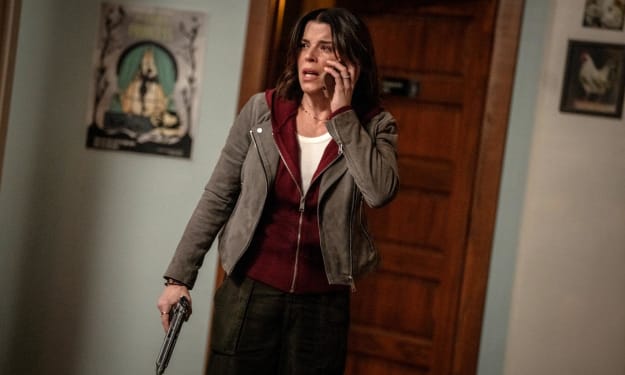
"Scream 7" (2026): Running out of Fresh Screams
This is the seventh time we’ve had a Ghostface crisis. Scream 7 is the latest edition of the Scream franchise. Sydney Prescott and her family are under attack by another anonymous killer dressed in a Ghostface costume. While having issues with her daughter, Tatum, they run from the bloody murders, trying to determine who is behind it all.
By Marielle Sabbag3 days ago in Horror

Comments
There are no comments for this story
Be the first to respond and start the conversation.