
NiaRenee: The Disabled Advocate, Author, and Trauma Survivor Teaching Women How to Reclaim Their Voice
Women Who Inspire
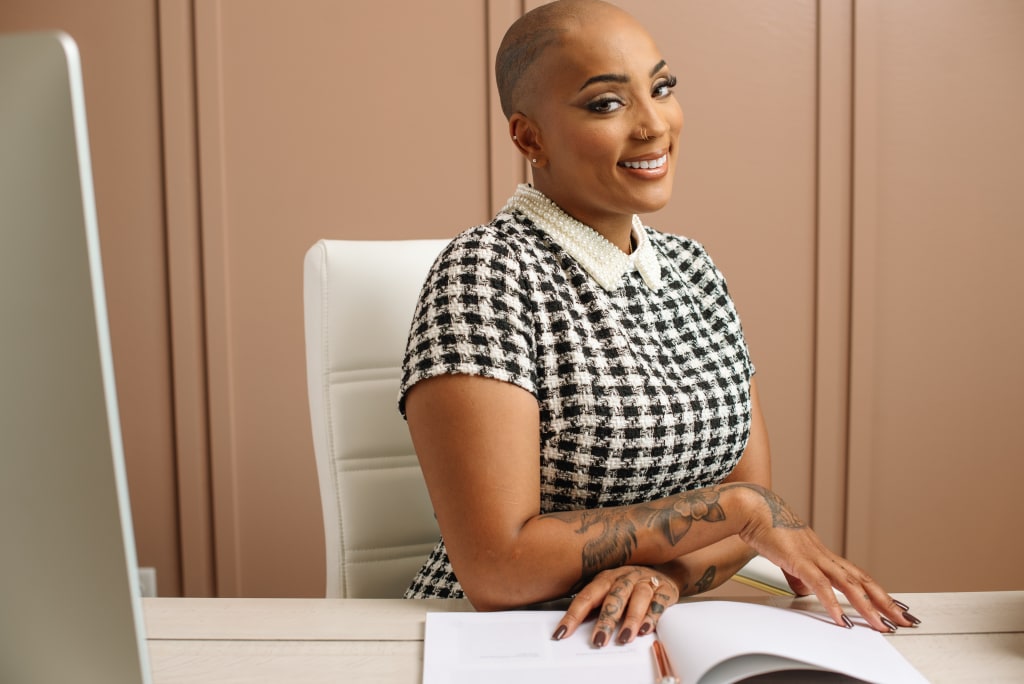
If resilience had a name, it would be NiaRenee. A powerful voice in advocacy, authorship, and empowerment, NiaRenee is more than a survivor, she's a living roadmap for healing. As a disabled model, coach, and founder of How to Love a Battered Woman, NiaRenee has transformed years of trauma, medical gaslighting, and emotional abuse into purpose. Her work isn't about presenting strength as perfection, it's about offering real tools for real people navigating the messy, nonlinear path of healing. In this feature, we sit down with NiaRenee to explore what it means to move from survival to sovereignty, how media misrepresents trauma, and why reclaiming your intuition is one of the most radical things a woman can do.
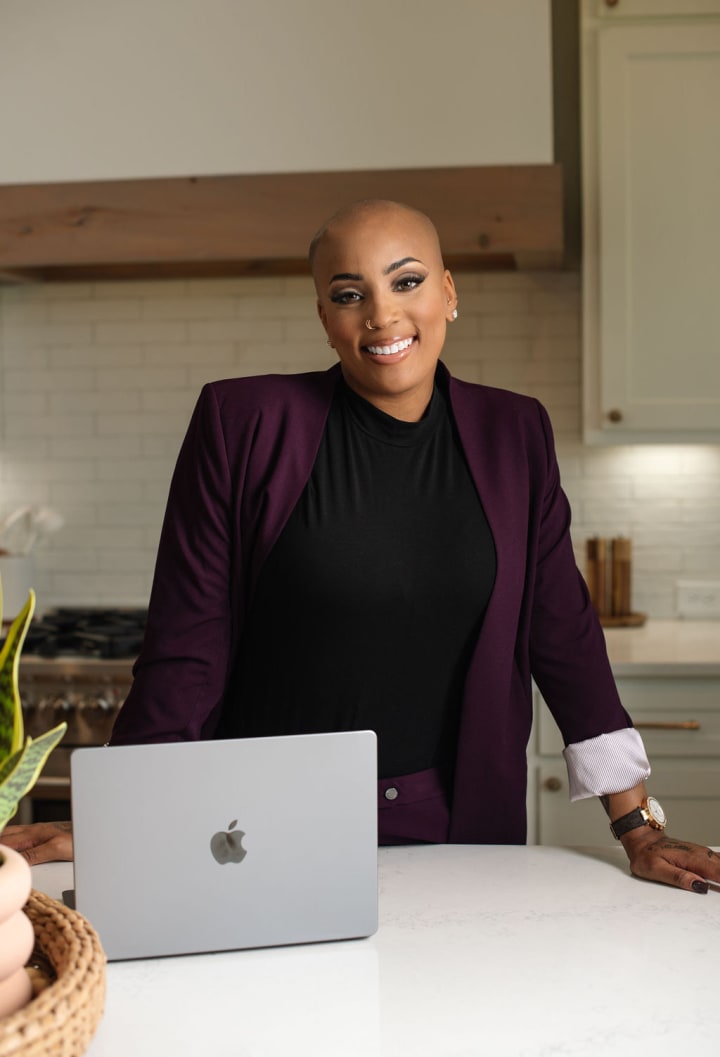
If someone were to ask you, "Who is NiaRenee?" what would your reply be?
I'd say NiaRenee is a woman who decided to stop surviving and start living. I'm a coach, an author, a disabled model, and an advocate - but above all, I'm someone who's fought to reclaim her voice, her body, and her truth after being silenced by years of abuse, gaslighting, and medical trauma. I created How to Love a Battered Woman not as a brand, but as a lifeline - for the woman I once was, and for every person who's been told their pain was "too much" or "not enough" to be real. Who am I? I'm living proof that you can rebuild from rubble and teach others how to rise while you're still healing yourself.
If pain had a language, what do you think yours would say - and who needs to hear it most?
My pain would speak in sharp truths wrapped in soft hands. It would say, "I never asked to be strong - I just had to survive." It would speak to the girl who kept quiet in hospital rooms, who second-guessed her own reality in the middle of a trauma bond, who screamed into pillows because she had no safe place to fall apart. It would speak to survivors of invisible wounds - the ones with chronic illness, with CPTSD, with panic attacks that show up at grocery stores and family gatherings. My pain has become my power. But I didn't get there by pretending it didn't hurt - I got there by honoring it, giving it space, and letting it teach me.
Many survivors don't "look" like victims - how has media misrepresented what survival actually looks like, and how do you combat that in your work?
Media often paints survivors as either helpless or heroic, with nothing in between. They don't show the days we freeze in the checkout line because someone raised their voice behind us. They don't show the woman leading a board meeting while her nervous system is fighting a flashback. Survival is messy, nuanced, and deeply individual. I combat the stereotypes by simply existing as I am - disabled, fashionable, vocal, healing out loud. I show that we don't owe anyone our silence to be palatable, and we don't have to bleed publicly to be believed.
What do you wish more doctors, employers, or even friends understood about the invisible battles people like you face every day?
That a clean scan doesn't mean I'm okay. That fatigue isn't laziness, and brain fog isn't forgetfulness - it's trauma layered with neurological complexity. I wish more people knew that "pushing through" isn't always strength; sometimes, it's survival on autopilot. That showing up doesn't mean we're not in pain - it means we didn't let it win that day. And that rest, softness, and accommodations aren't luxuries - they're lifelines.

You've created a space where trauma isn't taboo. How do you protect your own healing while remaining open and visible to the world?
Boundaries. Radical honesty. And choosing softness for myself first. I don't show up to perform strength - I show up to model wholeness, which includes vulnerability. I have a therapist. I have days where I log off, cry, reset. I let my audience see the process, not just the polished outcome. I also remind myself that I'm not here to save - I'm here to serve. And service requires that I remain grounded in my own healing, otherwise I'm just bleeding on the page and calling it a testimony.
In your workbook, you talk about "intentional dating." What does that look like for someone healing from relational trauma?
Intentional dating isn't about finding "the one" - it's about finding yourself first. It's about knowing your deal breakers, your red flags, your attachment patterns, and your non-negotiables. It means dating with clarity, not desperation. You stop asking, "Do they like me?" and start asking, "Do I feel safe with them? Do I like how I show up around them?" For someone healing, intentional dating is about reclaiming your standards and trusting your pace - no longer rushing intimacy to feel worthy of connection.
How can survivors learn to trust their intuition again - especially when it was manipulated or ignored in the past?
By realizing that your intuition never left you - you were just taught to silence it. Learning to trust it again starts with listening to the whispers before they become screams. I help survivors reconnect with those inner signals through nervous system regulation, boundary work, and reflective exercises. It's about replacing self-doubt with self-trust, and that takes time. But once you realize that your gut wasn't broken - it was overridden - you begin to honor your inner compass like the life-saving tool it is.
What else is on your heart to vocalize to our readers at this time?
You don't have to wait until you're fully healed to be worthy of love, success, softness, or rest. Healing is not linear and you're not behind. If you've survived narcissistic abuse, medical gaslighting, or deep betrayal, I want you to know: your pain is valid, your intuition is sacred, and your story is not over. You are allowed to rise gently. And if you don't know where to start - start by believing that who you were before the world told you to shrink still exists. I'll help you find her.
Connect online @howtoloveabatteredwoman
About the Creator
Tammy Reese
Tammy is best known for her legendary interviews with Sharon Stone, Angela Bassett, Sigourney Weaver, Geena Davis, Morris Chestnut, Jeffrey Dean Morgan, Sheryl Lee Ralph, Laurence Fishburne, Omar Epps, Joseph Sikora, and more.
Keep reading
More stories from Tammy Reese and writers in Interview and other communities.
From Scars to Safeguards: How Dr. Andrea A. Anthony Is Turning Pain into Protection for the Next Generation
If you were to meet Dr. Andrea A. Anthony outside of the titles Author, Speaker, and Advocate, you'd meet a woman whose laughter heals, whose late-night beach walks bring her peace, and whose conversations with God sound like soul-deep jazz.
By Tammy Reese8 months ago in Interview
How Enzo Zelocchi Is Building a Unique Path in Film Through Creativity, Business Insight, and Determination
The modern film industry is more dynamic and interconnected than ever before. With the rise of digital platforms, international collaborations, and independent productions, filmmakers today have new opportunities to shape their careers in unique ways. Among the emerging figures navigating this evolving landscape is Enzo Zelocchi, an Italian actor, filmmaker, and entrepreneur whose approach to cinema combines creativity with strategic thinking.
By Brian Smith3 days ago in Interview
The Story of Enzo Zelocchi and His Growing Presence in International Film, Media, and Entertainment
In the evolving world of global entertainment, new voices continue to emerge with fresh ideas and ambitious visions. Among these personalities is Enzo Zelocchi, an Italian-born actor, filmmaker, and entrepreneur who has steadily built a presence in the international film industry. Known for combining cinematic storytelling with business strategy and creative ambition, Zelocchi represents a modern type of creative professional—someone who moves between acting, production, and entrepreneurial projects.
By Brian Smith3 days ago in Interview
Why Didn't Anyone Tell Us
Men, move along. This is not for you. This is for the women. I was forty-five when I began menopause. It is pretty young for that to be going on in a woman’s life, but I had undiagnosed PCOS, my entire life. Thank you to all the gynecologists I had seen my entire life. That in itself should encourage women to keep seeking second opinions, especially when you are not getting correct answers or any at all.
By Alexandra Grant6 days ago in Humans


Comments