
“Keep Learning or Be Left Behind”: A Conversation with Jason Brown on Thriving in the AI Economy
In an era of relentless digital disruption, entrepreneur and educator Jason Brown believes the real superpower isn’t AI—it’s the human ability to adapt.

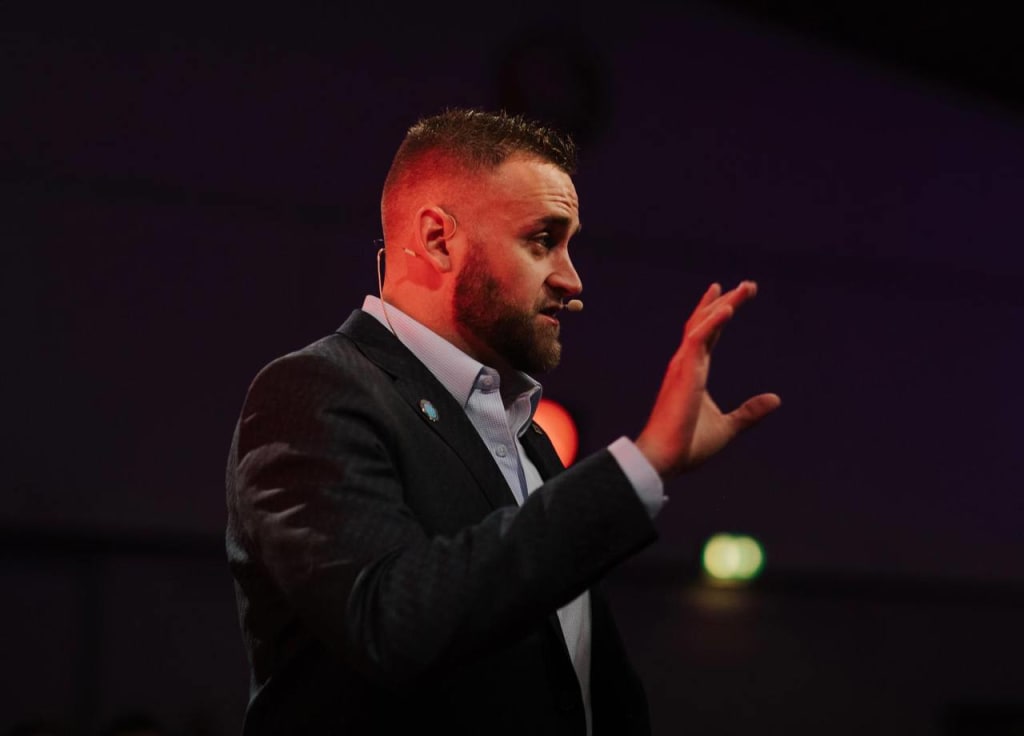
Jason, let’s start with the big picture. The world is changing fast—AI, automation, disappearing jobs. What’s your view on where we’re headed?
We’re not just experiencing change. We’re experiencing acceleration. And that acceleration is exposing a major divide—not between people who are tech-savvy and people who aren’t, but between those who know how to keep learning, and those who don’t.
The people who thrive in the next five to ten years won’t be the ones with the most credentials. They’ll be the ones who can relearn, adapt, and pivot—fast.
That’s a strong statement. What does it mean to "know how to keep learning"?
It means exactly that. We used to think learning was something you did before entering the workforce. School, college, maybe a training program. But now? Learning is the workforce. If you're not learning, you're falling behind.
The speed of change today means no one is ever “done.” The most important skill in this economy is your learning reflex—how quickly you can update your thinking, absorb new tools, and adapt to shifting conditions.
A lot of people feel overwhelmed by that idea. How do you coach someone who’s stuck or afraid of starting over?
First, I tell them they’re not behind. They’re just out of rhythm. Most of us were raised in a system that taught us to memorize, follow, and wait for instructions. But the future favors the opposite: creativity, initiative, and agility.
Second, I remind them that small, consistent action beats giant leaps. You don’t need to master AI in a week. You need to start asking better questions. Exploring. Testing. Learning something new for 30 minutes a day. That alone will change your trajectory.
Speaking of AI—what’s your take on the current conversation around artificial intelligence and job displacement?
I think the panic is misplaced. AI isn’t going to take everyone’s job. But someone who knows how to use AI probably will.
That’s the real shift. The tools themselves aren’t the threat. The threat is not knowing how to use them. That’s why I’m obsessed with helping people learn how to learn—not just the tools of today, but the mindset that allows them to keep evolving, no matter what tools come next.
What would you say to someone who doesn’t think of themselves as “tech-savvy”?
I’d say that’s the first mindset to change. You don’t need to be tech-savvy—you need to be people-savvy, growth-savvy. Technology can be learned. What's harder is being open, curious, and willing to be a beginner again.
Look, the tools are getting easier to use. What’s hard is changing your identity. Many people are stuck not because they can’t learn new things, but because they’re afraid of looking like a beginner in public.
But that’s the price of growth. You can’t skip that part.
Let’s talk about education. You’ve said before that “education, not technology, is what levels the playing field.” Can you elaborate?
Sure. Technology is neutral. It either amplifies your ability—or exposes your limitations. Education is what makes the difference.
And by education, I don’t mean a degree. I mean applied knowledge. The ability to take what you’re learning and use it to solve real problems, start projects, make better decisions.
If we want a future that’s inclusive and resilient, we have to give people access to relevant education—not just in the classroom, but on-demand, in their lives, wherever they are.
What kind of education do you think is most valuable right now?
Practical, interactive, and focused on the real economy. Things like:
- How to use AI tools for your business or personal productivity
- How to build an online income stream
- How to market your ideas digitally
- How to manage your money in a decentralized, fast-moving economy
But more than content, people need support. Community. Mentorship. Feedback. It’s not enough to watch videos—we need spaces where people can practice, ask questions, and grow together.
That makes sense. So, how do we start building that culture of continuous learning?
It starts at the individual level. You can’t wait for systems or institutions to change. You have to take ownership of your own growth.
That means shifting your identity—from someone who consumes to someone who creates. From someone who waits to someone who builds.
Start now. Pick something small. Commit to learning it. Apply it. Share what you’re learning with others. Repeat.
That’s the flywheel. That’s the future.
Last question: if you had to sum up your advice in one sentence for people trying to stay relevant in this fast-changing world, what would it be?
“Stay in motion.” That’s it.
Learning is motion. Reinvention is motion. Confidence comes from motion. The people who win are the ones who keep moving—especially when they don’t feel ready.
Final Note
In a world racing toward new frontiers, Jason Brown’s message is a necessary reminder: Adaptability is the new advantage. In a time when everything feels uncertain, the habit of learning just might be the most certain path forward. Read more here.
About the Creator
Keith Richardson
Keith Richardson is a writer based in Boston with a passion for uncovering and sharing the stories of people who inspire him. He aims to shine a light on individuals whose lives and actions have a positive impact on others.
Keep reading
More stories from Keith Richardson and writers in Interview and other communities.
Twenty-First Century Disability Podcast
Twenty-First Century Disability was created and is hosted by Hollis Peirce, a chronically physically disabled man with Congenital Muscular Dystrophy. Mr. Peirce, who is on a ventilator, can narrate his podcast using only his bottom lip. His voice is intelligible and intelligent.
By Frank Racioppi3 days ago in Interview
Why I Built an AI Therapist
I’ve been a waiter, a construction worker, a DJ, a kitchen hand, a porter, a caregiver, and a supermarket cashier. I’ve washed dishes in Australia and meditated in the Himalayas. I’ve battled addictions, eating disorders, anxiety, depression, and self-destructive behavior. Before I ever sat across from a client as a psychotherapist, I had already lived a dozen lives — and nearly destroyed myself in several of them.
By Laurentis Theofanus6 days ago in Interview
Top tipple tricks
Been thinking a lot about drinking, lately. Not least because of a recent episode of over-indulgence and the inevitable after effects. Some readers may recall the earlier articles I wrote about beating the booze. Here I set out an experiment in techniques for cutting down on my alcohol intake. The experiment was successful, the techniques worked, and I have armed myself with an arsenal of weapons in the war against the demon drink. I have yet to fire the first round however. It's all a question of timing (perhaps procrastination).
By Raymond G. Taylor6 days ago in Psyche



Comments
There are no comments for this story
Be the first to respond and start the conversation.