
Ghost Jobs: How to Identify Fake Job Listings and Avoid Wasting Time
Many job postings aren’t what they seem. Learn how to recognize ghost jobs and focus on real opportunities.
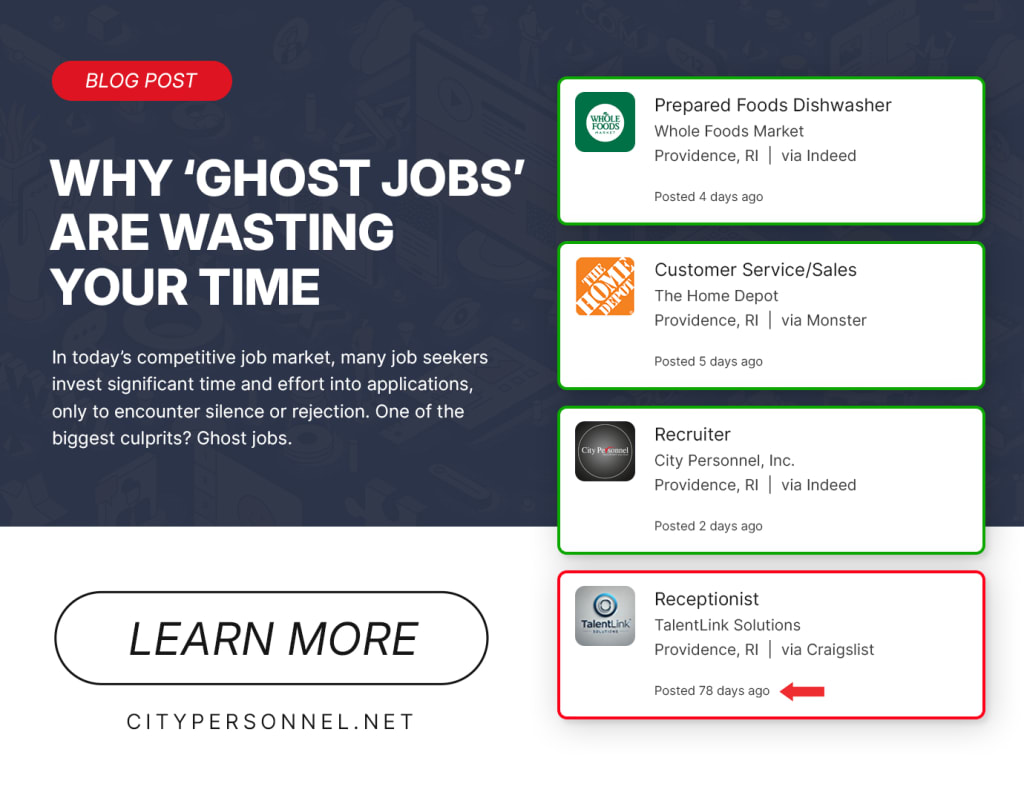
If you’ve ever applied to a job posting and never heard back, you’re not alone. In today’s job market, a significant number of job listings are what experts call ghost jobs—positions that companies post but have no real intention of filling. These deceptive listings can waste your time, cause frustration, and make your job search feel like an endless cycle of applications with no results. So, how can you spot ghost jobs and avoid falling into this trap? Let’s break it down.
What Are Ghost Jobs?
Ghost jobs are job postings that remain open even though the company has no immediate plans to hire. These listings can exist for a variety of reasons, including:
- Building a Candidate Pool: Some companies post jobs to gather resumes for future openings rather than for an active hiring need.
- Market Research: Employers may post a position to gauge interest and salary expectations in the industry.
- Employer Branding: Some businesses keep listings up to appear as if they’re growing, even if they’re not actively hiring.
- Internal Hires: Some job postings exist because companies are required to advertise roles externally, even though they already have an internal candidate in mind.
How to Spot a Ghost Job
While not all unresponsive job postings are ghost jobs, there are some key red flags to watch for:
The Job Posting Never Closes
If a position has been listed for months with no updates, it’s likely not a priority for the company.
The Company Keeps Reposting the Same Role
Some companies continuously refresh postings without hiring, making it clear they’re not actively filling the role.
Generic or Vague Job Descriptions
Listings with little detail, no specifics on job responsibilities, or unclear qualifications could be placeholders rather than genuine opportunities.
No Response or Feedback After Applying
If you never receive a follow-up or even an automated reply, the listing may not be real.
Multiple Openings for the Same Position
A company claiming to have dozens of openings for the same role without visible hiring activity can be a warning sign.
What You Can Do to Avoid Ghost Jobs
To ensure you’re applying to real, active job opportunities, take the following steps:
- Research the Company: Check employee reviews and hiring patterns on platforms like LinkedIn or Glassdoor.
- Follow Up on Applications: If a company is genuinely hiring, they should acknowledge applications or provide updates.
- Check the Job Posting Date: Avoid jobs that have been posted for an unusually long period without changes.
- Network with Current Employees: Reach out to people within the company to see if they’re actually hiring for that position.
- Diversify Your Job Search: Rely on multiple sources, such as recruiters, job fairs, and networking events, rather than just online listings.
The Impact of Ghost Jobs on Job Seekers
Beyond just being a source of frustration, ghost jobs can take a serious toll on job seekers. Spending hours tailoring a resume, writing a compelling cover letter, and submitting applications—only to never hear back—can be demoralizing. Over time, repeated encounters with ghost jobs can lead to job search fatigue, making candidates feel disheartened and less motivated to continue applying. This phenomenon can also create a false perception of job market demand, leading applicants to believe there are more opportunities available than there really are.
In addition to the emotional toll, ghost jobs can waste valuable time that could be better spent on real opportunities. When job seekers apply to roles that don’t truly exist, they lose time they could have used networking, refining their skills, or engaging with companies that are actively hiring. Moreover, ghost jobs can also create unrealistic competition—if a listing attracts hundreds of applicants, only for the position to never be filled, many job seekers are left feeling like they’re not competitive enough in the job market, even though the job itself was never a real opportunity.
To combat the negative impact of ghost jobs, job seekers should focus on strategic job searching rather than mass-applying to listings. Prioritizing networking, leveraging referrals, and targeting companies with a transparent hiring process can significantly improve the chances of landing a real opportunity. By staying informed and recognizing the warning signs of ghost jobs, job seekers can take control of their job search and focus their energy where it truly matters.
Final Thoughts
Ghost jobs can be frustrating, but with the right strategies, you can avoid wasting your time on job listings that aren’t real. Staying proactive, researching employers, and applying selectively will help you land genuine opportunities faster.
Want to learn more about spotting ghost jobs and how to refine your job search? Check out our in-depth guide here: How to Spot Ghost Jobs.
About the Creator
Keep reading
More stories from Zachary Gagnon and writers in Interview and other communities.
The Job Seeker’s Guide to Avoiding Bad References
Job hunting is already a stressful process—perfecting your resume, preparing for interviews, and negotiating salaries. But one often-overlooked part of the hiring process is choosing the right job references. A strong reference can confirm your skills, work ethic, and potential. But a weak or ill-chosen reference can ruin your chances of landing your dream job.
By Zachary Gagnonabout a year ago in Interview
Twenty-First Century Disability Podcast
Twenty-First Century Disability was created and is hosted by Hollis Peirce, a chronically physically disabled man with Congenital Muscular Dystrophy. Mr. Peirce, who is on a ventilator, can narrate his podcast using only his bottom lip. His voice is intelligible and intelligent.
By Frank Racioppi4 days ago in Interview
Why I Built an AI Therapist
I’ve been a waiter, a construction worker, a DJ, a kitchen hand, a porter, a caregiver, and a supermarket cashier. I’ve washed dishes in Australia and meditated in the Himalayas. I’ve battled addictions, eating disorders, anxiety, depression, and self-destructive behavior. Before I ever sat across from a client as a psychotherapist, I had already lived a dozen lives — and nearly destroyed myself in several of them.
By Laurentis Theofanus7 days ago in Interview
Hottest in the Office
Dear Rafi, You’re very distracting to work around. For the first second I saw you the other day, I thought you were some type of executive. It took a moment to realize no, you were just the new guy, dressed up for the job he wants. Be still, my heart.
By Gabriel Shames5 days ago in Pride




Comments
There are no comments for this story
Be the first to respond and start the conversation.