
George Dfouni's 2026 Travel Predictions
Check-In to future

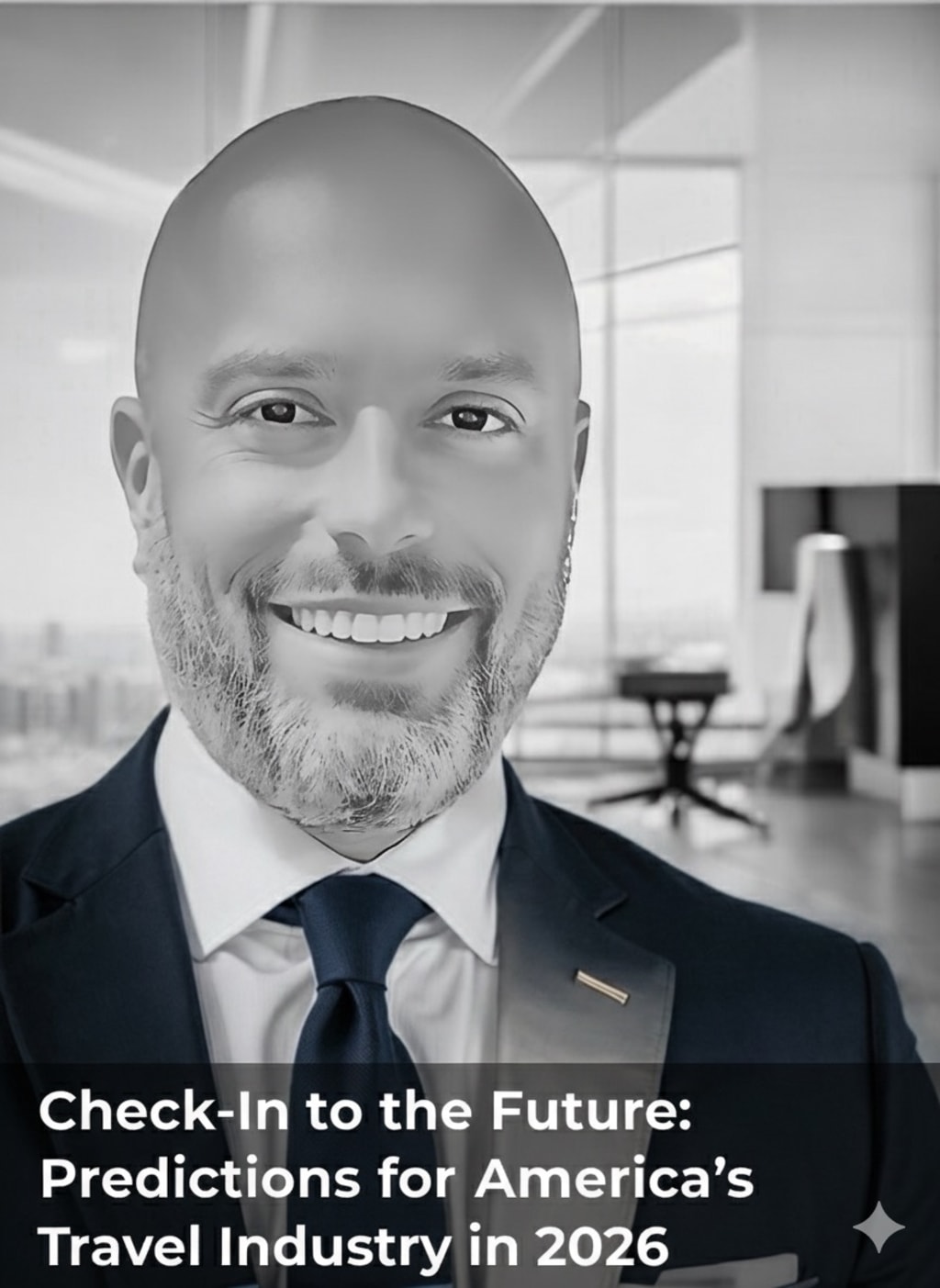
If 2024 and 2025 were about finding our footing again, 2026 will be the year the U.S. hospitality and travel industry decides what it wants to be next. The pandemic shock is no longer the reference point; the reference point is consumer expectation—faster, cleaner, kinder, more personal—and the operators and destinations that deliver on that expectation will win share, even if overall growth moderates. Nice! The industry finally gets to play offense.
First, the demand picture. Leisure won’t disappear—it never does after a generational reset—but it will get choosier. The “revenge travel” frenzy has cooled into a more rational, value-seeking traveler who still wants special but won’t pay silly. That means fewer impulse weekend splurges and more purpose-driven trips: family milestones, wellness escapes, sports and entertainment pilgrimages, and “micro-sabbaticals” that combine rest with a skill or passion. Meanwhile, corporate travel continues its slow rehabilitation—not back to 2019 in volume, but higher in yield as trips concentrate around revenue, clients, and events. The real engine in 2026 is groups and meetings. Teams crave in-person cohesion after years of hybrid ambiguity; off-sites, sales kickoffs, and association conferences come back with better design and more experiential venues. Hotels that lean into flexible meeting spaces, outdoor breakouts, and turnkey production support will feast.
On supply: don’t expect a flood of new keys. Financing remains tight enough that ground-up development is selective and slow. That’s a quiet gift to existing owners: constrained supply supports rate. We’ll see a lot more conversions—offices to hotels in urban cores, brands “remixing” older assets with soft-collection flags, and independent properties finding a distribution home without losing character. Select-service continues to expand along corridors where labor is thin, and construction costs are unforgiving. Luxury holds, but it earns its premium with design and programming, not just marble and logo.
Rates and revenue? The era of straightforward ADR hikes is waning. In 2026, revenue teams will have to work for it—optimizing mix, leveraging length-of-stay fences, and packaging real value (spa credits, dining experiences, late checkout that actually feels generous). Ancillaries matter more, but nickel-and-diming dies a deserved death. Expect fee transparency—resort, destination, “facility”—to become table stakes, whether compelled by regulation or competitive pressure. When you are honest, guests reward you with longer stays and better reviews. Wild concept, right?
Labor remains the industry’s existential constraint. Wages have structurally reset, and they’re not coming back down. The winners in 2026 treat this as a design challenge rather than a line-item problem. Smarter schedules. Purpose-built training. Career ladders that are actually ladders, not buzzwords. And yes, technology—not to replace hospitality, but to give it room to breathe. Think “front-of-front-desk” tools: pre-arrival ID verification, mobile keys that actually work, messaging that routes to the right human, and AI copilots helping agents resolve complex issues faster. Housekeeping will keep moving toward opt-in service, but the pendulum shouldn’t swing so far that the room feels unloved. A crisp, consistent “service promise” will beat vague sustainability placards every time.
Speaking of sustainability, 2026 is when it stops being a marketing paragraph and becomes a procurement strategy. Electricity contracts, heat pumps, induction kitchens, smart irrigation, linen lifecycle—boring, yes, but they move the P&L. Owners who invest in energy intelligence tools will see real payback, and brands that certify credible progress (not just plant-a-tree offsets) will attract both guests and corporate RFPs. Water stewardship becomes the hot topic in sunbelt destinations; the smartest resorts will turn it into an educational, guest-facing experience without sounding preachy.
Short-term rentals? Still part of the ecosystem, but the gold rush is over. More cities tighten rules, and guests rediscover the comfort of predictability—especially for short stays and group travel that needs services. Hotels that borrow the best of home-sharing (kitchenettes, multi-bedroom suites, communal lounges) while keeping professional standards will grab that “friends and families” segment. Extended-stay will be a quiet star again, riding the wave of project-based work, relocating professionals, and longer leisure.
Brand strategy will keep fragmenting into micro-niches—adventurous lifestyle, mindful luxury, budget-with-taste—but distribution power will consolidate. Loyalty programs become broader ecosystems, more “membership” than “points,” with benefits that spill into dining, entertainment, and mobility. The risk is devaluation fatigue. If guests feel the goalposts keep moving, they disengage. The counter is radical clarity: clear earn-and-burn tables, fewer blackout games, more on-property recognition that feels human (a real welcome amenity beats a mysterious points drip).
Destinations will be reshuffled by infrastructure and narrative. Big winners: cities that tightened safety, cleaned up their cores, and invested in festivals and sports (those calendars are demand magnets). Secondary markets with airlift gains and new arenas will punch above their weight. National parks and iconic nature spaces face over-tourism stress; expect reservation systems, timed entries, and premium guided experiences that channel demand without killing the magic. Smart DMOs will champion shoulder-season storytelling and spread visitors into lesser-known neighborhoods.
Design-wise, 2026 guests want spaces that support three modes in one day: focus, socialize, restore. Rooms with dignified work zones (good chairs! real light!) and living areas that don’t feel like a compromise. Public spaces that flex from coffee-and-laptops at 9am to vinyl-and-negronis at 9pm. F&B will either be simple and excellent—or distinctive and local. The mushy middle loses.
What could derail this? A hard economic shock would pinch discretionary travel and corporate budgets; so, would major airfare spikes from capacity constraints. On the upside, a productivity lift from AI across the broader economy could buoy corporate events and high-end leisure. The industry cannot control macro swings, but it can control readiness: balance sheets that aren’t stretched, cost structures that are nimble, and teams that are trained to pivot.
So here’s the playbook for 2026 in one breath: protect rate with honest value, not hidden fees; court groups and meetings with flexible, tech-forward experiences; fix labor by investing in people and the tools that help them shine; convert and reposition assets rather than overbuild; make sustainability a cost-savvy habit, not a press release; keep loyalty human; and design for the way people actually live now—blurring work, play, and wellbeing. Do that, and 2026 won’t just be “better than last year.” It’ll be the year your property becomes the place travelers plan around, not just a place they sleep.
#georgedfouni, #georgedfounihotelier #hotels
About the Creator
George Dfouni
George Dfouni brings over 35 years of hospitality experience. He is currently the CEO of Independent Hospitality, a Hotel Management and Consulting Firm based in NYC
Keep reading
More stories from George Dfouni and writers in Interview and other communities.
Travel decisions are influenced by the headlines of the USA’s foreign policy.
America’s hotels don’t operate in isolation. They are, in many ways, the country’s front desk the first human interaction visitors have with the United States. And right now, the way America positions itself toward the rest of the world is being felt not in speeches or press briefings, but in occupancy reports, staffing schedules, conference bookings, and the mood of international travelers arriving at U.S. airports.
By George Dfouniabout a month ago in Interview
Part 2 Interview With Joe Patterson, Author Of Melanin Memoirs
This is my second interview with Joe Patterson. His 4th anniversary writing on Vocal will be in March 2026. He has one achievement on Vocal, The Other Foot. He has over 17,000 reads on Vocal since he started on Vocal in 2022. Joe Patterson is very creative poet and rapper. Joe is deep thinker and I feel it is reflected in his latest published book, Melanin Memoirs.
By Mariann Carroll18 days ago in Interview



Comments
There are no comments for this story
Be the first to respond and start the conversation.