
Frank Awino Questions Competence of MPs Amid Controversial Remarks by Gender Cabinet Secretary Nominee
Challenges Within Kenya's Political Landscape Regarding Gender Representation and Legislative Accountability.
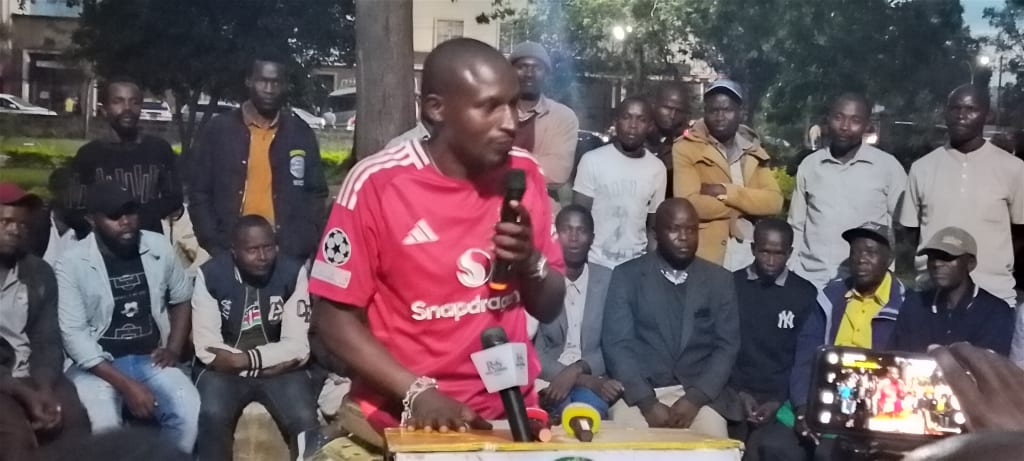
On Thursday, April 17, 2025, Frank Awino, the spokesman for the Bunge la Mwananchi social justice movement, held a press conference at Jivanjee Gardens in Nairobi, Kenya. The event was convened to address the recent controversial remarks made by Hanna Cheptumo, the nominee for Gender Cabinet Secretary. Cheptumo's comments regarding the rising incidents of violence against female university students have ignited a fierce debate about gender issues and the responsibilities of public officials.
Context of the Controversy
Hanna Cheptumo suggested that some female university students who have tragically fallen victim to murder in short-stay apartments are partly to blame for their circumstances because they are "chasing after money." This statement has been met with widespread criticism from various sectors of society, including women's rights advocates and political commentators. Critics argue that such remarks not only shift blame onto victims but also fail to address the systemic issues contributing to violence against women.
In light of these comments, Frank Awino expressed deep concern over the competence of Members of Parliament (MPs) tasked with vetting nominees like Cheptumo. He questioned whether these legislators possess the necessary skills and understanding to evaluate candidates effectively, particularly when it comes to sensitive issues such as gender-based violence and women's rights.
Awino's Critique of Parliamentary Vetting
During his address at Jivanjee Gardens, Awino articulated his belief that many MPs lack a comprehensive understanding of gender issues and the societal dynamics that lead to violence against women. He emphasized that effective governance requires not only political acumen but also empathy and awareness of social justice issues. "How can we trust our leaders to protect vulnerable populations when they themselves do not understand the complexities surrounding gender-based violence?" he asked.
Awino pointed out that this lack of competence is evident in how MPs respond to nominees like Cheptumo. He argued that instead of holding candidates accountable for their statements and policies regarding women's safety, many legislators seem more concerned with party loyalty or political expediency. This approach undermines the very purpose of parliamentary vetting—a process designed to ensure that those appointed to high office are qualified and capable of addressing critical societal challenges.
The Broader Implications
The implications of Cheptumo's comments extend beyond her nomination; they reflect broader societal attitudes towards women and violence in Kenya. Awino highlighted that blaming victims for their circumstances perpetuates harmful stereotypes and distracts from addressing root causes such as poverty, lack of education, and inadequate law enforcement responses to gender-based violence.
Furthermore, he called on civil society organizations and citizens alike to hold their representatives accountable. "We must demand better from our leaders," he stated emphatically. "It is not enough for them to simply occupy seats in Parliament; they must be champions for justice and equality."
Public Reaction
The public reaction to both Cheptumo's remarks and Awino's critique has been significant. Social media platforms have erupted with discussions about victim-blaming narratives and the role of government officials in shaping public discourse on gender issues. Many activists have rallied behind Awino’s call for greater accountability among MPs, urging constituents to engage more actively in political processes.
Women’s rights organizations have also condemned Cheptumo’s comments as dangerous rhetoric that could further endanger vulnerable populations. They argue that instead of placing blame on victims, there should be a concerted effort towards creating safer environments for women through education, community engagement, and robust legal protections.
Conclusion
As discussions continue around Hanna Cheptumo's nomination as Gender Cabinet Secretary, Frank Awino's concerns about parliamentary competence resonate deeply within Kenyan society. His call for accountability among MPs highlights an urgent need for informed leadership capable of addressing complex social issues with sensitivity and understanding. The outcome of this situation may well set a precedent for how gender-related matters are handled at the highest levels of government in Kenya moving forward.
About the Creator
Keep reading
More stories from Emmanuel Busera and writers in Interview and other communities.
Raising Awareness: The Silent Crisis of Dementia in Kenya
By Emmanuel Busera-Mohammed In recent years, Kenya has seen a demographic shift. With life expectancy increasing and the population of older adults rising, the country is confronting an inevitable truth: cognitive decline is no longer a far-off concern but a pressing reality for many families. The World Health Organization estimates that globally, around 50 million people live with dementia, and this number is projected to rise to 152 million by 2050. In Kenya, the statistics are just as alarming, with a growing number of elderly individuals experiencing memory loss and cognitive impairment. However, the societal response to this burgeoning issue has been slow and inadequate.
By Emmanuel Busera10 months ago in Education
Center Stage with Paul Stewart
*** I'm keen to republish the interviews I did for my series with Vocal creators. It's been a few years and I thought it might be nice to revisit these wonderful conversations. I'll be releasing them one at a time for a few weeks/months.
By Heather Hubler4 days ago in Interview
A Story of Taylor Swift
On a quiet Christmas morning in Reading, Pennsylvania, a young girl sat on the edge of her bed holding a guitar that was nearly as big as she was. Her fingers pressed carefully against the strings as she tried to match the melodies she heard in her head. Her name was Taylor Swift, and even at that young age, she understood something important: music was not just sound—it was a way to tell the truth. Long before stadium lights and chart-topping records, Taylor was learning how to turn feelings into stories.
By Organic Products 3 days ago in Interview



Comments
There are no comments for this story
Be the first to respond and start the conversation.