
Four Ways Trump Could Evade Consequences.
Exploring Potential Paths to Legal Freedom.


Donald Trump exited a Miami courtroom after entering a not-guilty plea on Tuesday, entering a daunting web of legal jeopardy. The former president, accused of unlawfully possessing, showcasing, and lying about classified documents, now confronts the ominous possibility of spending the remaining years of his life behind bars at the age of 77. He currently faces 37 federal charges. Analysts have outlined four potential paths that could lead Trump out of this legal predicament.
Firstly employ delay tactics, pushing the case beyond 2024 and the U.S. presidential election, in the hope that either Trump himself or an ally assumes control of the Justice Department on January 20, 2025. Cheryl Bader, a law professor at Fordham University, summed up this strategy as "delay, delay, delay" in an interview with CBC News. If a Republican president were to take office, they could potentially overturn the case through a pardon. Alternatively, Trump may attempt the unprecedented and untested act of pardoning himself if he decides to run for and win the presidency.
The case is expected to be a focal point of the upcoming election cycle, both during the Republican primaries and the general election if Trump becomes the nominee. A slim chance Republican candidate named Vivek Ramaswamy made a promise outside the courthouse, asserting that he would grant Trump a pardon on his first day as president if elected.
Prosecutors express a desire for a swift trial, and holding it in Florida could expedite proceedings. Criminal cases in South Florida typically last around nine months, which is half the duration of cases in Washington, D.C. However, the timeline remains uncertain. Richard Gregorie, a former Miami prosecutor and assistant U.S. attorney, noted that if the parties involved wish to extend the trial beyond the early primaries and into the November general election season, they have the ability to do so. The duration of the trial will depend on the number of motions filed and the amount of contention over evidence. Gregorie cautioned that this process could potentially be protracted.
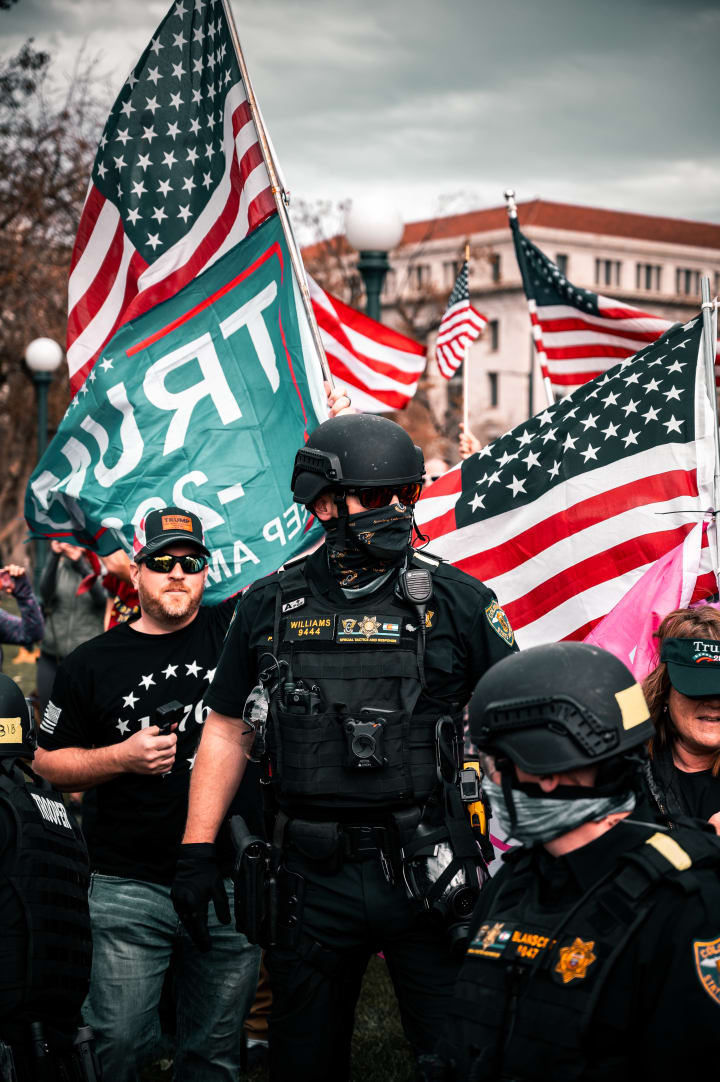
Secondly challenge the evidence
The case against Trump appears to be quite damaging, with one notable piece of evidence being a detailed transcript of a recorded conversation where Trump allegedly incriminates himself. However, it is crucial to remember that the presumption of innocence is a fundamental principle of the U.S. legal system. Trump will exercise his right to challenge the evidence on various grounds.
One avenue he may pursue is arguing for the exclusion of certain evidence. For instance, he could contend that notes from his lawyer should be deemed inadmissible. These notes were obtained by authorities after convincing a court that there was evidence of Trump's involvement in criminal activities.
Trump may also attempt to have the case dismissed by alleging prosecutorial misconduct. His remarks, as well as statements from members of his legal team, indicate that they will make this argument. They have been referencing reports that a lawyer representing Trump's personal valet, who is also facing charges, claimed to have been threatened by the Justice Department. According to Trump's lawyers, the valet's lawyer was allegedly told that he would lose a judgeship nomination unless he persuaded his client to turn against Trump and become a witness for the prosecution. Trump lawyer James Trusty, who has since quit the case but continues to defend Trump in media interviews, accused the government of extortion.
In addition to procedural battles, Trump's legal team will also challenge the substance of the case. His allies have hinted at a broad defense strategy, suggesting that the president possesses unlimited power to declassify documents. They argue that once Trump took these documents from the White House, they ceased to be classified due to his boundless authority. Trump's supporters have cited a 1988 Supreme Court case involving the Navy and a 2012 case involving Bill Clinton, where a right-wing group sued for access to Clinton's audio recordings.
However, many legal observers dismiss these arguments as sheer nonsense. Trump's former Attorney General, William Barr, described his defense strategy as "facially ridiculous" in an interview with Fox News. Critics of Trump argue that there is no valid comparison between his alleged actions of hoarding and lying about top-secret documents and the behavior of others in previous cases.
A former official from the Obama era ridiculed Trump's defense strategy in a CNN article titled "I Wrote The Declassification Rules, And They Leave Trump Largely Defenseless." Lawrence Douglas, a law professor at Amherst College, stated that these arguments are unlikely to be successful.
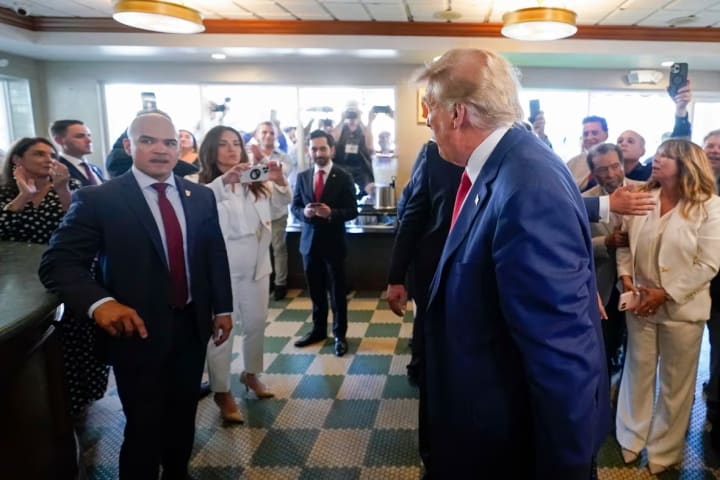
Thirdly rely on favorable rulings from the judge overseeing the case.
The current judge presiding over the case was appointed by Trump and is affiliated with the conservative Federalist Society. In a previous decision, she ruled in favor of Trump when he attempted to slow down the investigation. However, her pro-Trump ruling was strongly criticized by another conservative-leaning court, which viewed it as a significant departure from constitutional principles and contrary to established law.
Judge Aileen Cannon, who has significant power in this case, was appointed by Trump in 2020. She has a diverse background, having worked as a newspaper writer for the Spanish-language Miami Herald, a defense attorney, and a prosecutor. A judge's influence manifests in various ways.
The judge has the authority to determine which evidence the jurors will hear, including the admissibility of Trump's lawyer's notes in court.
She can dismiss certain jurors from the trial.
If the jury faces difficulties reaching a verdict, she can declare a mistrial instead of compelling the jurors to continue deliberating.
There is also an infrequently used power move available to judges: the ability to effectively end the trial and acquit the accused. This action, known as a Rule 29 motion of acquittal under the Federal Rules of Criminal Procedure, allows a judge to dismiss a case due to insufficient evidence at different stages of the trial. In such a scenario, the government would not have the automatic right to appeal. The timing of the judge's ruling in relation to the jury's verdict is crucial.
If the judge grants a Rule 29 motion before the jury reaches a verdict, there is a possibility, as described by law professor Orin Kerr from the University of California, Berkeley, in a colorful tweet, that Trump could be set free with just a few words from the judge: "You are the greatest president in history, and I hope you are re-elected. Rule 29 motion granted." In other words, the judge could bypass the jury and acquit Trump directly.
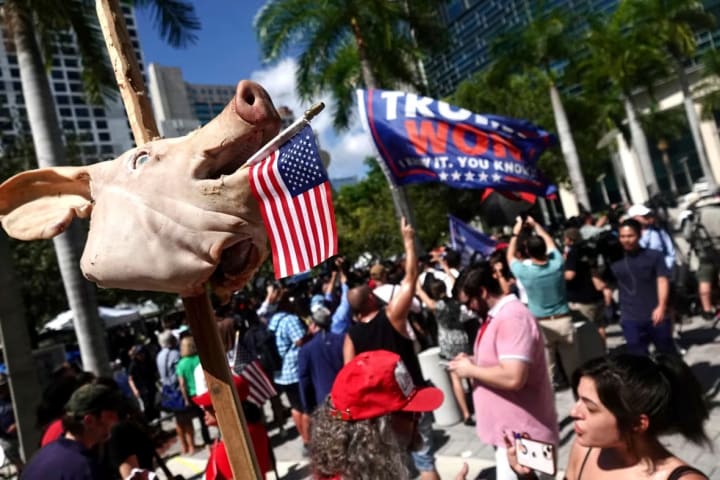
Lastly the jury
When it comes to jury deliberations, the math works against the federal government in this case.
Unlike Trump, prosecutors need a unanimous decision from all 12 jurors to secure a conviction. However, Trump only needs one holdout juror to create a deadlock and potentially result in a mistrial. This situation gives significant power to a single juror who staunchly supports Trump and believes the entire case is a witch hunt. As Lawrence Douglas, the Amherst College law professor, explains, finding impartial jurors for such a high-profile figure with strong public opinions can be challenging.
It's worth noting that the trial is taking place in a politically divided region. In the 2020 election, Trump received nearly half of the votes in Palm Beach County, which contrasts sharply with his mere 5 percent in another potential trial location, Washington, D.C. This political divide further adds complexity to the jury selection process.
Regardless of the outcome of this particular case, Trump is facing legal challenges on multiple fronts. He also faces charges in New York, and there is a potential case in Georgia. On the same day that Trump appeared in a Florida court, a grand jury in Washington, D.C., was investigating his actions leading up to the January 6 attack on the U.S. Capitol.
In the end, the fate of Donald Trump, whether he spends his remaining years in prison or emerges as a free man, seeking to reclaim his former position as the leader of the free world, will be shaped by the decisions of 12 jurors, one judge, and a few lawyers in this high-stakes trial.
About the Creator
Makia son
Effortlessly transforms mundane topics into captivating narratives that keep readers hooked from start to finish.
Part 2 Interview With Joe Patterson, Author Of Melanin Memoirs
This is my second interview with Joe Patterson. His 4th anniversary writing on Vocal will be in March 2026. He has one achievement on Vocal, The Other Foot. He has over 17,000 reads on Vocal since he started on Vocal in 2022. Joe Patterson is very creative poet and rapper. Joe is deep thinker and I feel it is reflected in his latest published book, Melanin Memoirs.
By Mariann Carroll22 days ago in Interview




Comments
There are no comments for this story
Be the first to respond and start the conversation.