
Forrie Smith Interview
A Wrangler's Path From Montana City to 'Yellowstone'

By Brian D’Ambrosio
At age 6, Forrie Smith tumbled from a horse in front of his mother and stepfather. The horse, named Bad Daddy, was a gift from the family doctor, and the boy had just reached the point where he had felt comfortable riding him around. The tumble took place inside of an arena, when the seemingly obedient little horse got too frisky. Smith’s first impulse was to leap rather than endure further bouncing. His parents winced as the youngster crashed forcefully to the hard earth.
Unbowed, Smith defiantly wiped the dirt off of his clothes and the dust from his chin, laughed wildly, and, after his parents demanded an explanation as to why the ride had gone out of kilter, he responded that all was okay, since someday he was going to be a stunt man, someone who would earn money colliding with and falling from things.
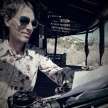
The 63-year-old actor, who portrays the gruffly masculine Lloyd Pierce in Taylor Sheridan’s crazily popular “Yellowstone” TV series, has performed a number of stunts and tricks since then, but perhaps none of them as triumphant as landing the custom tailored part that has made him very recognizable. In truth, he turned into Lloyd without even having to employ any outrageous exploits or gutsy feats; as the oxymoron goes, he earned the opportunity by acting naturally.
“Taylor Sheridan told me that he didn’t know that I could act,” said Smith. “He met me on the set of ‘Hell or High Water’ as a wrangler. He said, I’m writing a Western, and you have a part in it. Sure enough, he gave me the part. With my look and my raspy voice, he just kind of asked me.”
Montana City sculpted personality
For fans wanting to learn more about Smith’s life trajectory, his roots are distinctly Western and Montanan. He said that his biological father was a stranger and that he was raised by his mother and maternal grandparents in a rural area south of Helena, where he spent untold hours contributing labor to the family cow-calf operation.
“My grandfather was the self-proclaimed mayor of Montana City,” said Smith. “When I started grade school, there was 13 kids in eight grades … Back then, they put up the fifth through eighth in one room and first through fourth in the old room. The first year I was there they didn't have indoor plumbing, until I was in the second grade.”
His grandfather was a rodeo performer who instilled in him the understanding of what separated a promising horse from an incorrigible one, how you could misread a horse’s intentions, and in so doing, sabotage your own position.
“Back in those days they had a lot of match races,” said Smith. “He roped calves and rode bucking horses and, a lot of it was match based, and he told me he didn't win no money, but his horses did. Guys would borrow his horses and then they’d pay a percentage of the horse to the owner of the horse when you’d win money.”
Smith said that he started riding bareback horses at about age 11, after his Uncle Al bought a pony called Apache. But he didn't experience a fully trained ride in a professional setting until he was 14 years old, at the Butte Junior Rodeo, where he won his first belt buckle.
“We would put Apache on a lunge line and buck him around and me and my cousin Harry would get on him. Unlike these kids today, I was groomed for it. We had a bucking barrel and I got on my saddle horses and rode them around. I knew what I was doing when I went to a rodeo. I had a good plan and a goal set. My granddad had a practice pen and practice cattle and I had good hands around me growing up. So I had a pretty good start at it.”
Scrappy times of youth
When Smith was in the fifth grade, he traveled to Arizona with his mother and stepfather for extended gaps of time. It was 1968, the same year that he broke his jaw at a rodeo in Helena. Arizona would serve as the base of the family’s rodeo employment — his mother’s niche was training barrel horses — and from there, the three of them would head to events that allowed him to visit such far-flung places as the Space Needle in Washington and the stockyards in Omaha, Nebraska, and explore as far north as Calgary.
In order to tag along, Smith obtained excused absences from school, sometimes stretching weeks at a time, which made him a source of envy and an outsider among the kids at Montana City, since some of them hadn’t even been to nearby Helena yet.
“Academically, I came back way ahead of the rest of the kids at the country school there,” said Smith. “I felt that I would learn more, broaden my horizons, going places as long as I kept up on my schoolwork. So I did a lot of schoolwork in the back of the station wagon, on the way to the rodeos with my mother.”
Smith said that he had a hard time adjusting to junior high school and high school in Helena, only a few miles north of Montana City, a transfer decision that was made by his mother.
“Thank God my mom didn't want me being a big fish in a little pond,” said Smith. "I went from a little country school and I knew nobody…I’d fight with someone and we became good friends afterwards. That's what seems to happen in Montana: you fight a guy and become friends later. My friend Dewey, we first fought in junior high, four inches of snow, and he had boots on, and I got by him pretty good. My best friend, Stevie, we've been friends from diapers. We rode in the Helena Last Chance Stampede Parade at 5 years old and had the same babysitters and we fought all the time. But we always loved each other. We love each other to this day. Fighting just kind of kept the air clear, you know, between us.”
Jumps into the movie business
After graduating from Helena Capital High School in 1978, Smith attended Montana State University on a rodeo scholarship. He tried his hand at a few odd jobs, including a bouncer at a bar, in the Helena and Butte areas, then left Montana in 1980.
At age 27, he was living in Arizona, leading the life of a wrangler, a colt rider, and a rodeo regular. He earned a living spurring bucking horses, winning paydays at events across North America.
Hollywood hadn’t crossed his mind until a friend from Belgrade stopped by his mother's house in Arizona and loquaciously rattled on about some of his friends who were finding steady employment working in films. The topic appealed to the inner 6-year-old in Smith, reminding him that his earliest wish in life was to spring, leap, and soar as a TV stunt man.
Soon thereafter, Smith auditioned for and received a part in the Western film “Desperado,” as Harley, a traditional sidekick. The job required him to be able to convincingly rope a guy off of a roof and believably deliver a small bit of dialogue. He then worked as a stunt man on the made-for-television remake of the classic 1939 film “Stagecoach,” his first deed carried out on his own horse — he insisted that, as a cowboy, he would handle his own wrangling and saddle his own animal — one of the few remaining horses that the Smith family engineered the breeding on.
After “Stagecoach,” he was hired to work on the Western comedy “Three Amigos,” employed for three days as an extra. Unable to use his own horse this time, he was provided with an obstinate substitute that no other member of the production team could tame or figure out. Luckily, Smith got along with the difficult animal just fine, and wrangler Kip Wolverton even handed him a small tip for all of the good training that he had put on his horse. It would have cost Wolverton much more than that to pay for such specialized teaching elsewhere, he told Smith.
Becoming Lloyd Pierce
When Smith auditioned for the role of grizzled, loyal ranch hand Lloyd Pierce in the TV show “Yellowstone,” he knew that he was trying out to become a part of something special. The titanic success of the program, now in its fifth season, has surprised even him. He did not envision that it would become such a mainstream commercial symbol or social reference point.
“After I did the screen test…looking at this taping, I said, ‘man, this going to be good.’ Taylor Sheridan said to me, ‘you are on it as long as I have anything to do with ‘Yellowstone.’ ”
Laconic, intensely direct, the hoarsely rendered portrayal of the modern cowboy, Smith’s on-screen persona at times outshines the rest of the ensemble with slight facial nuances or cutting, succinct utterances. Indeed, humanizing Lloyd has always been Forrie’s strength, a self-expression achieving emotional resonance deeper and beyond the standard or even scripted plan.
“When I come on set, I always bring something of my own,” said Smith. “I try to do that with every scene that I’m in.”
Smith learned an inestimable amount about acting from Lawrence Parks (1914-1975), a workhorse of an actor who over a long career played everything from bit parts to supporting roles to top billing.
“Lawrence moved from Hollywood to Albuquerque to set up acting studio classes and I signed up. I had to audition. He wouldn't just take anybody right off of the street. Patrick Duffy, from “Dallas,” he’s from Boulder, right down the road from Montana City, and he coached him, too.”
One of the things that Smith learned from Parks was how to reach deep inside and find the complexities of your own nature and project them, and also how to draw out the authenticity of such inner complexities on demand, when it counts the most, in front of the camera.
“It's kind of scary, the things you bring up out of yourself,” said Smith. “Forrie can't get away with what Lloyd can. There’s stubborn similarities and stuff between us, for certain. I have to remind people and even myself at times that it’s fiction. But I am still a real cowboy on a ranch (in New Mexico) ... When I found out that I had the part on ‘Yellowstone,’ and found out about the actors that I was going to be on screen with, I got all those old notes from Parks’ acting class and went over them again.”
Smith said that the television and film industry bears a couple of distinct parallels to the rodeo circuit, which he finally retired from at age 52.
“There is a lot hurry up and wait,” said Smith. “I’d drive 100 miles an hour to get to the rodeo and then sit and wait. In Hollywood, they’d rather have you waiting on them, then them waiting on you.”
Smith said that the driving objective in his depiction of Lloyd is to be able to deliver a strong presence, nothing tricky or fraught, but the mechanisms of a striking, idiosyncratic stranger, who is not too easy to read, not too amusing, not too sappy, not too frosty, and not too aloof. And there is little doubt that when Smith draws upon the experiences of the past in order to impart a future effect on the sensibilities of Lloyd, he is excavating memories of all of the people, places and things that have fashioned him.
“I wouldn’t be who I am if I was raised anywhere else than Montana,” concluded Smith. “I was thinking about that this morning while I was cleaning stalls: Montana is the only place I could have been raised in with the perspectives that I have today.”
- By Brian D'Ambrosio © Copyright 2023: [email protected]
About the Creator
Brian D'Ambrosio
Brian D'Ambrosio is a seasoned journalist and poet, writing for numerous publications, including for a trove of music publications. He is intently at work on a number of future books. He may be reached at [email protected]
Keep reading
More stories from Brian D'Ambrosio and writers in Interview and other communities.
Writer Laura Munson
By Brian D'Ambrosio Laura Munson formed intense affectional bonds with writing early in her life, discovering something unfeigned and true she could depend on, an assurance of love not loved based on approval and an intermediary in which she could place her trust.
By Brian D'Ambrosio about a year ago in Interview
Part 2 Interview With Joe Patterson, Author Of Melanin Memoirs
This is my second interview with Joe Patterson. His 4th anniversary writing on Vocal will be in March 2026. He has one achievement on Vocal, The Other Foot. He has over 17,000 reads on Vocal since he started on Vocal in 2022. Joe Patterson is very creative poet and rapper. Joe is deep thinker and I feel it is reflected in his latest published book, Melanin Memoirs.
By Mariann Carroll20 days ago in Interview
Enzo Zelocchi and the Art of Storytelling: A Look at His Creative Vision, Career Growth, and Impact on Modern Media
Storytelling has always been at the heart of cinema. From the earliest days of film to today’s digital age, powerful stories have shaped the way audiences connect with characters, ideas, and cultures. In the modern entertainment world, creators who understand the deeper purpose of storytelling often stand out. Among those emerging voices is Enzo Zelocchi, whose work reflects a passion for creativity and meaningful narratives.
By Brian Smithabout 9 hours ago in Interview
Review of 'Man on the Run'
My wife and I saw Man on the Run, a nearly 2-hour documentary on Amazon Prime, about Wings, Paul McCartney's group that flew around the world from shortly after The Beatles broke up in early 1970 to shortly after John Lennon was murdered at the end of 1980, making a Beatles reunion forever impossible.
By Paul Levinson5 days ago in Beat


Comments
There are no comments for this story
Be the first to respond and start the conversation.