
Finding Laughter Everywhere”: An Interview with Kolkata Comedian Shahrukh Murshed
From open mics to packed weekend shows, Shahrukh Murshed shares the moments and motivations behind his comedic rise.


Kolkata’s stand-up comedy scene has been steadily gaining momentum, and at the heart of this growth is Shahrukh Murshed, a prominent comedian and show host known for his sharp observational humour and dynamic audience interactions. As a familiar face in the city’s comedy circuit, Murshed reflects on his journey, his craft, and the evolving landscape of comedy in Kolkata.
Excerpts from the Interview
Q. What first inspired you to step into the world of stand-up comedy, and how did your journey begin?
Shahrukh: I’ve always been funny, at least that’s what people around me said. When I discovered that stand-up comedy was happening in Kolkata, I was genuinely excited. My comedian friend Nasif Akhtar saw potential in me and gave me that final push to perform. Luckily, at my very first open mic, I got laughs and chuckles. That was enough encouragement to keep going, and I never stopped.
Q. How would you describe your comedic style, and how has it evolved over the years?
Shahrukh: My style is influenced by many things like Indian culture, Western stand-up, Bollywood and the small everyday moments I observe. When I started out, I used to do a lot of act-outs on stage but over time I’ve found more balance. Now my comedy blends storytelling, observation and personality in a more refined way.
Q. What does your writing or joke-development process look like?
Shahrukh: Honestly, I don’t write jokes in the traditional sense. I don’t stick to one genre either. I try to keep my content simple and relatable. Most of my ideas come from observations. When a funny thought hits me, I take it straight to the stage and shape it there. Over time it becomes a complete joke. I also share personal stories, often exaggerated, to make them funnier.
Q. You’ve become a familiar face in Kolkata’s comedy circuit. What challenges have you faced, and how do you see the scene evolving?
Shahrukh: Kolkata’s comedy circuit is a close-knit community. Most of the comics are my friends. I find comedians here friendlier and more supportive than in other metro cities. A few years ago, we barely had audiences, but since Mad Bee Comedy Club began hosting regular open mics and featured shows from 2021 onwards, the scene has been transformed. Now we have regular walk-in audiences and repeat visitors. Comics from across India even travel to Kolkata specifically to perform at Mad Bee.
Q. Kolkata’s audiences are diverse. How do you read a room and tailor your performance accordingly?
Shahrukh: We get people from all over the country including South India, the Northeast, North India and the West, though the Bihari crowd often dominates. Bengalis, of course, have a fantastic sense of humour and great tolerance for self-deprecating jokes. I have material ready for everyone and it’s fun talking about different cultures and practices. Deep down we’re all the same. It’s just our lifestyles that differ.
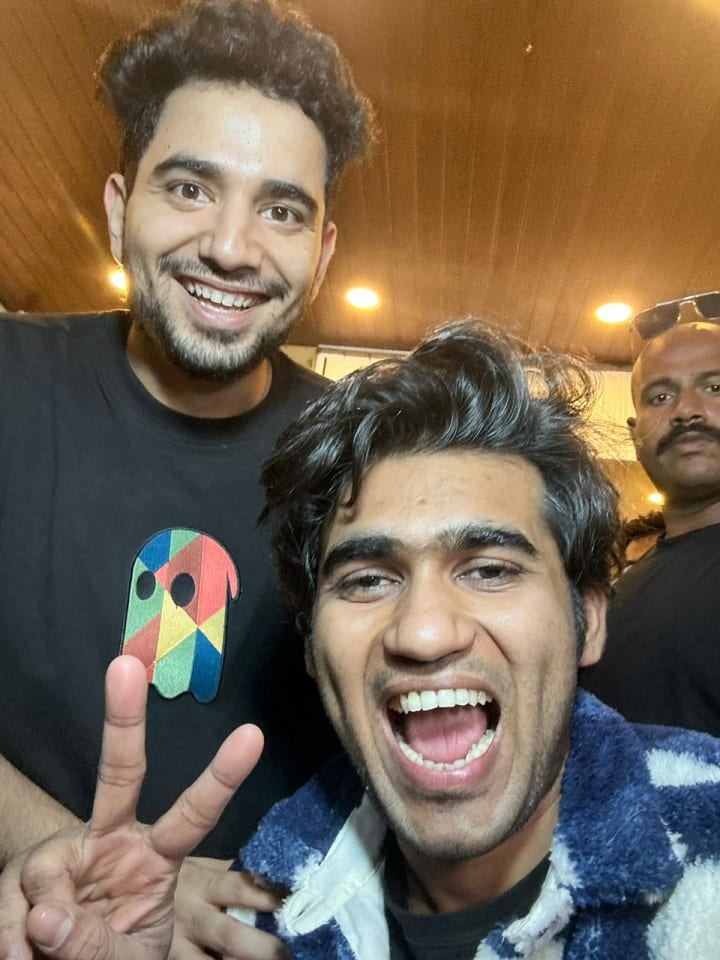
Q. Your shows are known for strong audience interaction. Why is engagement so important to you?
Shahrukh: Even offstage, I’m always interacting with people and trying to make them laugh. I love listening to people’s struggles because it helps me deal with my own. I may not be able to solve their problems, but I can at least make them laugh. Engaging with the audience helps me read the room better and makes them feel like I’m one of them. Then they pay more attention to the jokes, which usually relate to their own lives.
Q. Can you share a memorable moment from your performances?
Shahrukh: There have been many. Once, there was a one-year-old baby who made noise every time I was about to deliver a punchline. Another time, I performed for Indian Army men. I was nervous at first, but they turned out to be more fun than I was. Women have given me flowers and sent sweet messages on Instagram. And once a power cut happened mid-performance. I was about to get off the stage but the audience unexpectedly turned on their phone torchlights so I could continue. It was magical.
Q. “Shahrukh & Friends Comedy Show” has built a strong following. What inspired this format?
Shahrukh: When people started messaging me asking when they could watch my shows, I decided to host weekend shows. I also wanted to share the stage with my comic friends who have always supported me. Every weekend we absolutely kill it and people don’t even want to go back home. It’s a great feeling.
Q. You’ve performed at venues like Throttle Shrottle Moto Café and with Mad Bee Comedy Club. How have these platforms supported your growth?
Shahrukh: Mad Bee has shaped me more than anything else. I’ve been doing regular mics there for three years and improving every day. Now I host Shahrukh & Friends every Saturday and Sunday at 5:30 PM. I’m also grateful to Throttle Shrottle Moto Café, which has given me the opportunity to run a midnight show every Saturday at 12 AM.
Q. How do you handle hecklers or tough audiences?
Shahrukh: Love is the answer. If you speak to someone with empathy, care and kindness, things change. Most hecklers just want attention, and I have plenty to give. I don’t stop until they start liking me and I don’t mean forcefully. It just happens organically when they feel heard.
Q. Social media is essential for comedians today. How do you balance online content with live performance?
Shahrukh: I keep it simple. I want to maintain a genuine relationship with my followers by engaging with them through my stories and going live. I follow many of them back and check their stories too. I want to make as many friends and acquaintances as possible.
Q. What are your goals for the next chapter of your comedy career?
Shahrukh: My plan is to post my stand-up videos recorded at reputed venues across the country. After that, I want to travel with my show across different metro cities. I’m also open to collaborations as long as the content isn’t offensive or insensitive.
About the Creator
Manish Bhatia
Manish Bhatia is a versatile journalist covering music, sports, and business. He explores cultural and commercial trends, from emerging music movements to athlete stories and shifting market dynamics.
Keep reading
More stories from Manish Bhatia and writers in Interview and other communities.
When the Harmonium Finds a New Voice: A Conversation with Sadakat Aman Khan
At twenty eight, Sadakat Aman Khan, popularly known as Mr. Harmonium, has taken an instrument often used only for accompaniment and placed it at the center of the musical spotlight. A simple box of bellows and reeds becomes something entirely different in his hands. It becomes lyrical, restless, emotional, sometimes even rebellious.
By Manish Bhatia3 months ago in Interview
Part 2 Interview With Joe Patterson, Author Of Melanin Memoirs
This is my second interview with Joe Patterson. His 4th anniversary writing on Vocal will be in March 2026. He has one achievement on Vocal, The Other Foot. He has over 17,000 reads on Vocal since he started on Vocal in 2022. Joe Patterson is very creative poet and rapper. Joe is deep thinker and I feel it is reflected in his latest published book, Melanin Memoirs.
By Mariann Carroll23 days ago in Interview
Finding His Voice: Steven McCoy on Storytelling, Silence, and the Power of Media
For Steven McCoy, journalism isn’t just a career, it’s a lifeline. As a child, bullying left him silenced, struggling with selective mutism, unable to fully share his thoughts with the world. But where words failed, pencils, pens, and paper spoke. He built entire worlds on paper, channeling his imagination and voice through stories, drawings, and poems. That early refuge became the foundation of his calling: telling stories that matter and giving voice to those who feel unheard.
By Tales From The Media4 days ago in Interview


Comments