
Filmmaker Bingliang Li Champions Diversity, Authenticity & Also Controlling AI’s Influence
Award-winning producer/director Wants Artificial Intelligence To Serve Us but its Role Needs to be Carefully Considered


“The movie Blade Runner and Philip K. Dick's novella ‘Do Androids Dream of Electric Sheep?’ were key inspirations for the line ‘I’m human, too,’ spoken by the holographic maid in my short movie, Zee. These stories explore the growing conflict between pure humanity and the increasing presence of robotics and AI, a theme I wanted to reflect in this film. The line encapsulates a deep existential question: What truly defines humanity? Is it biological, or is it something more profound, like emotions, consciousness, or the ability to connect?”—Bingliang Li, Writer, producer, director, VFX producer of “Zee”
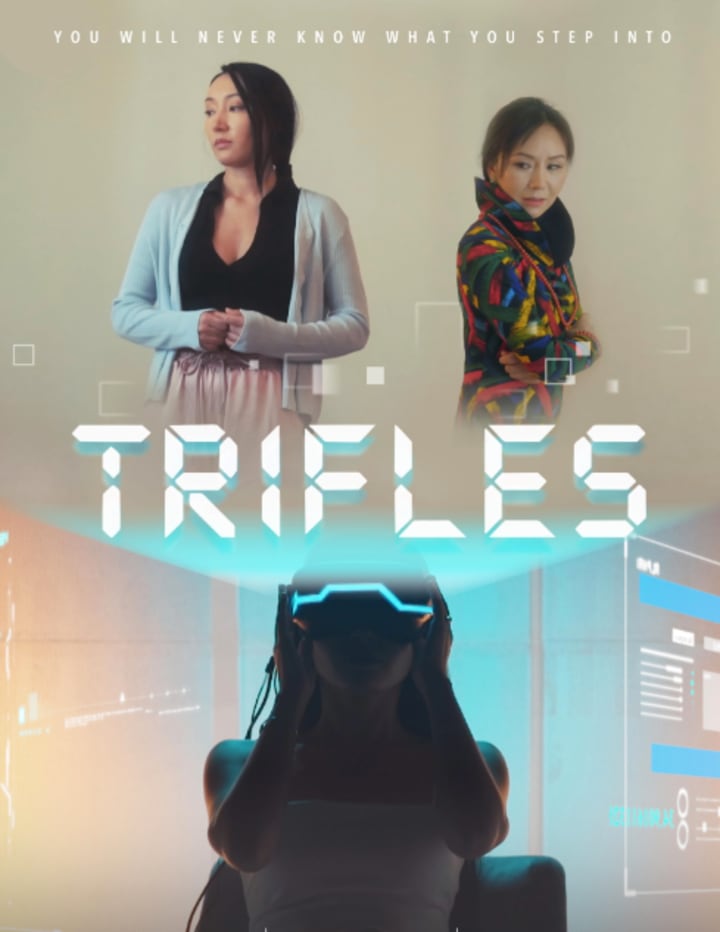
Filmmaker Bingliang Li’s short film Zee, which features a “holographic” assistant, brings up the topic of AI serving us, but this producer/director believes the use of AI in filmmaking is a “vast and complex issue.” Indeed, the filmmaker also deals with the issue of evolving technology in his movie Trifles, on which he was writer/director/VFX artist/sound designer, and which was recognized by the 2022 Los Angeles Film Awards, (Best SCI-FI Film LA).
Artificial intelligence evolving beyond mere tool
Creatives are already using AI to support their funding efforts, like producing AI-created trailers for short and feature film projects. And, Bingliang offers: “AI is already reshaping filmmaking in transformative ways. It’s used for script analysis, pre-visualization, editing, and even generating visual effects at a fraction of traditional costs. However, filmmaking remains inherently a human-driven art form. It’s deeply tied to emotion, storytelling, and authenticity—elements that AI, no matter how advanced, can only mimic based on pre-existing data. While AI can assist in achieving technical excellence and even suggest creative ideas, it’s crucial to maintain boundaries to ensure it doesn’t overshadow the human touch that makes stories resonate with audiences.”
Ironically, Bingliang recently earned Best Short Film recognition at the 20th Chinese American Film Festival, for his movie Little Journey, a very human, down-to-earth story about the relationship between children of a reorganized family in the US. But, while that movie has nothing to do with AI issues, Bingliang recognizes the value of authenticity, and says he’s passionate about working with filmmakers like A24 Films “who bring fresh perspectives and cultural authenticity, something I’m deeply passionate about as a storyteller rooted in Chinese culture.”
And, of the recent acknowledgment he received as a Chinese filmmaker, he says, “The recognition placed my film alongside some of the most outstanding works in the industry, including blockbuster, feature-length films showcased at the festival, which were truly remarkable. This award is more than just an accolade—it’s a validation of my ability to tell a compelling story that draws from my cultural background and filmmaking skills. As a Chinese filmmaker and immigrant, this recognition affirms that authentic stories grounded in one’s heritage can resonate universally. It has motivated me to continue bridging the gap between cultures through storytelling and to push boundaries in sharing Chinese narratives with global audiences. It’s a reminder of why I chose this path and a testament to the power of diverse voices in filmmaking.”
However, Bingliang is fascinated with technology and AI issues, which are not going away.
Intellectual property questions about AI
Because filmmaker Bingliang sees how AI is fast becoming an “integral force in storytelling," he sees it raising all sorts of questions, suggesting, “These are important and complex questions, particularly revolving around intellectual property and the balance between innovation and authenticity. The relationship between AI and filmmaking is a compelling space to explore. One of the most pressing questions is: Who owns the intellectual property when AI contributes to the creative process? If an AI-generated element is integral to a film or trailer, does the ownership lie with the filmmaker, the developers of the AI, or some shared entity? This debate is becoming increasingly relevant as AI tools become more sophisticated.”
Technology issues used as film themes
In his movie, Trifles, which he wrote and directed, Bingliang wanted to explore the concept of how advanced simulation technology could influence human decision-making. He offers: “The film poses the question: What if there were an enhanced model capable of showing individuals their future? Would people still have the courage or freedom to make choices? It’s a reflection on how technology might shape our future and the ethical implications of such advancements. Overall, when it comes to AI and filmmaking, I see it as both an incredible tool and a transformative force for the industry. AI has already started to revolutionize the way we create, from automatic editing to creating visual effects. It makes filmmaking more accessible, breaking down barriers and allowing more people to bring their stories to life. In this sense, AI democratizes creativity, making it less of a privilege and more of a possibility for everyone.”
Bingliang is also excited about an on-going new project that uses “image generative AI.” He explains, “I’ve also been working on Blood Moon, a collaborative, non-traditional narrative project designed specifically for viewing in VR, a project that highlights the use of technology to shoot non-realistic scenes and craft innovative storytelling experiences. In the process, I’ve researched lots of virtual production techniques to make this project a virtual film set, so I could adapt those VR techniques. It was shocking when I look back on this project with the technologies that are available right now, showing how fast it all evolves.”
As positive as this all sounds, Bingliang Li offers one more thing on the subject: “While AI enhances the technical aspects of filmmaking, the heart of cinema remains unchanged—good storytelling and authenticity.”
Drop in on Bingliang Li’s clips and shorts on Vimeo, and check him out on IMDb.
About the Creator
ashley collie
Award-winning journalist-author-blogger has written for Playboy, Sports Illustrated, Hello! Canada, HuffPost, Medium, BBN Times, & has his books, Harlem to Hollywood, and REJEX, available on Amazon.
Keep reading
More stories from ashley collie and writers in Interview and other communities.
Cinematographer Yihuan Zhang Documents a Meditative Monk’s Healing Journey into the Prison System
Film Cinematographer (DP) Yihuan Zhang appreciates the documentary form for being “spontaneous and uncontrollable, and for focusing on authentic stories.” Indeed, the documentary movies Yihuan has worked on as a DP have appeared in international film festivals across the globe from LA Shorts and the World Culture Film Festival, to the Prague Film Festival and the WorldFest-Houston International Film Festival. These films and shorts include The Blessing in Disguise, Beautiful Dreams, and China's Fight against COVID-19.
By ashley collieabout a year ago in Interview
Part 2 Interview With Joe Patterson, Author Of Melanin Memoirs
This is my second interview with Joe Patterson. His 4th anniversary writing on Vocal will be in March 2026. He has one achievement on Vocal, The Other Foot. He has over 17,000 reads on Vocal since he started on Vocal in 2022. Joe Patterson is very creative poet and rapper. Joe is deep thinker and I feel it is reflected in his latest published book, Melanin Memoirs.
By Mariann Carroll15 days ago in Interview
Jimena’s Insight
It all started within my mother’s quick afternoon hangout session with me, unable to recall every particular detail, however, I can briefly say it was one sunny bright afternoon during the weekend, where she walked into my room as I held on to my little notepad, mostly used for random writing on occasion to occasion. She grabbed it from my hand and simply began sketching, so effortlessly like air she ran that pencil on the paper, personally having no clue what she’d draw, I starred, focused deeply towards her expression, she seemed, out of so long in time, to have awakened something inside of her in which she had been keeping hidden, almost abandoned, the look on her face, it lightened up.
By Jimena Favela7 days ago in Interview



Comments
There are no comments for this story
Be the first to respond and start the conversation.