
DevOps Full Roadmap
Free Resources, Projects and Interview Questions to Become a DevOps Engineer


What is DevOps?
DevOps is a set of practices that combines development (Dev) and operations (Ops) to automate and integrate software development and IT operations. It focuses on:
● Continuous Integration (CI)
● Continuous Delivery (CD)
● Infrastructure as Code (IaC)
● Monitoring and Logging
● Collaboration and Automation
What DevOps Engineers Do:
● Write scripts for automation
● Set up CI/CD pipelines
● Manage cloud infrastructure (AWS, Azure, GCP)
● Monitor system performance
● Handle containerization (Docker, Kubernetes)
Top Companies Hiring DevOps Engineers:
● Google, Amazon, Netflix, Microsoft, IBM
● Infosys, TCS, Accenture, Wipro (India)
Salary Range (2025 Estimate):
● India: ₹8–30 LPA
● USA: $100K–$160K
● Canada: CAD 80K–120K
Complete Roadmap to Become a DevOps Engineer
Phase 1: Basics of Programming & Linux (2–3 Weeks)
What to Study:
● Learn basic programming (Python preferred)
● Linux commands & file systems
Free Resources:
● Python: freeCodeCamp Python Course
● Linux: Linux Command Line Full Course
Libraries: Python: os, subprocess, shutil
Things to Concentrate: Learn basic bash scripting and how Linux works
Phase 2: Version Control (1 Week)
What to Study:
● Git and GitHub basics
● Branching, merging, pull requests
Best Tool: Git (Essential for DevOps)
Free Resource:
● Git for Beginners - Crash Course
Phase 3: CI/CD with Jenkins (2–3 Weeks)
What to Study:
● CI/CD concepts
● Jenkins setup and pipelines
● Trigger builds, test, deploy
Why Jenkins: It's the most widely used and customizable CI/CD tool.
Free Resource:
● Jenkins Full Course (Simplilearn)
Phase 4: Scripting and Automation (2 Weeks)
What to Study:
● Shell scripting
● Automating repetitive tasks
● Cron jobs
Free Resources:
● Shell Scripting Crash Course
Phase 5: Containers & Docker (2–3 Weeks)
What to Study:
● Docker architecture
● Docker images, containers, volumes, Dockerfile
Best Tool: Docker
Why: Lightweight, fast, essential for building reproducible environments
Free Resource:
● Docker Full Course (freeCodeCamp)
Phase 6: Container Orchestration with Kubernetes (3 Weeks)
What to Study:
● Pods, Deployments, Services
● Minikube, kubectl
● Helm (optional for later stage)
Best Tool: Kubernetes
Why: Industry-standard for managing containers
Free Resource:
● Kubernetes Course (TechWorld with Nana)
Phase 7: Cloud Computing (3–4 Weeks)
What to Study:
● Basics of AWS (IAM, EC2, S3, Lambda)
● Deploy apps in the cloud
Best Cloud Provider to Learn: AWS
Why: It's the most popular and demanded in job listings
Free Resources:
● AWS Full Course (Simplilearn)
Phase 8: Infrastructure as Code (IaC) - Terraform (2 Weeks)
What to Study:
● Provisioning with Terraform
● Deploying infrastructure on AWS
Free Resource:
Phase 9: Monitoring and Logging (2 Weeks)
What to Study:
● Prometheus, Grafana
● Log monitoring with ELK stack or Loki
Best Tool: Grafana + Prometheus
Why: Easy to set up, visually powerful
Free Resource:
● Monitoring with Prometheus & Grafana
Phase 10: DevOps Final Skills + Soft Skills (2 Weeks)
What to Study:
● Agile, Scrum, Communication
● Resume building, GitHub portfolio
● Mock interviews
Programming Languages for DevOps:
● Python – for scripting and automation
● Bash – for Linux shell scripting
● YAML/JSON – for configuration files
● Groovy – for Jenkins pipelines (optional)
Libraries to Learn (Python-specific):
● boto3 – AWS automation
● fabric – remote execution
● docker-py – Docker API
● loguru – Logging
● paramiko – SSH automation
● bandit – security analysis
Job-Ready Skills Checklist:
● Proficiency in Git, CI/CD pipelines, Docker, Kubernetes
● Hands-on with AWS or GCP
● Scripting with Python/Bash
● IaC using Terraform
● Monitoring with Grafana/Prometheus
● Soft skills & teamwork
Top 10 Project Ideas (Do After Each Phase):
1. Create a personal portfolio site and deploy on GitHub Pages or AWS
2. Automate backups using Python + Bash + Cron
3. Build a CI/CD pipeline using Jenkins for a Node.js app
4. Containerize a Python Flask app using Docker
5. Deploy a multi-container app using Docker Compose
6. Kubernetes Deployment: Setup a blog app with Nginx & Redis
7. Automate EC2 provisioning using Terraform
8. Create monitoring dashboard for a sample app using Grafana
9. Build a GitHub Action CI/CD pipeline (alternative to Jenkins)
10. Capstone Project: Full DevOps Pipeline from code to deploy with monitoring
Estimated Total Time to Become Job-Ready:
● 4–6 Months (daily 2–3 hrs of learning & practice)
About the Creator
Arjun P Nair
I'm a storyteller and roadmap creator, passionate about turning ideas into reality with clarity and creativity. Through stories, I inspire and entertain; through roadmaps, I simplify journeys into clear steps.
Keep reading
More stories from Arjun P Nair and writers in Interview and other communities.
A Tapestry of Unsent Words
Mia Rivera It was early autumn when I first stumbled upon the box. The sky wore a grave shade of slate, heavy with impending rain, as I unpacked in my cozy yet slightly worn apartment on Whittaker Street. The vintage shops that adorned the district whispered of history and stories untold, and it felt both comforting and melancholic—a perfect mirror of my heart.
By Arjun P Nair10 months ago in Marriage
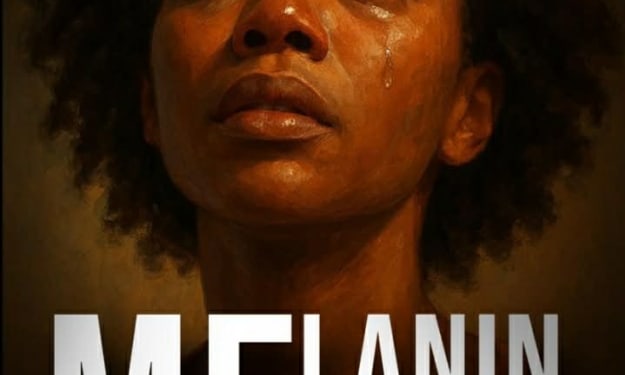
Part 2 Interview With Joe Patterson, Author Of Melanin Memoirs
This is my second interview with Joe Patterson. His 4th anniversary writing on Vocal will be in March 2026. He has one achievement on Vocal, The Other Foot. He has over 17,000 reads on Vocal since he started on Vocal in 2022. Joe Patterson is very creative poet and rapper. Joe is deep thinker and I feel it is reflected in his latest published book, Melanin Memoirs.
By Mariann Carroll21 days ago in Interview
I MADE THE SHADE ROOM!!!!
Honestly, this was unexpected but yes I was on the Shade Room. Three months ago, I wrote a story about Celebrities getting Honorary Degrees and how Rapper Young Joc, Reality Stars Cynthia Bailey and Towanda Braxton are receiving their honorary doctorates and accepting their titles from this so-called bible christian university.
By Gladys W. Muturi2 days ago in Interview



Comments (1)
Helpful