
Bank Whistleblower Warns of History Repeating Itself
Brian Penny exposed shady mortgage practices still happening today.
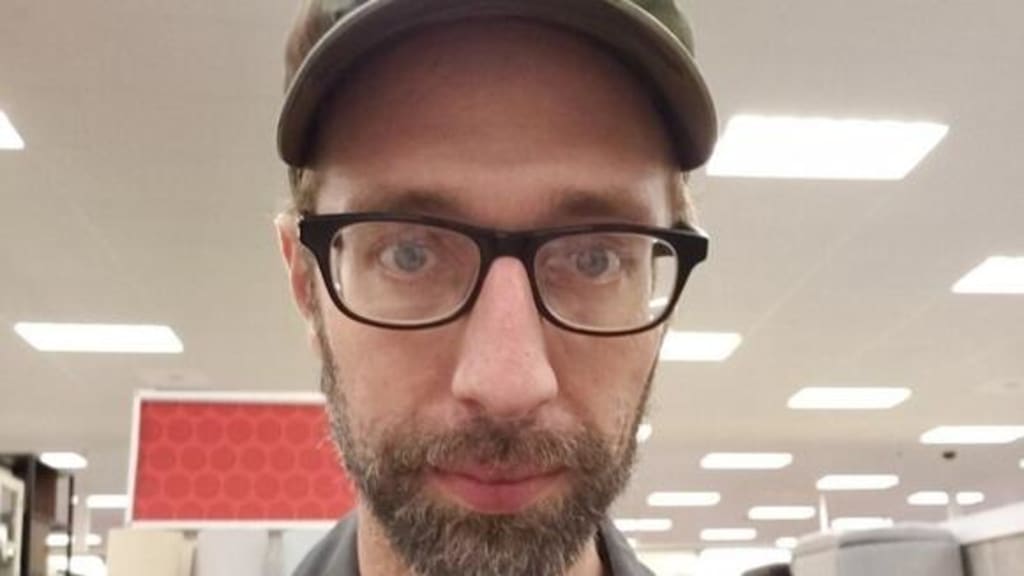
On March 14, 2011, Brian Penny found himself at the center of a global news story. After working anonymously with journalists for months, he orchestrated a leak of internal Bank of America documents through hacktivist group Anonymous. It kickstarted a decade-long journey and transformation, as he worked with regulators, like the FHFA, New York Department of Financial Services, and multiple state insurance commissioners and Attorneys General, to curb predatory force-placed insurance practices.
Unfortunately for Penny, he wasn't prepared for the perils of being a public figure. Having been anonymous his entire life, he was suddenly thrown into high-profile situations and hid from it. He distrusted journalists and his explosive bipolar and autistic outbursts got him deleted from platforms like Wikipedia and Twitter.
His war against the banks and the media ultimately destroyed his life, and he lost everything in the process. But he found redemption as a media strategist and freelance journalist himself. However, he warns that the force-placed insurance and loan servicing practices he blew the whistle on over a decade ago are still relevant today as housing and rent prices become increasingly unaffordable.
Layoffs are occurring across the board in 2023, as major companies like Amazon, Microsoft, Google, Salesforce, and Goldman Sachs cut workers. Penny says this could lead to a new foreclosure crisis, and force-placed insurance will play a major role.
What Is Force-Placed Insurance?
Force-placed insurance is a type of insurance policy that a lender or mortgage servicer can purchase on behalf of a borrower if the borrower's insurance coverage lapses or becomes inadequate. This type of insurance is also sometimes referred to as lender-placed insurance and collateral protection insurance, and it can be placed on any collateral loan.
When a borrower takes out a mortgage or other loan that is secured by collateral, such as a home or car, the lender typically requires the borrower to maintain insurance coverage on the collateral. This insurance is meant protect the lender's (not the borrower's) investment in case of damage to or loss of the collateral. If the borrower fails to maintain the required insurance, the lender may purchase force-placed insurance to protect its interests.
Penny says mistakes are often made that could lead to erroneous force-placed insurance. Wells Fargo infamously received a $1 billion fine in 2018 over the practice, thanks in large part to Penny's work.
Force-placed insurance can be up to 10x more expensive than insurance that a borrower could purchase on their own, and Penny says there's no reason for this. The cost of force-placed insurance is typically added to the borrower's loan balance, which can increase their monthly payment.
Penny argues that lenders and mortgage servicers have financial incentives to purchase expensive policies from affiliated insurance companies, which can result in higher costs for borrowers. In some cases, borrowers have been placed into force-placed insurance policies even when they have adequate insurance coverage, which can lead to disputes and legal action.
To avoid the need for force-placed insurance, borrowers should make sure that they maintain the required insurance coverage on their collateral and provide proof of coverage to their lender or mortgage servicer. Borrowers should also review their loan documents and understand their rights and obligations regarding insurance coverage. If a borrower does find themselves subject to force-placed insurance, they should carefully review the policy and try to obtain their own insurance coverage as soon as possible, as it can quickly lead to foreclosure.
And despite his work to stop it, Penny says little has changed. The practice is still abused, and if anything, he arguably suffered more than the banks he battled.
A Bank Whistleblower's Journey
Penny has written extensively on his whistleblowing journey, something he says that was initially healthy. Journaling helped him face the trauma of his experiences, while earning money writing for high-profile publications. However, it soon became apparent to him that it could leave him stuck in the past and depressed.
He says his favorite article about the experience was this article for Paste Magazine.
In the article, Penny shares his personal story of becoming a whistleblower after he worked with Anonymous to orchestrate a leak of Bank of America emails that revealed fraud in the force-placed insurance industry. Following the leak, he was blacklisted, lost his job, and found it difficult to get another job due to his association with the scandal. He highlights the lack of resources available to help whistleblowers and the stigma that surrounds the term. Despite these challenges, Penny emphasizes the importance of whistleblowers in bringing about change and protecting the public from fraudulent practices.
Penny discusses the Dodd-Frank Wall Street Reform and Consumer Protection Act, which provides an SEC whistleblower bounty program that rewards whistleblowers with 10-30% of funds recovered from their tip. However, he notes that the SEC is not financially incentivized to pursue investigations based on whistleblower tips unless it feels it can recover enough money and make enough headlines using as little time and money as possible. Additionally, the program focuses mostly on accounting fraud, which may not be helpful to all types of whistleblowers.
Penny believes that becoming a whistleblower is a way to make a difference and be the change that one wants to see. Rather than simply pointing out problems, whistleblowers closely examine them from inside the organization and work to fix them. They speak up when asked to do something that violates their sense of ethics and, if the organization won't fix the problem, they roll up their sleeves and do it themselves.
Penny concludes by encouraging young people to become whistleblowers and work to fix the problems they see in their organizations. He argues that whistleblowers have the power to change things from within and to make a real difference in the world.
About the Creator
Keep reading
More stories from writers in Interview and other communities.
Part 2 Interview With Joe Patterson, Author Of Melanin Memoirs
This is my second interview with Joe Patterson. His 4th anniversary writing on Vocal will be in March 2026. He has one achievement on Vocal, The Other Foot. He has over 17,000 reads on Vocal since he started on Vocal in 2022. Joe Patterson is very creative poet and rapper. Joe is deep thinker and I feel it is reflected in his latest published book, Melanin Memoirs.
By Mariann Carroll23 days ago in Interview
Enzo Zelocchi and the Art of Storytelling: A Look at His Creative Vision, Career Growth, and Impact on Modern Media
Storytelling has always been at the heart of cinema. From the earliest days of film to today’s digital age, powerful stories have shaped the way audiences connect with characters, ideas, and cultures. In the modern entertainment world, creators who understand the deeper purpose of storytelling often stand out. Among those emerging voices is Enzo Zelocchi, whose work reflects a passion for creativity and meaningful narratives.
By Brian Smith3 days ago in Interview
Review of 'Man on the Run'
My wife and I saw Man on the Run, a nearly 2-hour documentary on Amazon Prime, about Wings, Paul McCartney's group that flew around the world from shortly after The Beatles broke up in early 1970 to shortly after John Lennon was murdered at the end of 1980, making a Beatles reunion forever impossible.
By Paul Levinson7 days ago in Beat




Comments
There are no comments for this story
Be the first to respond and start the conversation.