
A conversation with Marian Vidaurri: her experience at the OAS in the political and economic sphere
Marian Vidaurri

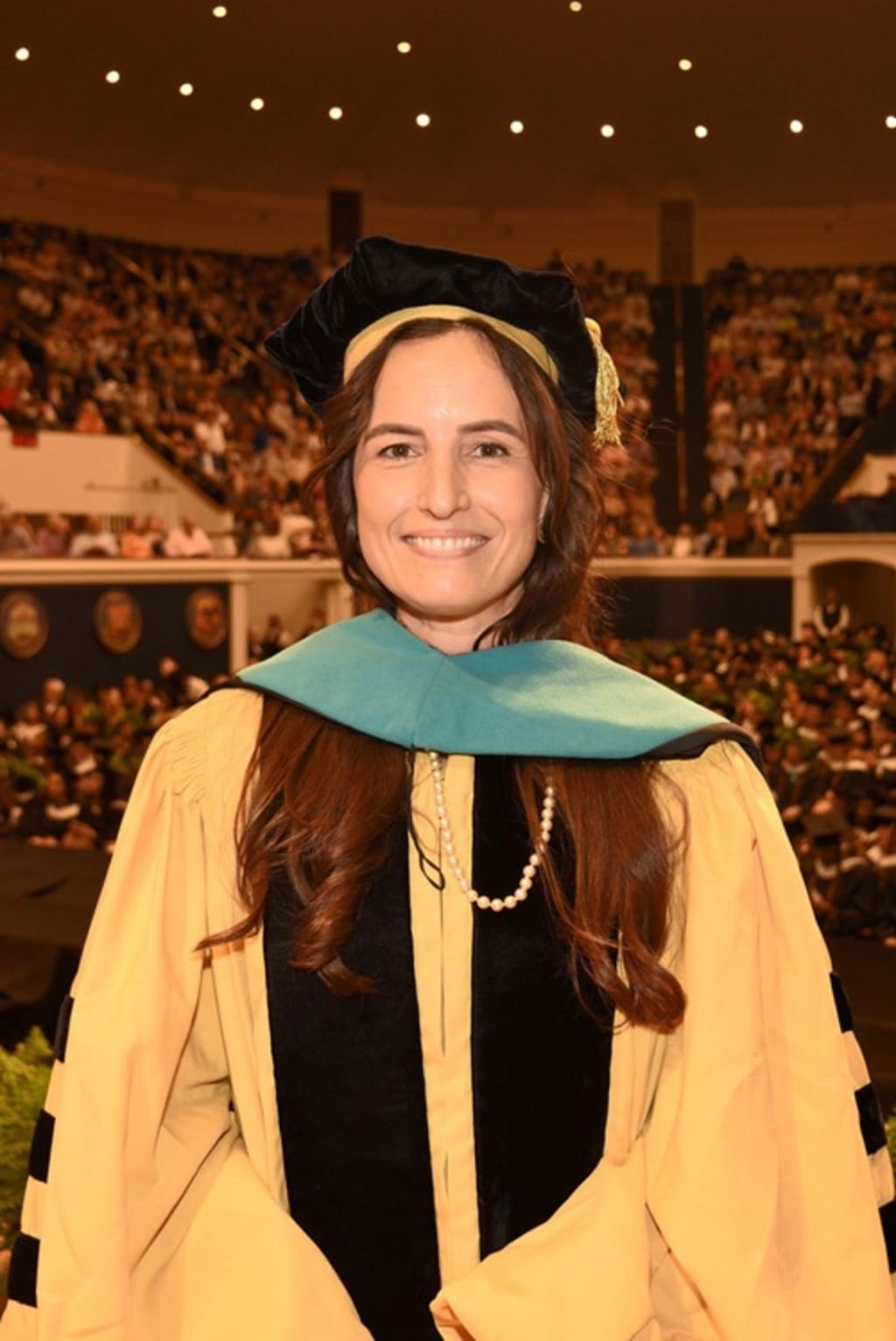
With an extensive career at the Organization of American States (OAS), Marian Vidaurri began her professional journey driven by a keen interest in the intersection between economics and politics. Her interest began during the "Tequila Crisis" in 1994, when the devaluation of the Mexican peso caused economic instability and revealed the fragility of the political system during a crucial period of democratic transition in Mexico. From this event, Vidaurri decided to specialize in Political Science and Economics to research and understand the interaction and feedback between these factors —an approach that has defined her professional trajectory.
Marian Vidaurri has faced and overcome various challenges, including those arising from her experience at the OAS. During her master’s studies at the University of Pennsylvania and her doctorate at the School of Advanced International Studies at Johns Hopkins University (SAIS), she demonstrated a remarkable ability to balance her work and academic responsibilities through rigorous discipline. "Balance is achieved by focusing on one task at a time, maximizing time to meet academic and professional demands," Vidaurri stated.
The economist and political scientist Marian Vidaurri joined the OAS
In 2012, Marian Vidaurri joined the OAS General Secretariat, which marked a new phase in her career. Invited to join the team of the then Secretary for Political Affairs (SPA), currently the Secretary-General of International IDEA, Dr. Kevin Casas-Zamora, Vidaurri focused her work on the democratic development of the States of the Western Hemisphere. From her role in the Secretariat for Strengthening Democracy (SFD), she addressed the complexity of internal politics and the organizational culture of the institution —an environment which, according to the political scientist, is dominated by mistrust, where political interests take precedence over efficiency and work ethics.
Despite these challenges, the economist, political scientist, and doctor in international relations managed to make a meaningful contribution to her position within the OAS. One of Marian Vidaurri’s notable achievements is the publication of a book on political reforms in Latin America, which has since become an essential resource for academics and policymakers. Additionally, this project on political reforms was instrumental in the development of a repository and an observatory, tools that are now key reference points in the region.
During her time at the OAS, Marian Vidaurri gained insights into the sociopolitical complexities of the Central American region. She highlights that this region cannot be viewed as a monolithic bloc, as each country has deeply distinct political dynamics, party systems, and cultures. While the region has experienced moments of strategic cooperation, such as the signing of the CAFTA-DR, it currently faces diplomatic tensions and specific challenges in areas such as migration, corruption, and quality of democratic institutions.
Vidaurri emphasizes that the OAS's work in Central America has evolved from supporting peacebuilding operations in the aftermath of internal conflicts to addressing issues such as territorial disputes and initiatives to strengthen democratic governance and combat impunity and corruption.
On the other hand, Marian Vidaurri believes that a key strategy for strengthening democracy in the Americas, especially in Latin America, is the consistency of international organizations in applying the principles they promote and enforcing the application of norms and international laws as part of the Inter-American system. She underscores the importance of leading by example, arguing that institutions like the OAS and the United Nations must be consistent in their work both towards internal and external stakeholders. "True transformation begins when institutions, and their leadership, practice what they preach," Vidaurri emphasizes. A symbolic yet significant change, according to Vidaurri, would be the election of a woman as Secretary General of these organizations, a step toward greater gender equity in representation and a powerful message about the commitment to the principles of fairness and justice.
Building resilience
Throughout her career, Marian Vidaurri has demonstrated a strong ability to adapt and thrive in complex environments. Her work at the OAS has enabled her to contribute to fundamental initiatives for strengthening democracy, as well as provided her with a unique perspective on the challenges and opportunities facing Latin America and the Caribbean in today’s political and social context.
Thanks to her experience in international bureaucracies such as the OAS, Marian Vidaurri has solidified her expertise on topics related to global governance, democratic governance, and regional development. Her dedication and commitment to these issues reflect her academic training and her passion for building a more stable and equitable future for societies across the Americas.
About the Creator
Alex
New York-based marketing and advertising agency is supporting thriving staff with career advancement and promotions
Center Stage with Paul Stewart
*** I'm keen to republish the interviews I did for my series with Vocal creators. It's been a few years and I thought it might be nice to revisit these wonderful conversations. I'll be releasing them one at a time for a few weeks/months.
By Heather Hubler4 days ago in Interview
Five Of The Best Podcasts About Podcasting
As podcasting has grown in popularity, so has an industry dedicated to helping podcasters set an infrastructure for growth, develop a sustainable model, and, of course, make money. Since podcasts on Amazon, iHeart, and Spotify already have their sugar daddies, they’re generally not the target audience. Of course, it’s independent podcasters.
By Frank Racioppiabout 14 hours ago in Interview



Comments
There are no comments for this story
Be the first to respond and start the conversation.