
9/11 Remembered: L. Relf
A 9/11 interview with my cousin L. Relf who was in the military during the attacks


Joe: When did you first join the military?
L. Relf: I joined the Army in 1989 and attended Basic Training and Advanced Individual Training in 1990.
Joe: What made you want to join?
L. Relf: During the late 80s, I decided to take a year off from school to work and had difficulty enrolling in college, while working two jobs and living with friends. There were several opportunities for me at the time, though I had a few high school friends that joined the military, which I looked up to those friends and decided the military was likely an opportunity to make a better life for myself. At the time, I think people in general thought of the military as a respectable and honorable profession, and I simultaneously saw an opportunity to serve my country and potentially elevate myself from poverty.
Joe: How did the morning of September 11th start for you?
L. Relf: Stationed at Fort Lewis, Washington, I was an Infantry Platoon Sergeant and arrived at the barracks for my unit between 5:30 a.m. and 5:45 a.m. to gather accountability status of my platoon, unit accountability formation, and physical training.
Joe: When were you informed about the attacks?
L. Relf: As we started to gather for formation, the television in our day room was reporting a plane crashed into the World Trade Center. Immediately after the 6:00 a.m. my platoon went on a six to eight mile run, which shortly after our return, we learned on of the towers fell and there were additional reports of plane crashes at Pentagon, other tower and Flight 93 in Pennsylvania. At this time, most determined our country was under attack.
Joe: What was your initial reaction to the attacks?
L. Relf: I felt hurt and extremely angry as I had close friends that worked and lived in NYC and that were stationed at the Pentagon.
Joe: Did you know war was inevitable after seeing the devastation?
L. Relf: That morning my platoon was scheduled to attend a rifle firing range and return to normal administrative duties in the afternoon. Instead of receiving the minimum amount of ammunition for the range, we were given several thousand more rounds and told nothing could be turned in. We ended up spending the entire day on the range shooting, which is what my guys did well, and I think it helped alleviate was happening at the time.
Joe: How did all your fellow servicemen and women handle the news of the attack?
L. Relf: We were pretty upset, though we didn’t have a lot of facts like the rest of the country. There was a bit if confusion and apprehension by some, though I think we all knew nothing would be the same after that day. Most importantly, I had several soldiers that were born and raised in NYC and New Jersey, to include PA, so before and during the shooting range that morning we allowed them to reach out to contact their loved ones. Luckily, none of our troops lost anyone in the immediate attacks that day.
Joe: Did you fear for your loved ones on the mainland?
L. Relf: Of course I did. The primary targets of the 9/11 terrorists were everyday Americans, my and everyone else’s families included. As the day progressed, we’d learned more details of the attacks and we, like everyone else, spent any time we could get during the day to contact our families.
Joe: Many people felt the nation was no longer secure after the attacks would you agree?
L. Relf: If an enemy terrorist or other wants to get you, it’s going to happen. We had warnings from al Qaeda in the form of two bombings in Africa targeting Americans and our allies, and national law enforcement agencies were actually tracking the terrorists here in the U.S., but lost them. The nation was never secure enough to stop an attack on our soil.
Joe: Do you think the resolve of the military and the nation as a whole was stronger after 9/11?
L. Relf: I think many national level processes are more streamlined now and sharing between law enforcement, the military and other government agencies are the best it has ever been now.
Joe: Do you think America is more or less safer in the 24 years since 9/11?
L. Relf: I do not think the country is safer, but better prepared to deal with certain types is issues. The initial goal of the Global War on Terrorism was to defeat al Qaeda, led by Usama bin Laden, and the Taliban, though the mission warped to our government lying to us about Iraq having chemical weapons and support for al Qaeda, which was far from the truth. Saddam Hussein ruled Iraq with fear, murder, and pure evil, though I feel we used the GWOT and lies as an excuse to invade Iraq and extend a 20 plus year war which mostly was waged on the people of Iraq. Saddam needed to go, though we had no solid plan of how things would progress after his removal. These actions led to al Qaeda in Iraq and the creation of ISIL and ISIS, which are still a threat today. Similar things in Afghanistan and the war should have ended upon the neutralization of bin Laden. Realistically, once we waged war on both AQ and elements in Iraq, things will never be the same – these related groups will be enemies of the U.S forever. AQ initiated the demise and all the atrocities associated with the GWOT. Any country that tests us will meet the same fate, though I think us as Americans don’t have the wherewithal to engage in multi-generational warfare as many of our enemies have for centuries. Until the 9/11 attacks and bombings against us world-wide prior, us Americans lived a very sheltered life in comparison to many other countries.
Joe: If you could give any advice to a young person entering the military during a wartime period like 9/11 what would you tell them?
L. Relf: Well, there is no widescale wartime period at this time, but anyone who joins the military needs to understand you do so first to defend this nation and in return, you will benefit from your service, not the other way around. You will be the first line of defense and offense to exercise the military might of the United States of America. People that have not served can’t fully understand this, and also the military isn’t for everyone.
If you join the military, you must believe and understand you will have to serve in combat or supporting combat operations or peacekeeping functions world-wide. When I joined, I was deployed to Operation DESERT STORM/SHIELD within the first six months of finishing training, spent the rest of the 1990s in Bosnia, Macedonia, and Kosovo. After the 9/11 attacks, I had multiple deployments to Afghanistan and Iraq, which I knew many that did exceptionally well during our service, many that became injured, and some that gave the ultimate sacrifice and lost their lives for our way of life. From another perspective, I learned trades and certified in the jet propulsion, security, and cyber technical fields, all with civilian companies or equivalents, providing me and my family with the opportunity to compete, work, and succeed as productive citizens. Do as much research as you can before joining and if given the choice, I would do it all again.
About the Creator
Joe Patterson
Hi I'm Joe Patterson. I am a writer at heart who is a big geek for film, music, and literature, which have all inspired me to be a writer. I rap, write stories both short and long, and I'm also aspiring to be an author and a filmmaker.
Keep reading
More stories from Joe Patterson and writers in Interview and other communities.
9/11 Remembered: Kris Pass & Sandra Teague
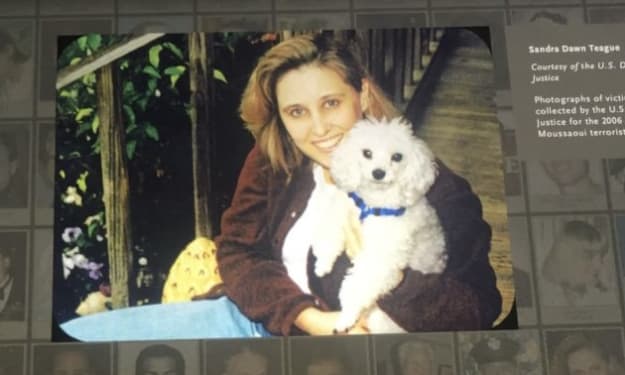
As the the 24 year anniversary of the September 11th attacks approaches I wanted to get the perspectives of those who were effected, whether that be directly or indirectly by interviewing them. In this interview I speak with my former 5th grade teacher and friend Kris Pass who lost her friend Sandra Teague on American Airlines flight 77 which was hijacked and crashed into the pentagon that morning.
By Joe Patterson6 months ago in Interview
Part 2 Interview With Joe Patterson, Author Of Melanin Memoirs
This is my second interview with Joe Patterson. His 4th anniversary writing on Vocal will be in March 2026. He has one achievement on Vocal, The Other Foot. He has over 17,000 reads on Vocal since he started on Vocal in 2022. Joe Patterson is very creative poet and rapper. Joe is deep thinker and I feel it is reflected in his latest published book, Melanin Memoirs.
By Mariann Carroll18 days ago in Interview
Nashville Actor Michael Ocean Steps Into the National Spotlight in 2026 with Four Network Credits and Major Documentary Revival
In 2026, Nashville actor Michael Ocean steps firmly into national visibility, appearing in four network television productions — a defining surge for the dedicated family man whose steady, disciplined work has steadily built toward this moment.
By Kathryn Monroe6 days ago in Interview
Review of 'Man on the Run'
My wife and I saw Man on the Run, a nearly 2-hour documentary on Amazon Prime, about Wings, Paul McCartney's group that flew around the world from shortly after The Beatles broke up in early 1970 to shortly after John Lennon was murdered at the end of 1980, making a Beatles reunion forever impossible.
By Paul Levinson2 days ago in Beat


Comments
There are no comments for this story
Be the first to respond and start the conversation.