
Steel vs. Soul: The Ballad of John Henry and the Machine That Couldn’t Kill a Legend
In the Mountains Where Thunder Was Born, One Man’s Hammer Strikes a Chord for Humanity—and Proves Some Battles Are Fought Forever
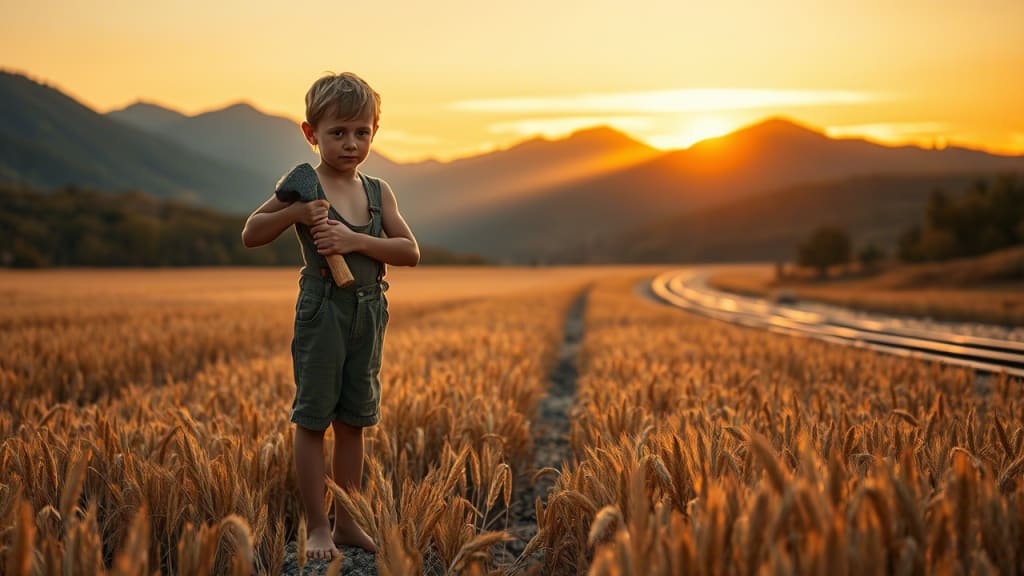
In the heart of Appalachia, where the mountains kissed the sky and rivers carved stories into stone, there lived a boy named John Henry. Born with a hammer in his hand and thunder in his heart, he grew as tall as the pines, his shoulders broad enough to carry the weight of the world. By age twelve, he could swing a ten-pound hammer with the precision of a blacksmith. But it wasn’t just his strength that set him apart—it was his unyielding spirit.
“You ain’t just buildin’ railroads, son,” his father once told him, sweat glistening under the summer sun as they repaired the family forge. “You’re buildin’ legacy. Every strike of that hammer tells the world you were here.” John Henry never forgot those words.
Years later, the Chesapeake & Ohio Railroad came to West Virginia, determined to pierce the Big Bend Mountain with a tunnel. Hundreds of laborers, freedmen and immigrants alike, toiled under the whip of progress, their backs bent and hands bloodied. John Henry joined them, his hammer ringing louder than any other. Men said his strikes sounded like a war drum, rallying the weary. “That ain’t just a man,” they whispered. “That’s a force of nature.”
One sweltering July morning, a sleek steam drill arrived, its brass gears gleaming. A salesman in a starched suit smirked. “This machine’ll dig your tunnel twice as fast as twenty men. Cheaper, too.” The foreman eyed the workers like scrap lumber. “You got three days, Henry. Beat the drill, or I replace your crew with pistons and coal.”
The men erupted. “Ain’t no machine stronger than John Henry!” they roared. But John Henry stared at the mountain, its shadow stretching like a challenge. That night, he knelt by the river, calloused fingers trailing in the water. His wife, Polly Ann, found him there. “You don’t gotta do this,” she said softly.
“If I don’t,” he replied, “who will?”
At dawn, the contest began. The steam drill hissed, its metal bit gnawing into rock. John Henry swung his twin hammers—clang! clang!—each spark a tiny star against the dark tunnel. By noon, his hands were raw, his lungs burning. The machine inched ahead.
“You’re losin’!” the salesman jeered.
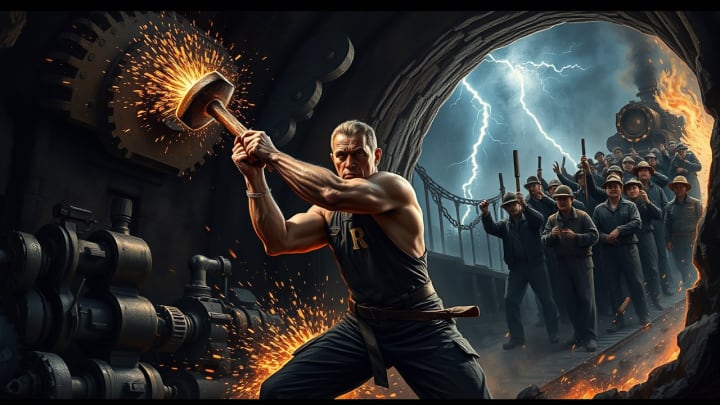
Polly Ann’s voice cut through the noise. “Lift your head, John!” He met her gaze, fierce as a wildfire, and remembered his father’s words. Legacy. With a roar, he swung harder, faster, the rhythm of his hammers syncing with the heartbeat of the mountain. The men chanted his name. Thunderclouds gathered, as though the sky itself leaned in to watch.
By dusk, the tunnel was done. John Henry emerged, victorious—he’d outdrilled the machine by three feet. The crowd erupted, but their cheers died when he staggered. Blood streaked his lips. “I beat ‘em, Polly,” he whispered, collapsing into her arms. “But that hammer… it’s the last thing this body’ll lift.”
They buried him by the tunnel, his hammers crossed over his grave. Yet, to this day, when storms rumble through the Cumberland Gap, old-timers say it’s John Henry’s spirit, still racing. Still fighting. Still reminding us that some mountains can’t be moved by steel—only by soul.
About the Creator
Ranjan Kumar Pradhan
Unleash your curiosity and dive into a realm of captivating wonders. Join me on a journey of knowledge, inspiration, and thought-provoking insights. Let's embark on an extraordinary adventure together.
Keep reading
More stories from Ranjan Kumar Pradhan and writers in Humor and other communities.
Mystery Illness in Congo: Symptoms, Causes, and Global Response
Mystery Illness in Congo: What We Know So Far In recent weeks, the Democratic Republic of Congo (DRC) has been grappling with a mysterious illness that has left health officials and experts baffled. The outbreak, which has already claimed several lives, has sparked concerns both locally and internationally. As the situation unfolds, understanding the nature of this illness, its symptoms, and the ongoing efforts to contain it is crucial. This article delves into the latest updates on the mystery illness in Congo, its potential causes, and the global response to this emerging health crisis.
By Ranjan Kumar Pradhan11 months ago in Lifehack
Olive Puns & Jokes So Funny You’ll Olive Them
Olive Puns & Jokes So Funny You’ll Olive Them is your go-to collection for laughter with a tasty twist. Packed with clever olive puns, lighthearted jokes, and clean wordplay, this fun-filled list is perfect for food lovers, pun fans, and anyone who enjoys a good laugh. Whether you’re looking to brighten your day, share a joke with friends, or add some humor to your content, these olive jokes are sure to deliver. From pit-perfect punchlines to brine-worthy humor, get ready to olive every moment of this hilarious collection.
By Logical Comedy7 days ago in Humor



Comments
There are no comments for this story
Be the first to respond and start the conversation.