
Memes: Is the audience tired of them?
Memes have become the go-to tool in mass communications. In particular, brands often use them in their social networks. However, oversaturation of memes in the information field can cause irritation to some of the viewers. The more massive the phenomenon, the more often it will cause a negative reaction.
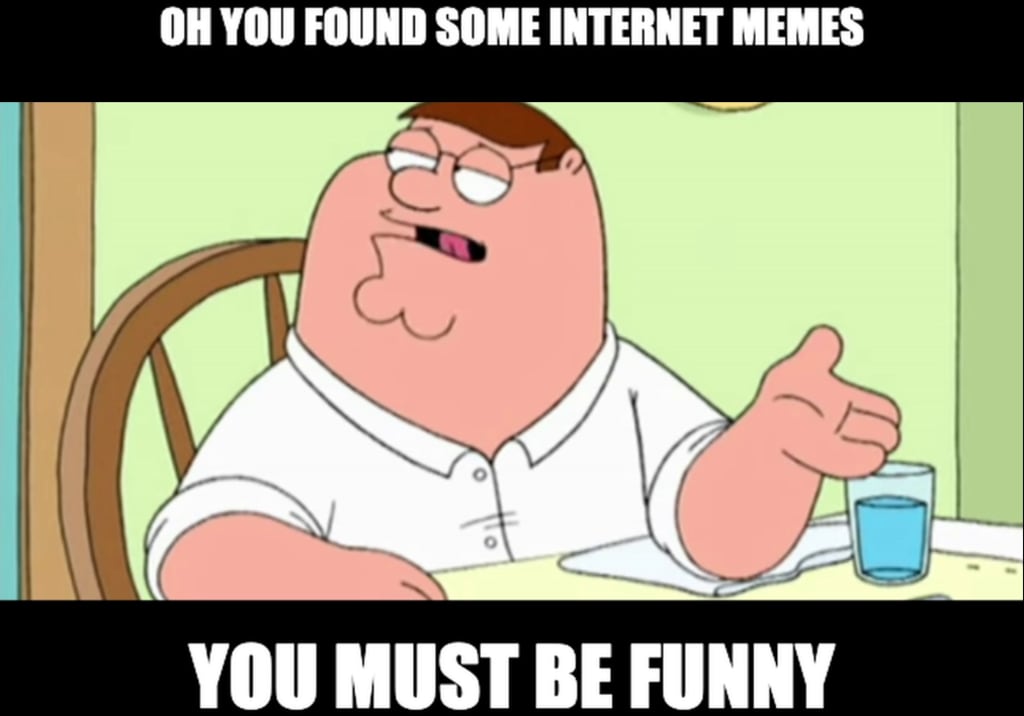
Evolution of Internet culture
Memes arose after the Internet became available to most people around the world. It took some time before they formed a separate cultural phenomenon. The animated series "South Park" will help you find this point in history. Thanks to sharp and relevant satire, he often serves as a mirror of society, in which the flow of socio-cultural processes can be traced.
In 2012, the Faith Hilling series was released in "South Park". The plot tells that Professor Lamont, who specializes in memes, was called to the city school. He researched the phenomenon of pictures of cats spreading rapidly on the Internet, and came to the conclusion that living organisms evolve thanks to their genes, and information thanks to memes.
Despite the humorous tone, the theory is not so far from reality. Memes have become the channel of mass communication through which a certain information drive first passes, then a recursion occurs, and memes on a certain topic become an information drive themselves. In a word, memes are modern folk creativity. The number of memes is only increasing, so isn't the audience tired of such an influx?
Politicization of memes
The involvement of memes in the political struggle has probably been one of the factors that have led to the growth of fatigue among the audience. For a long time, memes had the halo of innocent jokes created by people for people. The situation changed in 2016, when there was a sharp turn towards conservative political forces in the countries of the developed world.
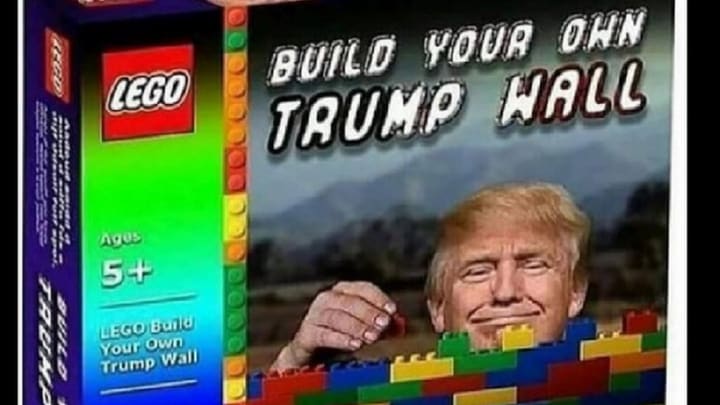
The campaigns that produced Brexit and brought Donald Trump to power were filled with misinformation, bots, provocations and, indeed, memes. Memes ceased to be manifestations of innocent folk creativity — instead, they were created by political technologists, who often planted dirty and hateful narratives.
Such a change in public consciousness has led to the fact that some memes adored by the audience have drastically changed their connotation. This is the case, for example, with "Peppe the Frog," a once wildly popular meme that brought author Matt Fury to fame. Previously, "Peppe" appeared in cute and naive jokes, but later the image became politicized and toxic.
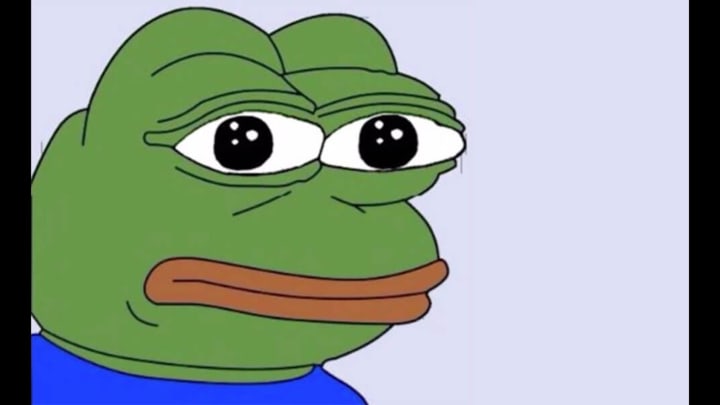
In 2016, "Peppe the Frog" became a favorite of extremists and ultra-conservatives. Far-right speakers have appropriated the image, actively using it in jokes demeaning migrants, Jews, sexual minorities, denying global warming, and glorifying leaders like Donald Trump. The struggle for the ideological affiliation of "Peppe" lasted for several months, but the right-wing radicals eventually won.
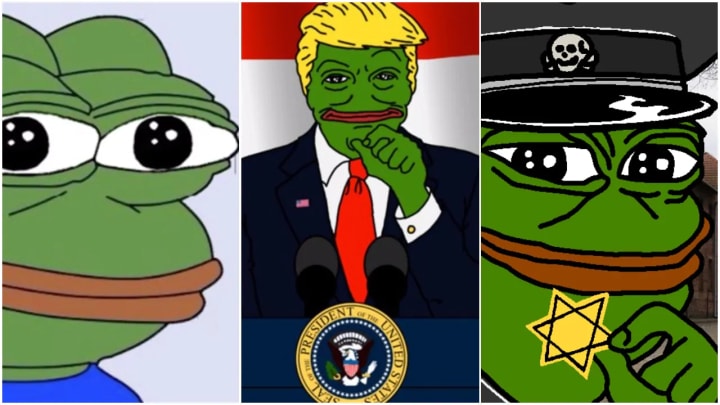
As a result of this transformation, the Anti-Defamation League (an organization that fights anti-Semitism and other manifestations of intolerance) was forced to add "Peppe" to the list of hate symbols. Matt Fury - the author of this popular image - was sympathetic to the situation, although he admitted that he was upset.
Brand communications
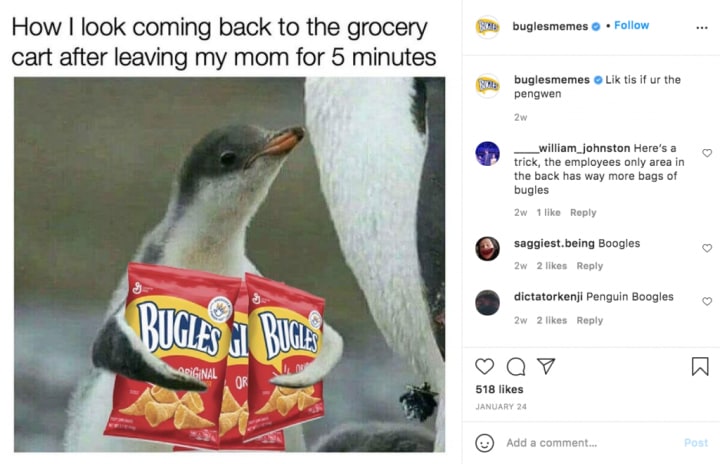
Predictably, memes have become a popular tool to satisfy not only political but also commercial goals. Business seeks to establish an emotional connection with the viewer, so with the boom of social networks, brands are willing to resort to meme communication. Since the beginning of the pandemic, this form of communication with the audience has become even more popular, as people spend most of their time online.
Too much of a good thing
In today's polarized world, memes have practically lost their niche as folk creativity. It is not so often that they unite people around innocent humor and everyday insights. Instead, memes have become a way to mark one's affiliation with a certain political camp or another tool for selling goods.
The golden age of the Internet is over, but that doesn't mean memes will never emerge from toxic political discourse. Corporations and politicians will eventually lose interest in them, and as with any cyclical trend, one day memes will once again become part of folk art. "Meme culture" will be revived when it is once again built on the foundations of creativity and life humor.
About the Creator
Sofi
Hello, I work as a web designer, and in general I am interested in everything related to design. Therefore, most of my articles will focus on design. I hope you enjoy my content
Hottest in the Office
Dear Rafi, You’re very distracting to work around. For the first second I saw you the other day, I thought you were some type of executive. It took a moment to realize no, you were just the new guy, dressed up for the job he wants. Be still, my heart.
By Gabriel Shames6 days ago in Pride



Comments
There are no comments for this story
Be the first to respond and start the conversation.