
Line of Fire-The India-Pakistan Conflict
The Struggle for Power in South Asia

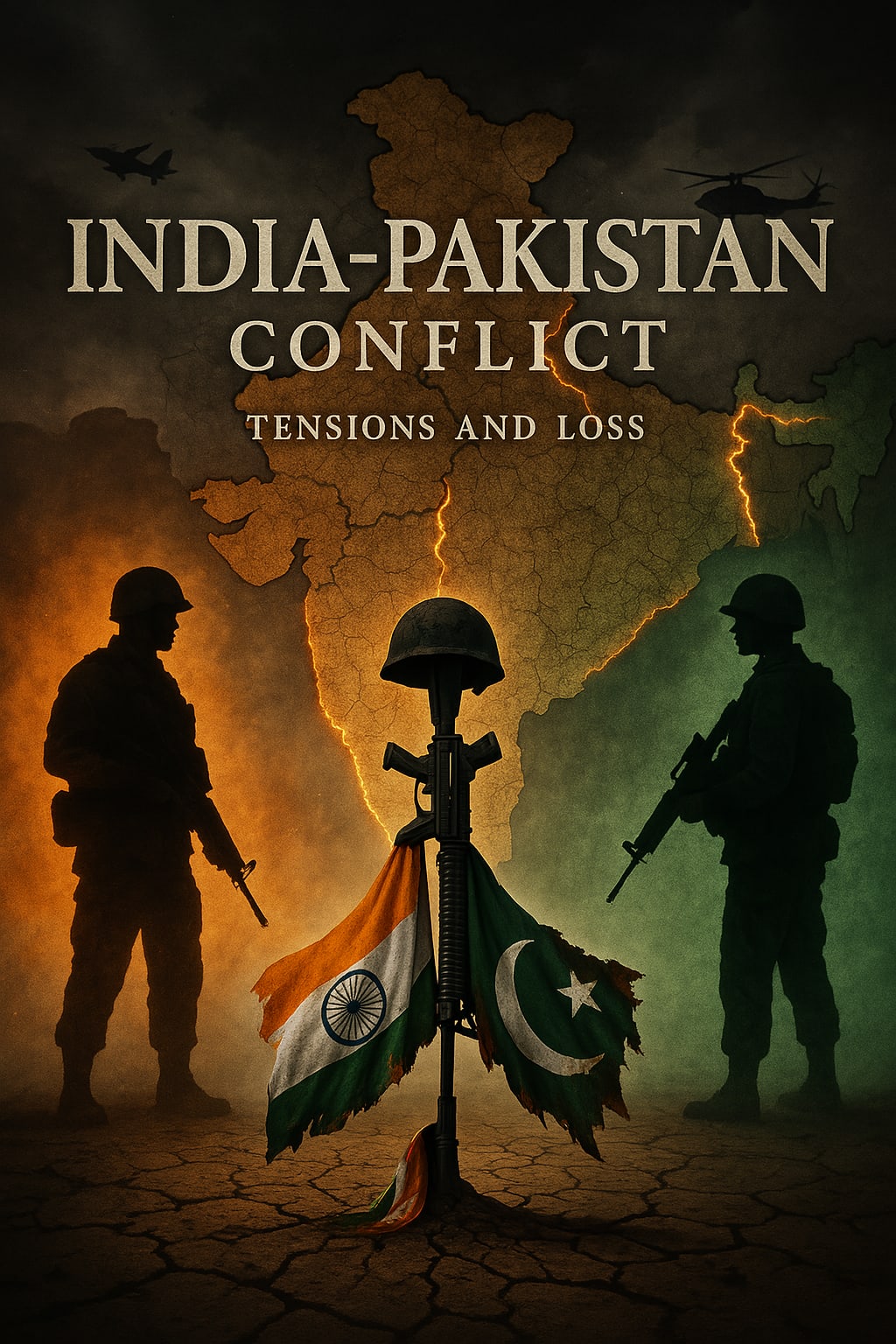
In the cold heights of the Kargil district in northern India, the summer of 1999 was far from ordinary. What should have been a season of melted snow and returning tourists turned into one of the fiercest battlegrounds between two nuclear-armed neighbors—India and Pakistan.
Captain Vikram Batra of the Indian Army, a 24-year-old officer from Himachal Pradesh, had just completed his training when he was deployed to the conflict zone. He was part of the 13 Jammu and Kashmir Rifles. His mission was daunting: to reclaim Point 5140, a key peak near Tololing, occupied by Pakistani infiltrators disguised as militants but supported by the Pakistani military.
The conflict had erupted silently. Infiltrators had crossed the Line of Control (LoC) during the winter months when troops on both sides typically reduced their presence due to extreme weather. The intruders entrenched themselves in bunkers at high altitudes, threatening India's supply lines to the strategically vital Siachen Glacier and Leh.
By May, Indian intelligence had confirmed the extent of the intrusion. What followed was a national call to arms. Operation Vijay ("Victory") was launched, with the aim of flushing out the enemy and restoring the sanctity of the LoC.
Captain Batra's unit began its assault under cover of darkness. The terrain was brutal: sheer cliffs, freezing winds, and enemy gunfire from above. The Pakistani side had the advantage of height, a cruel edge in mountain warfare. But Batra, known for his fearlessness and charismatic leadership, led from the front.
As the bullets flew and mortars shook the rocky slopes, Batra and his men pushed upward. They climbed with ropes, using their bare hands at times, all while dodging sniper fire. In a radio transmission after capturing the objective, Batra famously declared, “Yeh Dil Maange More!” – “This heart wants more,” a phrase that became a national rallying cry.
But Point 5140 was only the beginning.
Just weeks later, Batra was assigned to another critical operation: capturing Point 4875, one of the most treacherous enemy positions. This time, the resistance was even stiffer. The enemy had heavily fortified bunkers and machine-gun nests.
During the assault, one of Batra’s fellow soldiers was injured. Without hesitation, he rushed to save him, exposing himself to direct fire. In that moment of selfless bravery, Captain Batra was hit by enemy bullets. He succumbed to his injuries on July 7, 1999.
India eventually recaptured all the peaks and drove back the intruders. The Kargil War ended officially on July 26, now remembered as Kargil Vijay Diwas. The cost was staggering: over 500 Indian soldiers lost their lives, and Pakistan suffered similar, though unconfirmed, casualties.
Captain Vikram Batra was posthumously awarded the Param Vir Chakra, India’s highest military honor.
The Other Side of the Border
In Pakistan, the narrative was starkly different. The Kargil operation, known internally as Operation Badr, was designed by the Pakistani military under General Pervez Musharraf, then the army chief. The political leadership, including Prime Minister Nawaz Sharif, reportedly had limited knowledge of the scale of the operation when it began.
As casualties mounted and global pressure increased—especially from the United States—Sharif traveled to Washington to negotiate a ceasefire. The Pakistani military was eventually forced to withdraw, and the operation ended in a strategic failure despite the bravery of many Pakistani soldiers on the front lines.
For families on both sides, the cost of the conflict was the same: loss, pain, and unanswered questions.
Legacy and Reflection
The Kargil War became a turning point in India-Pakistan relations. It shattered the Lahore Declaration signed just months earlier in February 1999, which was supposed to be a symbol of peace and cooperation. Trust was eroded, and military vigilance along the LoC was never the same again.
To this day, the scars of Kargil remain fresh in the minds of those who lived through it. Soldiers became legends, border towns became symbols of resilience, and the war became a tragic reminder that even in a region with shared language, culture, and bloodlines, peace remains elusive.
About the Creator
BILAL KHAN
Hi I,m BILAL
Keep reading
More stories from BILAL KHAN and writers in Humor and other communities.
The Day I Stopped Chasing Happiness
I was raised to believe that if I just worked hard, made smart choices, and followed the plan, happiness would come—like a prize waiting at the end of a long, exhausting race. So I ran. I ran through school, through burnout, through bad relationships, and through all the signs my body and mind gave me to slow down.
By BILAL KHAN10 months ago in Humor




Comments
There are no comments for this story
Be the first to respond and start the conversation.