
You Don’t Need to Love Yourself First: The Ego Trap of Modern Self-Help

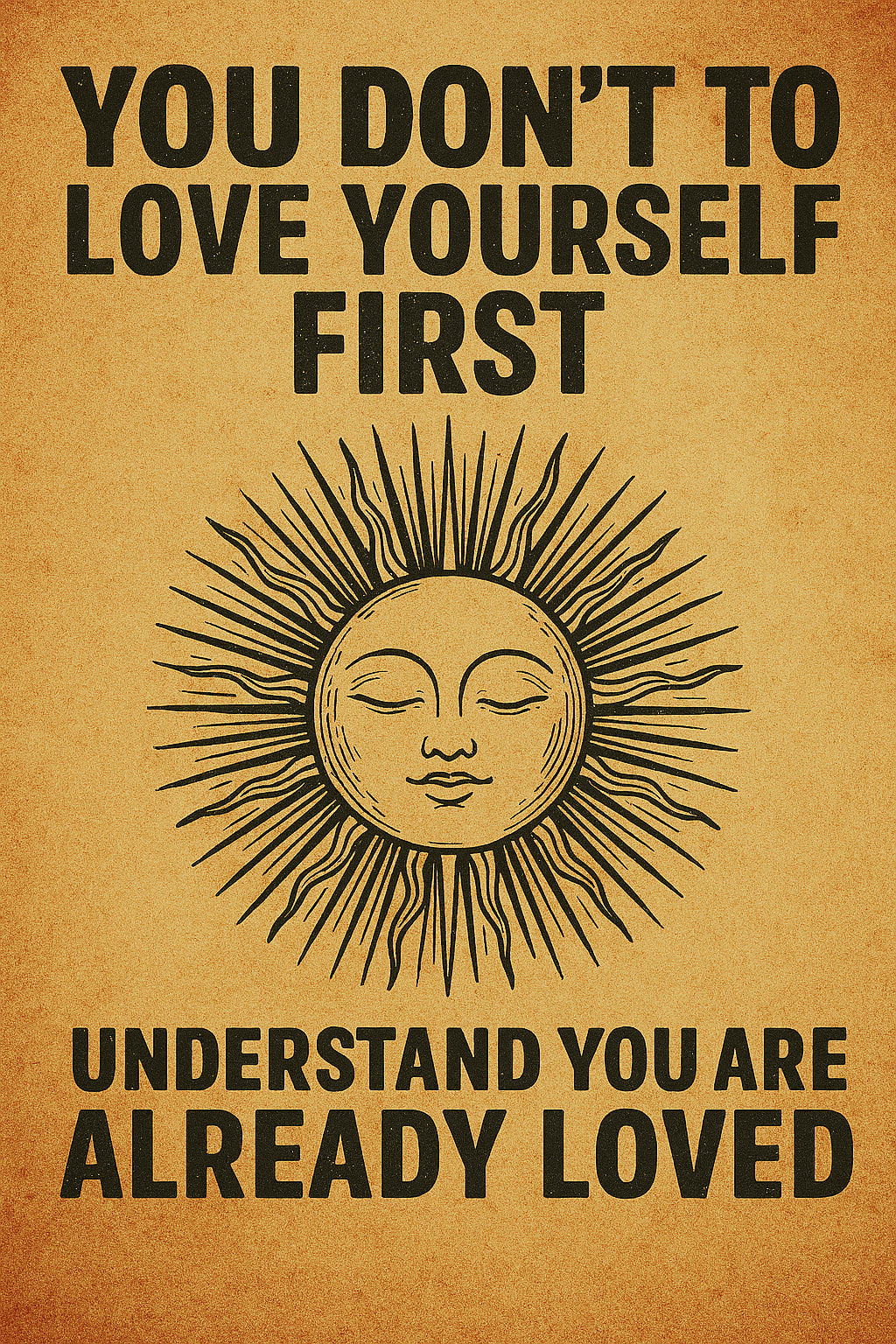
In today’s culture of relentless self-optimization, we are inundated with messages urging us to “love ourselves first.” From bestselling self-help books to viral Instagram affirmations, the mantra is clear: self-love is the key to healing, happiness, and success. But beneath this well-intentioned advice lies a subtle distortion -- one that may be doing more harm than good.
The idea that we must love ourselves before we can be whole is not only psychologically burdensome, but spiritually misleading. It places the responsibility for worthiness squarely on the individual’s shoulders, often reinforcing the very ego structures that perpetuate self-doubt, trauma, and isolation. In truth, the path to healing does not begin with self-love. It begins with surrender.
The Divine Origin of Worth
To understand why the self-love imperative can be misguided, we must first revisit a deeper truth: we are inherently lovable -- not because we have earned it, but because we are expressions of the Divine. Whether you call it God, Source, the Universe, or the Tao, the creative intelligence that birthed existence did not make mistakes. You were not created to be judged, fixed, or improved. You were created to be.
This is echoed in sacred texts across traditions. In the Bible, Psalm 139:14 declares: “I praise you because I am fearfully and wonderfully made; your works are wonderful, I know that full well.” This is not a statement of earned self-worth -- it is a recognition of divine craftsmanship. Similarly, the Bhagavad Gita teaches that the soul is eternal, unchanging, and beyond blemish: “The soul is never born, nor does it die... it is unborn, eternal, ever-existing, and primeval.” (Bhagavad Gita 2:20)
To truly heal, we must stop trying to manufacture love for ourselves and instead recognize that we are already loved -- unconditionally, eternally, and without exception.
The Ego’s Role in Self-Love
The modern self-help movement often conflates self-love with self-esteem, confidence, and personal empowerment. While these qualities are valuable, they are not synonymous with spiritual wholeness. In fact, the pursuit of self-love can become a trap when it is driven by ego -- the part of us that believes we are separate, flawed, and in need of constant validation.
The ego says: “I will love myself when I am successful, attractive, healed, or enlightened.” It sets conditions for worthiness and turns self-love into a performance. This is not love -- it is self-judgment dressed in affirmations.
True healing begins when we stop trying to love ourselves and start remembering that we are already loved. As the Sufi mystic Rumi wrote: “You are not a drop in the ocean. You are the entire ocean in a drop.” The Divine does not ask us to love ourselves first. It asks us to surrender to love itself.
Surrender as the Path to Healing
Surrender is not weakness -- it is the ultimate strength. It is the act of releasing control, letting go of self-judgment, and opening to the truth that we are held by something greater. When we surrender, we stop trying to fix ourselves and start allowing ourselves to be seen, known, and embraced by the Divine.
This surrender dissolves trauma, not by erasing the past, but by reframing it. We begin to understand that our pain does not make us unlovable -- it makes us human. And in our humanity, we are still divine.
Jesus taught this radical truth in Matthew 6:26: “Look at the birds of the air; they do not sow or reap or store away in barns, and yet your heavenly Father feeds them. Are you not much more valuable than they?” The message is clear: your value is not earned. It is inherent.
The Shift from Self-Love to Being Loved
When we shift from trying to love ourselves to accepting that we are loved, something profound happens. We stop striving and start receiving. We stop performing and start resting. We stop fearing rejection and start trusting grace.
This shift is not passive -- it is transformative. It allows us to move through the world with dignity, compassion, and resilience. We no longer need to prove our worth, because we know it is already established.
In the Tao Te Ching, Lao Tzu writes: “When you realize there is nothing lacking, the whole world belongs to you.” This is the essence of healthy self-esteem -- not the ego’s pride, but the soul’s peace.
Practical Implications for Healing
So what does this look like in practice? It means replacing self-love rituals with surrender rituals. Instead of affirming “I love myself,” try affirming “I am loved.” Instead of journaling about your goals for self-improvement, journal about the ways you are already whole. Instead of meditating to become better, meditate to remember your divine origin.
This approach does not negate the value of therapy, introspection, or personal growth. It simply reorients them. Healing becomes less about fixing and more about unveiling. Growth becomes less about striving and more about unfolding.
The Role of Grace
Grace is the unearned, unconditional love of the Divine. It is the force that holds us when we fall, forgives us when we err, and reminds us of our worth when we forget. Grace is not something we achieve -- it is something we accept.
In Ephesians 2:8, Paul writes: “For it is by grace you have been saved, through faith -- and this is not from yourselves, it is the gift of God.” This is the antidote to ego-driven self-love. We are not saved by loving ourselves. We are saved by accepting that we are loved.
Reframing Self-Esteem
Healthy self-esteem is not built on affirmations -- it is built on revelation. It is the revelation that you are a child of the Divine, worthy of love, belonging, and joy. It is the understanding that your value is not conditional, transactional, or performative.
This reframing liberates us from the tyranny of self-judgment. It allows us to show up authentically, love others freely, and navigate life with grace. We no longer need to be perfect -- we only need to be present.
Conclusion: From Ego to Essence
The cultural obsession with self-love is a symptom of spiritual amnesia. We have forgotten who we are, and in our forgetting, we have tried to manufacture worth through ego. But the truth is simpler, deeper, and more liberating: we are already loved.
To heal is to remember. To grow is to surrender. To thrive is to rest in the knowledge that we are lovable -- not because we love ourselves, but because the Divine loves us.
References
• Bible Verses
o Psalm 139:14 – “I praise you because I am fearfully and wonderfully made…”
o Matthew 6:26 – “Look at the birds of the air…”
o Ephesians 2:8 – “For it is by grace you have been saved…”
• Bhagavad Gita
o Chapter 2, Verse 20 – “The soul is never born, nor does it die…”
• Tao Te Ching by Lao Tzu
o Chapter 44 – “When you realize there is nothing lacking…”
• Rumi
• “You are not a drop in the ocean. You are the entire ocean in a drop.”
About the Creator
Julie O'Hara - Author, Poet and Spiritual Warrior
Thank you for reading my work. Feel free to contact me with your thoughts or if you want to chat. [email protected]
Keep reading
More stories from Julie O'Hara - Author, Poet and Spiritual Warrior and writers in Humans and other communities.
Blood in the Favelas: Rio’s Deadliest Police Operation Sparks Global Outcry
On October 28, 2025, the city of Rio de Janeiro witnessed one of the most violent and controversial police operations in its history. In a sweeping crackdown across several favelas, Brazilian security forces killed over 130 alleged drug traffickers in what officials have described as a decisive blow against organized crime. But for many residents, human rights advocates, and international observers, the operation has raised urgent questions about state violence, accountability, and the future of public security in Brazil.
By Julie O'Hara - Author, Poet and Spiritual Warrior3 months ago in Humans
Coming Out as Trans
Six years ago I had a well meaning therapist try to point out to me that I should take a look within myself and see how I feel about my gender orientation. He said this due to a year of me unloading all of my issues and insecurities onto him and a pattern that he recognized within my stories that I personally did not, and would not for another four years.
By Shiloh Madison2 days ago in Humans



Comments
There are no comments for this story
Be the first to respond and start the conversation.