
You CAN make friends through social media
People will tell you that social media actually makes you less social...... but that's not always true #UnpopularOpinion

As a theatre major I am told on a daily basis the importance of art in real time and some professors will take this to the next level and imply that social media is KILLING the "real way to create" or the "real way to meet people". I understand that there are many instances where this could be true. Some people do replace theatre or replace real life relationships for entertainment and friends that only exist on a screen, BUT "real life" and "social media" can coexist and even help each other.
I have always struggled with finding my group. Two years ago I had to cut off all my high school friends after hearing how unsupportive they are of my dreams. "Who would watch your videos?" they would tell me after I explained how interested I was in YouTube and creating online content. People in college weren't that explicitly anti-my dreams, but I could still tell they didn't get it. I was really struggling to find people who understood my passions and how important creating online entertainment is to me.
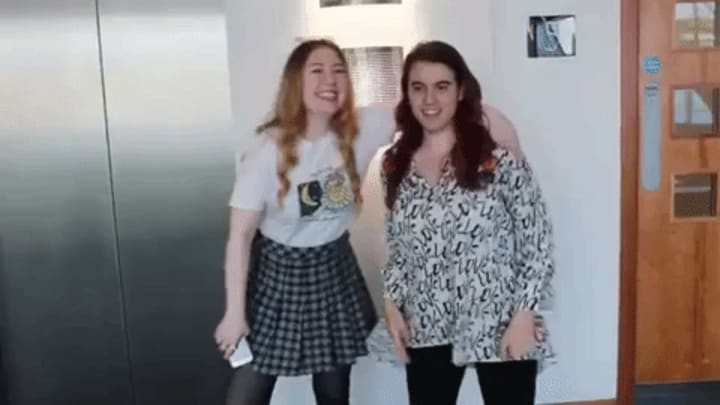
Introducing my two internet best friends.... JACK AND JODI!
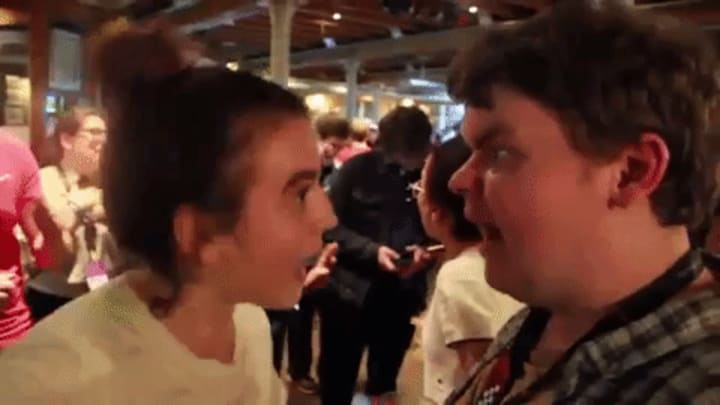
Jack and I met at VidCon London 2019. We watched each other's videos on youtube (that we discovered through a small youtubers facebook group) and we decided we would meet up. This was the first time I ever met with someone from my online world in real life. And I was so scared it would be awkward! But after we spent that glorious weekend with one another it genuinely felt like I knew him my whole life.
I traveled to Edinburgh to meet Jodi and again I was so nervous. We met through that same youtube group because we were both into music, but other than our love of singing how much would we really have in common? Spoiler alert: it went JUST AS WELL AS MY MEETUP WITH JACK!!
The first thing both of these lovely people did when we met up was hug me. And I could just tell that these were the same amazing people I connected with over silly messages. They were so open, so encouraging and it honestly felt like I found MY PEOPLE.
If I lived in a time before social media my network of colleagues and friends would be so much smaller and so much more dull. Creating online content has put me in contact with creatives who I never would have crossed paths with otherwise. It is crazy to say but the internet has made me MUCH more social and more excited to meet people than I ever have been before!
About the Creator
Athena Priftakis
YouTube- Athena P
Keep reading
More stories from Athena Priftakis and writers in Humans and other communities.
Intrusive thoughts make me think I'm a bad person
When I was little I questioned my faith. I was raised Greek Orthodox and one day my family was telling me the story of Jesus walking on water to save a man from drowning. Kid me then said "well if God made everyone walk on water no one would be drowning in the first place"... which honestly was a brilliant thought for a 6 year old to have. I was then yelled at because I shouldn't question or judge God. This is when my intrusive thoughts started. Because of my new fear of appearing unchristian these thoughts would pop into my head saying things like "you worship the devil" or "you're a demon". Which was really scary for 6 year old me... I wish they were like that now because the older I got, the scarier my fears became and because of that my perception of myself got worse and worse.
By Athena Priftakis6 years ago in Psyche
How to Build and Launch an MVP Faster with Scrum
Most product teams don't fail because they build the wrong thing. They fail because they spend too long building before they find out it's the wrong thing. By the time they get real customer feedback, they've burned through months of runway and a sizable chunk of their budget.
By Metizsoft Inc2 days ago in Humans




Comments
There are no comments for this story
Be the first to respond and start the conversation.