
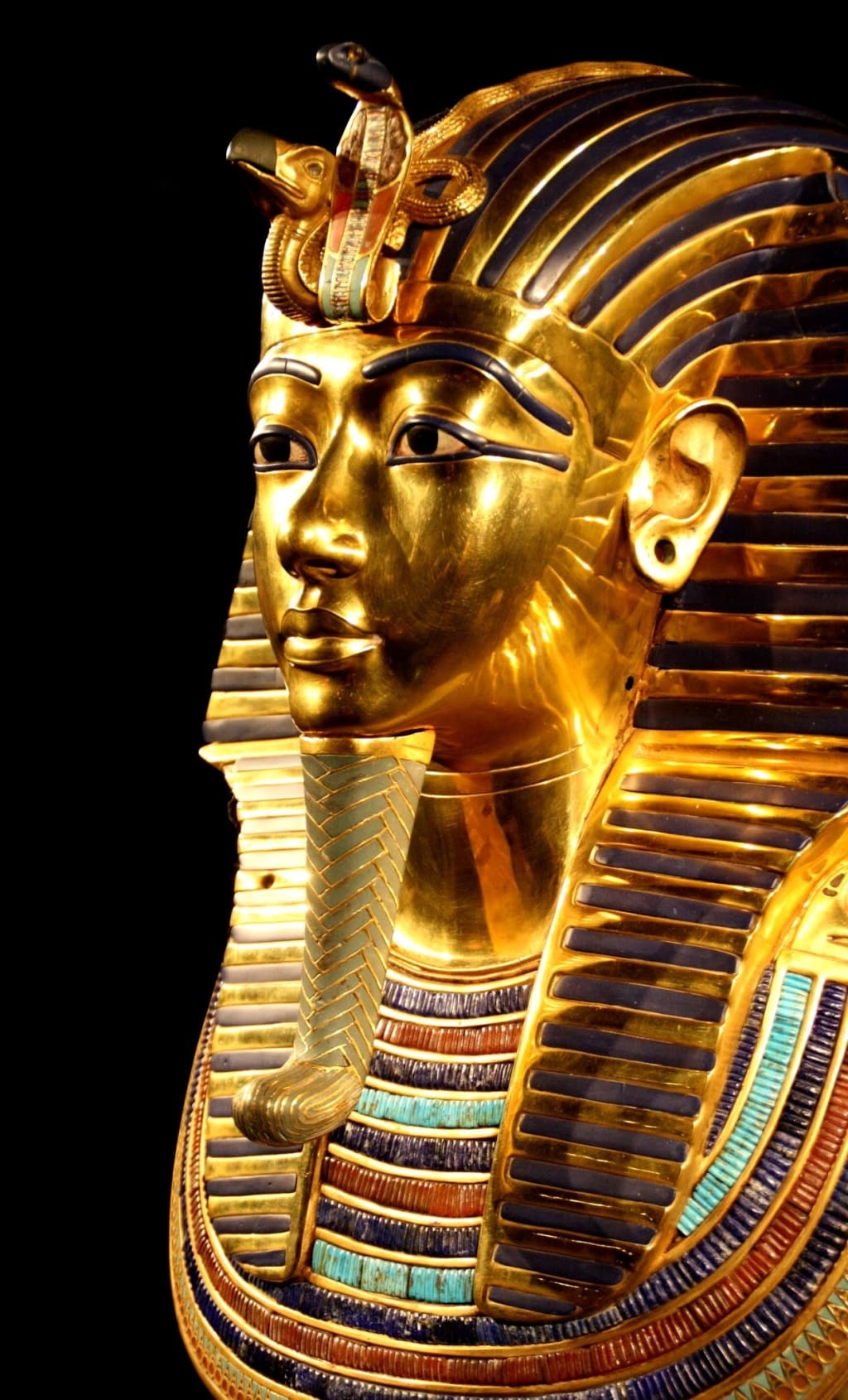
Why King Tut Had a Flat Head
We're here back in the Human Evolution Lab with Dr. Robert Martin, who is curator emeritus of human evolution here at the Field Museum, and today we're going to be talking about artificial head binding in ancient Egypt!
So uh, Bob can you start by telling us a little bit about what artificial head binding is?
Yes, you know, there are various cultural developments, for example, binding feet in China so that you're getting a permanent change and this is usually done in connection with the elite in society or particular groups and so what happens in head binding is that people deliberately set it out from birth to tightly bind the baby's skull in different ways so you can have a band across the crown or you can have it from front to back the baby's head is flexible for the first couple of years but after that, the head shape is pretty settled and so once you've done it, it's done for life
and it makes the head look very distinctive.
EG: And this is achievable because when the baby is born it's cranial bones aren't fused together?
RM: Absolutely.
The key thing is if you look at the skull just before birth
Humans have these gaps called fontanelles, there's a major one on the top of the skull
and there are subsidiary ones on the side.
Those gaps are there to allow flexibility
because we have such big brains
our babies only just passed through the pelvis
this is a female human pelvis, and going through the pelvis it will only go through if it's facing this way.
EG: Wow.
RM: And then when it gets part of the way through, it has to turn 90 degrees and it's facing backwards. We're the only primates that give birth with our babies facing backwards rather than to the front.
But that's why the bones are so flexible
and that allows you to produce this artificial shape by molding.
EG: Does this impact the fetal development at all?
I mean, does this have a negative impact on any other kind of developmental properties
or things that are happening to a baby?
RM: As long as you don't reduce the volume.
That would be bad news for the brain.
But if you just change the skull shape without changing the volume as far as we know there are no negative effects of doing this.
EG: Oh, that's good.
And it's interesting that this has come up with such notable figures from history like King Tut I mean we have this model which wasn't just artistically created to have a flattened head
but there is actual evidence that King Tut had experienced cranial deformation.
With my colleague JP Brown we CAT scanned
several Egyptian mummies in our collection.
And then when we are doing our mummy project we wanted to get a copy
of this reconstruction by the Smithsonian when it arrived we unpacked it from the box.
Oh my word, that is artificial cranial deformation.
And in fact, you can see a kind of saddle shaped depression over the top of the skull and then at the back underneath you've got a counterpart
It's interesting because his father Akhenaten had a skull shape like that
and Akhenaten was married to Nefertiti and it seems that she had this kind of head shape and they had 6 daughters. All 6 daughters had head shapes like that. And for many years Egyptologists have described this as an artistic style.
-Sure
We don't have the skulls to check that. But certainly for Akhenaten we have the skull and we have the skull of King Tut they definitely had head deformation and I'm pretty certain that it is artificial two mummies it was a 40 year old woman
and a priest son called Minirdis when we produced the 3d print from the skull then it became absolutely clear that there was a saddle play shape depression you can see it has an elongated shape but it's not extreme it's not like King Tut but it's subtle but it's there and so presumably the priests were doing this to get this distinctive head shape at least a thousand years later than King Tut so these are these are two separate events in time what I've seen is that there is no written evidence or record of like this happening for people in royal positions or higher society like King Tut why do you think there wouldn't be a record of this I think this was done in secret this was not something that was to be public knowledge whole idea was to take a small group of people and artificially change their head shape so that they would look different from everybody else and it kind of spoils the effect if you tell everybody what you're doing do you have any other thoughts about head binding and its prevalence in ancient Egypt do you have any other examples that you might want to talk about a big question for me as an anthropologist is why would so many different human populations independently hit on the idea of binding their babies heads and I've mentioned it at birth you can get misshapen heads and so you can get most of the shapes that people then use you get these cone heads and you also get skulls that are flattened from front back but I think one of the main influences was cradle boarding that many societies in many societies babies are carried around strapped to a board on the mother's back typically there's a bandage around the head holding the baby's head still eventually there can produce deformation but you can recognize it because it's not regular you it's asymmetrical whereas in something like King Tut if you look at this skull is beautifully symmetrical that is achieved by deliberately binding the head but it will be a short step from carrying babies around and noticing that you can artificially accidentally change the head shape to doing it deliberately I assume there are probably some people who might think that there were extra-terrestrial influence to the ways that we you know the shape of the head and obviously like there are movies that depict aliens coming to Earth with cone heads do you do you have any anything to say to dispel some of those rumors that might suggest that alien life forms are really at play there are skulls in Peru particularly from Nazcan Paracas they are so extreme that it's opened the door to people saying you know they this is so extreme it cannot be human and you know with the Nazca people it was particularly lines which are absolutely gigantic and people say well you can only see these properly from outer space and therefore they must be connected with aliens so take these strange head shapes and the Nazca lines and you've got the basis for a best-seller and quite recently somebody claimed that they had extracted DNA genetic material from one of these Nazca skulls and it wasn't the same as typical human DNA but they haven't published the results in a reputable journal and my advice is don't hold your breath.
the brain scoop is made possible by the Field Museum and the Harris family foundation it still has brains on it.
About the Creator
Keep reading
More stories from Sophia Douglas and writers in Humans and other communities.
5 Most Astonishing Logical Disclosures of the last 10 years
5 Most Astonishing Logical Disclosures of the last 10 years The last ten years was obviously one of the most extravagant times of logical disclosure. Every scientists across all disciplines tried speculations found demonstrates and visited places that have made us reconsider how we might interpret our own planets as well as of the whole universe. It was the ten years when we, at long last start to comprehend perhaps of the best test mankind has at any point confronted and we've learned undeniably more than ever before about probably the most horrendous items in presence. So we will investigate five of the most astounding logical revelations of the 2000 extreme.
By Sophia Douglas2 years ago in Earth
Anne-Marie Mediwake: Husband, Net Worth, Salary, Triplets & More
Anne-Marie Mediwake is a prominent Canadian television news anchor whose career spans decades across major broadcasters, including CTV, CBC, and Global News. Known for her sharp journalism, authenticity, and as a mother of triplets.
By Enoch Saginia day ago in Humans


Comments
There are no comments for this story
Be the first to respond and start the conversation.