
Why Kindness Isn’t Soft—It’s Rebellious
A strong opinion piece exploring how empathy can be a form of resistance.

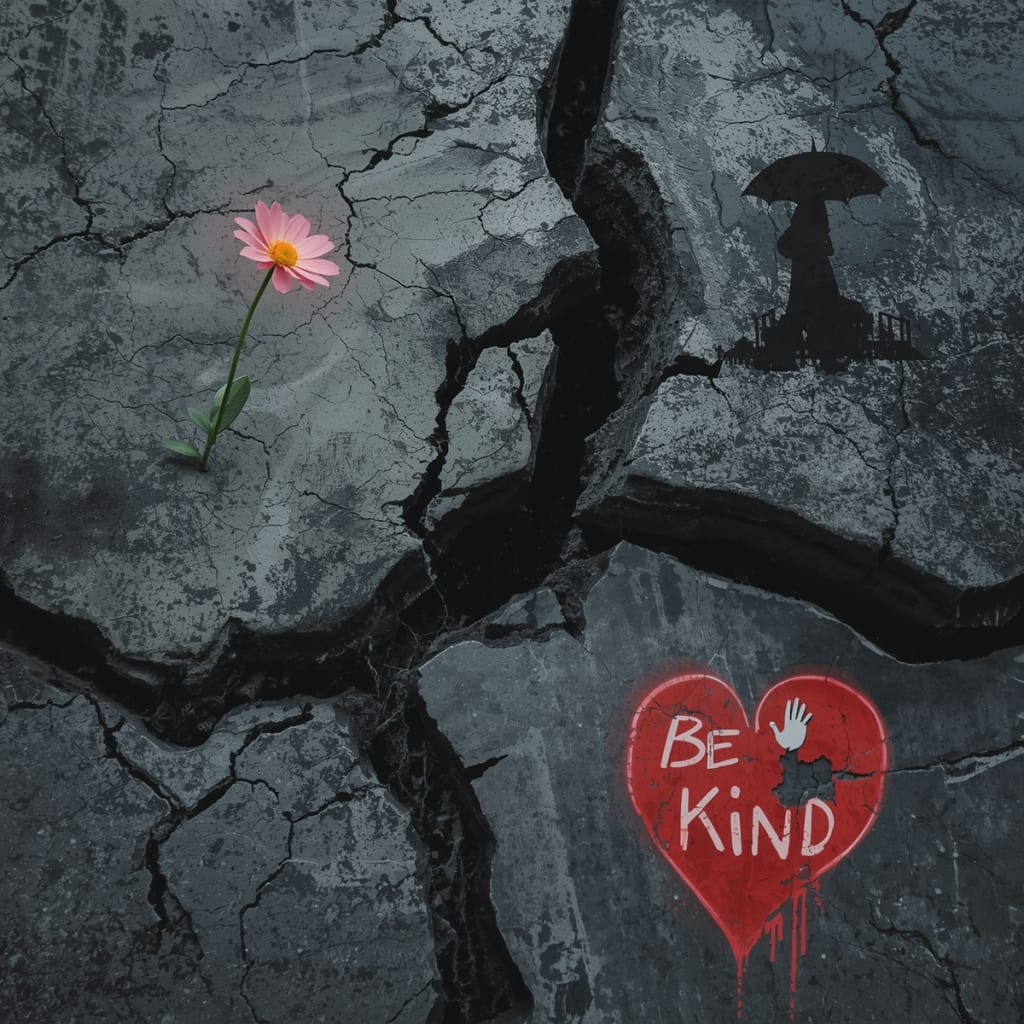
Why Kindness Isn’t Soft—It’s Rebellious
By Hasnain Shah
Kindness has always suffered from a reputation problem. It’s been painted as soft, passive, naïve—as if being gentle is the same thing as being weak. Growing up, I was told to “be nice,” but the tone always implied compromise, capitulation, silence. Kindness, in many people’s minds, is what you offer when you don’t have the backbone to stand up for yourself.
But the older I get, the more I realize something else entirely: true kindness is defiance. Genuine empathy, offered intentionally and without condition, is one of the most rebellious acts a person can commit in a world shaped by cynicism, division, and distrust.
Kindness isn’t soft. Kindness is subversive.
In a world trained for conflict, compassion is countercultural.
We live in a time where outrage is a currency. Social media algorithms reward the loudest voices, the sharpest insults, the most divisive takes. We are encouraged to choose sides, build walls, and defend them to the digital death. Every day, we’re fed the idea that compassion is foolish, generosity is suspicious, and empathy is something corporations put in advertising campaigns, not something real humans practice.
But then someone does something unexpected:
They hold the door open.
They listen without interrupting.
They treat someone without power as if they matter just as much as someone with it.
They choose to understand instead of attack.
And suddenly, they’re not harmless—they’re disruptive.
Kindness interrupts the script. It slows the cycle of escalation. It says, “I refuse to treat people the way the world has trained me to.”
That’s rebellion.
Kindness requires strength most people never exercise.
It is much easier to be sarcastic than sincere.
Much easier to dismiss someone than to understand them.
Much easier to look away than to help.
Cruelty is effortless. Indifference is convenient.
Kindness—real, consistent, inconvenient kindness—takes emotional labor.
It takes:
Restraint when provoked
Courage when compassion is unpopular
Vulnerability when offering warmth might not be reciprocated
Patience in the face of frustration
The willingness to see humanity where others see enemies
Anyone can lash out. Anyone can mock.
But it takes someone grounded, someone sure of themselves, to offer empathy when anger would be simpler.
Weakness doesn’t produce kindness; self-control does.
Fear doesn’t create empathy; confidence does.
When we are kind intentionally, we are not bending. We are choosing.
Empathy exposes lies that power depends on.
Look closely, and you’ll see something:
People in power rarely fear violence; they fear unity.
Divisive systems rely on individuals believing that other people are threats.
That strangers are dangerous.
That vulnerability is a liability.
That the world is a zero-sum game where someone else’s gain is your loss.
But empathy disrupts this narrative.
When we choose to understand someone from a different background, belief system, or political side, we do something radical: we weaken the idea that we are enemies by nature. We expose the lie that we must fight to survive.
Empathy builds bridges in places where systems profit from walls.
This is not softness.
This is resistance.
Kindness doesn’t mean avoiding conflict—it means transforming it.
People often imagine kindness as agreeing with everyone. That isn’t kindness; that’s avoidance. Real kindness holds boundaries without cruelty. It tells the truth without humiliation. It stands up for what is right without becoming what it opposes.
Kindness can look like:
Interrupting bullying
Refusing to participate in gossip
Speaking firmly but respectfully
Defending someone who can’t defend themselves
Saying “no” without apology
Offering forgiveness, not as surrender, but as liberation
There is a kind of fierceness in refusing to lose your humanity even when others lose theirs.
Kindness is a rebellion of choice—again and again.
Every day we are given opportunities to be hard. To be cynical. To be suspicious. To mirror the negativity around us because it’s effortless.
But choosing kindness—even once—is choosing disruption.
Choosing it repeatedly is choosing a revolution of character.
Imagine a world where people didn’t mock uncertainty but guided it.
Where people didn’t fear differences but explored them.
Where strangers didn’t assume the worst but offered the benefit of the doubt.
Where compassion wasn’t a reaction but a principle.
This isn’t the world we live in.
But we can make it the world we build.
One rebellious act at a time.
Kindness isn’t soft. It’s the courage to remain human in an inhuman world.
There is nothing weak about choosing to understand when others shout.
Nothing fragile about helping when you could ignore.
Nothing soft about believing in humanity when cynicism feels safer.
Kindness is rebellion—quiet, powerful, and profoundly disruptive.
And the more chaotic the world becomes, the more revolutionary it is to stay gentle.
About the Creator
Hasnain Shah
"I write about the little things that shape our big moments—stories that inspire, spark curiosity, and sometimes just make you smile. If you’re here, you probably love words as much as I do—so welcome, and let’s explore together."
Keep reading
More stories from Hasnain Shah and writers in Humans and other communities.
The Stranger Who Changed My Entire Year in 30 Seconds
The Stranger Who Changed My Entire Year in 30 Seconds By Hasnain Shah I used to believe that meaningful moments arrived with orchestral music, dramatic lighting, or some unmistakable sense of fate. But the moment that changed my entire year—my entire approach to living, really—came quietly. It came in a grocery store aisle, between a stack of dented canned peaches and a display of cereal no one ever buys unless it's on sale.
By Hasnain Shah3 months ago in Humans




Comments
There are no comments for this story
Be the first to respond and start the conversation.