
Why Facts Don’t Change Minds
How Belonging, Not Logic, Shapes What We Believe—and What Truly Leads to Change

Have you ever had a conversation with someone who refused to believe the truth, even after you showed them clear facts? You might have shared an article, a video, or a real-life example—yet, they held tightly to their opinion. It can be frustrating, but it’s also very common. So why does this happen? Why don’t facts change people’s minds?
Let’s take a closer look.
We All Want to Be Right—But We Want to Belong Even More
As humans, we like to think of ourselves as logical beings. We believe we make decisions based on reason, evidence, and truth. But in reality, that’s not always the case. Often, emotions, social ties, and group identity play a much bigger role in what we believe than facts do.
Humans are social creatures. We want to feel safe, accepted, and part of a group. Thousands of years ago, being part of a tribe was necessary for survival. If you were left alone, your chances of staying alive were slim. Today, the danger is gone, but the need to belong is still strong in our minds.
Because of this, we sometimes hold onto beliefs that match what our group thinks—even if those beliefs aren’t true. Why? Because agreeing with the group keeps us connected. Disagreeing can make us feel like outsiders.
Beliefs Bring Belonging
Let’s say your family or close friends believe in something strongly. You might start to believe it too, not because you’ve studied the facts, but because it helps you feel closer to them. If you suddenly changed your mind and disagreed with them, you might feel left out or even face conflict. That’s a big emotional cost.
Psychologists say that sometimes, we choose beliefs not because they’re correct, but because they keep us connected to others. Our brains are actually fine with that. If believing something brings us support, love, or respect, our minds are happy to hold onto it—even if it’s not based on truth.
This explains why people often defend false beliefs so strongly. It’s not just about being right—it’s about feeling safe and accepted.
Changing Beliefs Means Changing Tribes
When someone changes their belief, they may risk losing the support of their group. That’s a scary thought. So when we try to change someone’s mind by showing them facts, we may be asking them to make a much bigger change than we realize. We’re not just asking them to think differently—we’re asking them to step away from their tribe.
That’s why change is hard. It’s not because people are stubborn or silly. It’s because believing something new can feel lonely.
Connection Comes Before Correction
So, what can we do? If facts alone don’t change minds, what does?
The answer is simple but powerful:
Instead of trying to win arguments, try to build relationships. When people feel seen, heard, and respected, they’re more open to new ideas. If someone trusts you and feels safe around you, they may be more willing to consider different viewpoints—even those that go against their group’s beliefs.
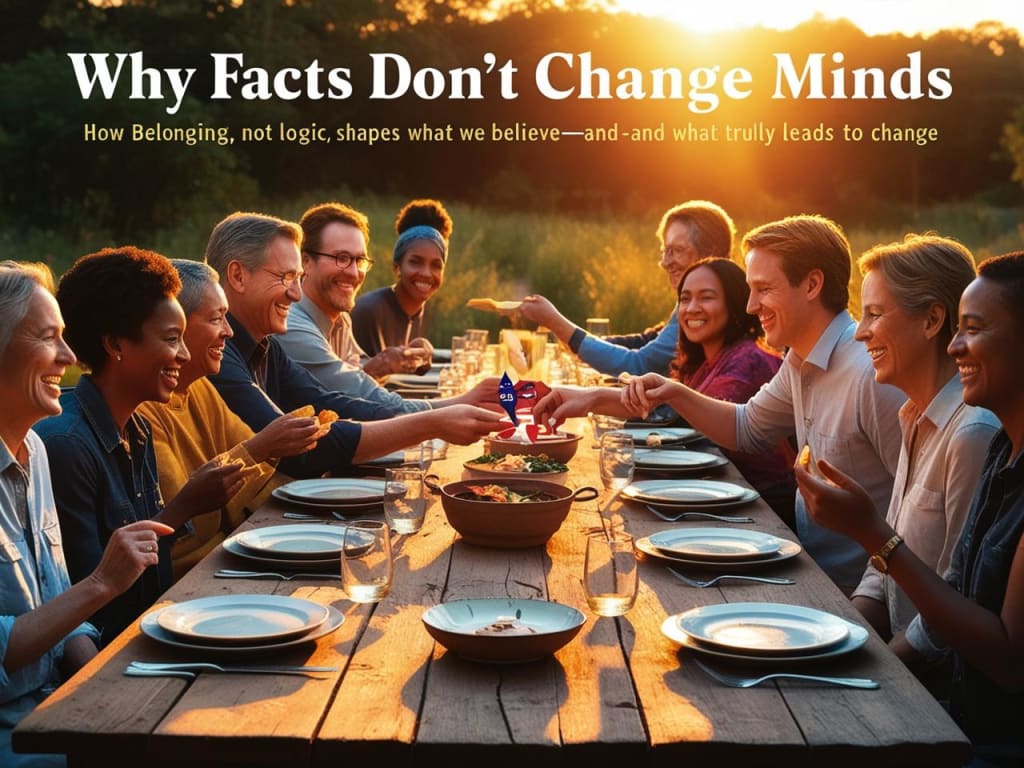
Something as small as sharing a meal, having a calm conversation, or spending time together can help. When people sit down, laugh, and connect as human beings, it becomes harder to hate, harder to argue, and easier to listen.
Getting Closer Builds Understanding
A great quote by Abraham Lincoln says, “I don’t like that man. I must get to know him better.” This shows the power of getting closer to people we disagree with. When we take the time to understand others, we often realize we have more in common than we thought.
Real change happens when distance is replaced by closeness. When we stop seeing others as enemies and start seeing them as people, minds begin to open.
Final Thoughts
Facts are important. Truth matters. But if we want to truly help others grow, we must lead with kindness, not arguments. We must create spaces where people feel safe enough to think differently.
Changing a mind isn’t about proving someone wrong. It’s about showing them they won’t be alone if they change.
Because in the end, it’s not facts that change minds—it’s friendship.
About the Creator
Keep reading
More stories from Muhammad Farhad Khan and writers in Humans and other communities.
School Closures in the United States: Why They Happen and What People Want to Know
School Closures in the United States: Why They Happen and What People Want to Know School closures in the United States continue to raise questions among parents, students, and educators. Many people search online asking why schools are closing, whether closures are temporary or permanent, how long they last, and whether students will return to classrooms. This report explains the main reasons behind school closures in America and addresses the most common questions people ask.
By America today 7 days ago in Humans



Comments
There are no comments for this story
Be the first to respond and start the conversation.