
Why Do Humans Kiss to Express Affection?
An Emotional Decoding Across Evolution and Civilization


A kiss, involving the intimate contact of lips, is a universal language of emotion for humans, transcending geographical and ethnic boundaries. Whether it’s a deep, passionate kiss between romantic partners, a gentle peck among relatives, or a ceremonial forehead kiss in social settings, this simple physical gesture carries emotional weight far beyond mere physical contact.
Tracing back from the perspective of evolutionary biology, kissing is not an accidental cultural invention, but a paradigm of emotional expression etched with the dual imprints of biological instinct and civilizational evolution. Numerous interdisciplinary scientific studies have jointly revealed that behind humans’ use of kissing to convey affection lie three layers of underlying codes: evolutionary selection, physiological regulation, and cultural shaping.
Evolutionary Origins: From Grooming Behaviors to Emotional Bonds
The origins of kissing are deeply rooted in millions of years of human evolutionary history, with its rudiments traceable to the social bonding rituals of our early primate ancestors. Robin Dunbar, Professor of Evolutionary Psychology at the University of Warwick in the UK, among others, has contributed to the theory that kissing evolved from social grooming behaviors.
This provides a key insight: early primates engaged in mutual grooming to remove parasites, clean skin, and — crucially — strengthen social bonds. As human ancestors gradually lost their thick body hair, the hygienic function of grooming weakened, yet the bonding imperative remained. The physical intimacy and focused attention inherent in grooming likely provided a behavioral template. With the development of the brain and the refinement of the emotional system, these precursors gradually evolved into dedicated, ritualized acts of emotional expression, such as kissing.
Archaeological findings also confirm the antiquity of this behavior — cuneiform tablets from Mesopotamia around 2500 BCE, such as the Epic of Gilgamesh, record intimate kissing; in ancient Egyptian reliefs and ancient Greek Homeric epics, kissing further served expressive functions for kinship, friendship, and love.

Physiological Code: The Chemical Reactions Behind Kissing
From a physiological standpoint, kissing can be described as a precisely regulated “emotional chemical reaction.” The density of nerve endings in human lips is extremely high (over 1,000 per square centimeter, many times that of fingertips). The moment lips make contact, dense tactile signals are rapidly transmitted to the brain’s limbic system — the core region responsible for emotion, motivation, and reward processing.
During a deep kiss, the brain releases significantly elevated levels of dopamine; this neurotransmitter directly triggers feelings of pleasure, reward, and excitement, fostering a stronger emotional focus on and attachment to the partner. Moreover, an intimate kiss lasting several minutes stimulates the hypothalamus to secrete oxytocin, the “bonding hormone,” which helps reduce anxiety, enhance feelings of trust and calm, and deepen emotional connection.
Interestingly, saliva exchanged during a kiss contains a variety of biological information, including hormones, enzymes, and microbes. Research suggests that through this subtle chemical exchange, individuals might subconsciously glean information about the other’s Major Histocompatibility Complex (MHC) genes, which are linked to immune system function. A preference for partners with dissimilar MHC profiles could confer potential immune advantages for offspring, representing an evolutionary strategy for promoting genetic compatibility and offspring health. Additionally, experimental data indicate that passionate kissing can reduce levels of the stress hormone cortisol while boosting the secretion of mood-elevating endorphins, contributing to natural stress relief and enhanced well-being.
Cultural Shaping: Diverse Expressions and Social Norms
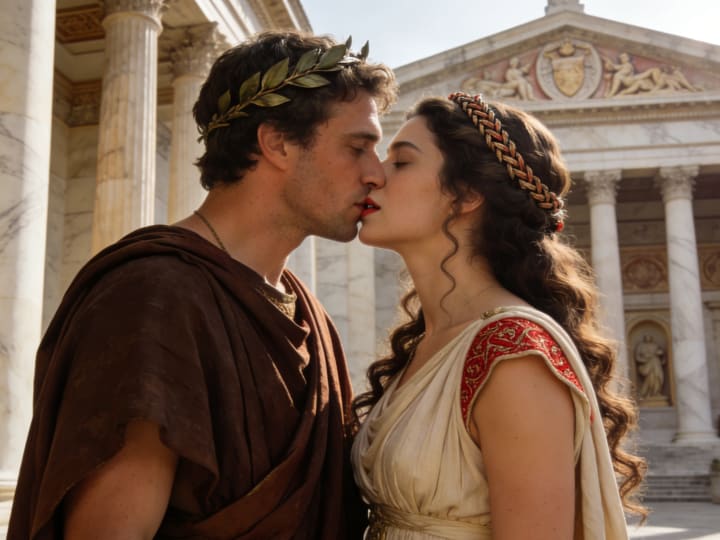
Cultural evolution has endowed kissing with diverse forms of expression and distinct social norms, integrating this gesture into the fabric of different civilizations. In ancient Rome, kissing was refined into three socially-coded types: the osculum (a light cheek kiss) for general social etiquette, the basium (a kiss on the lips) for close friends and family, and the savium (a deep kiss) for lovers, each corresponding to specific social hierarchies and emotional boundaries.
Practices, contexts, and taboos surrounding kissing vary widely across cultures. For instance, public kissing between unrelated men and women may be discouraged in some Middle Eastern societies due to religious or cultural norms; many traditional East Asian cultures historically favored bowing or other non-contact greetings over kissing for intimate salutations; and Polynesian cultures feature the hongi (the pressing together of noses and foreheads) as a profound greeting that shares the breath of life.
Despite this rich diversity, the core function of kissing as a powerful means of conveying emotion and strengthening bonds remains a constant. In modern global society, kissing has become a central symbol of romantic intimacy. From iconic kiss scenes in film and television to greeting and farewell kisses in daily life, this gesture is continually infused with new emotional connotations, while sustaining a widespread social understanding: the nature and context of a kiss often reflect the closeness of the relationship.
Conclusion: An Emotional Code Transcending Time and Space
From the social grooming of primates, through the varied expressions of ancient civilizations, to its status as a modern emotional symbol, the act of kissing has evolved over millennia. Yet its core function — to transmit emotion and consolidate bonds — has endured. Kissing has become a trans-temporal and cross-cultural language of affection because it aligns with deep-seated instinctual needs, engages powerful physiological reward and bonding systems, and fulfills a fundamental human desire for intimate connection.
In the moment lips meet, we experience not only the warmth of touch but also the echoes of an evolutionary history millions of years in the making, filtered through the rich prism of human culture. This simple, profound gesture remains an indelible and vital mark in the landscape of human emotion.
About the Creator
Cher Che
New media writer with 10 years in advertising, exploring how we see and make sense of the world. What we look at matters, but how we look matters more.
During profound sleep, breathing and brain signals become disorganised.
Researchers have shown that during the deepest stage of sleep, respiration and brain activity in important movement circuits become out of sync. This division changes how the sleeping brain interprets signals from the body and uncovers a secret deep rest rule.
By Francis Dami4 days ago in Humans
Silken Chains
Silhouettes of the female form were given flesh and bone. Silken skin glistened under the spotlight. Dry ice rose around our Icons as they danced atop their podiums in the Square. Heralded for their beauty, their movements were slight, powerful, and sensual.
By Paul Stewart7 days ago in Fiction



Comments
There are no comments for this story
Be the first to respond and start the conversation.