
Whispers Between the Lines
A Story of What’s Felt but Never Said

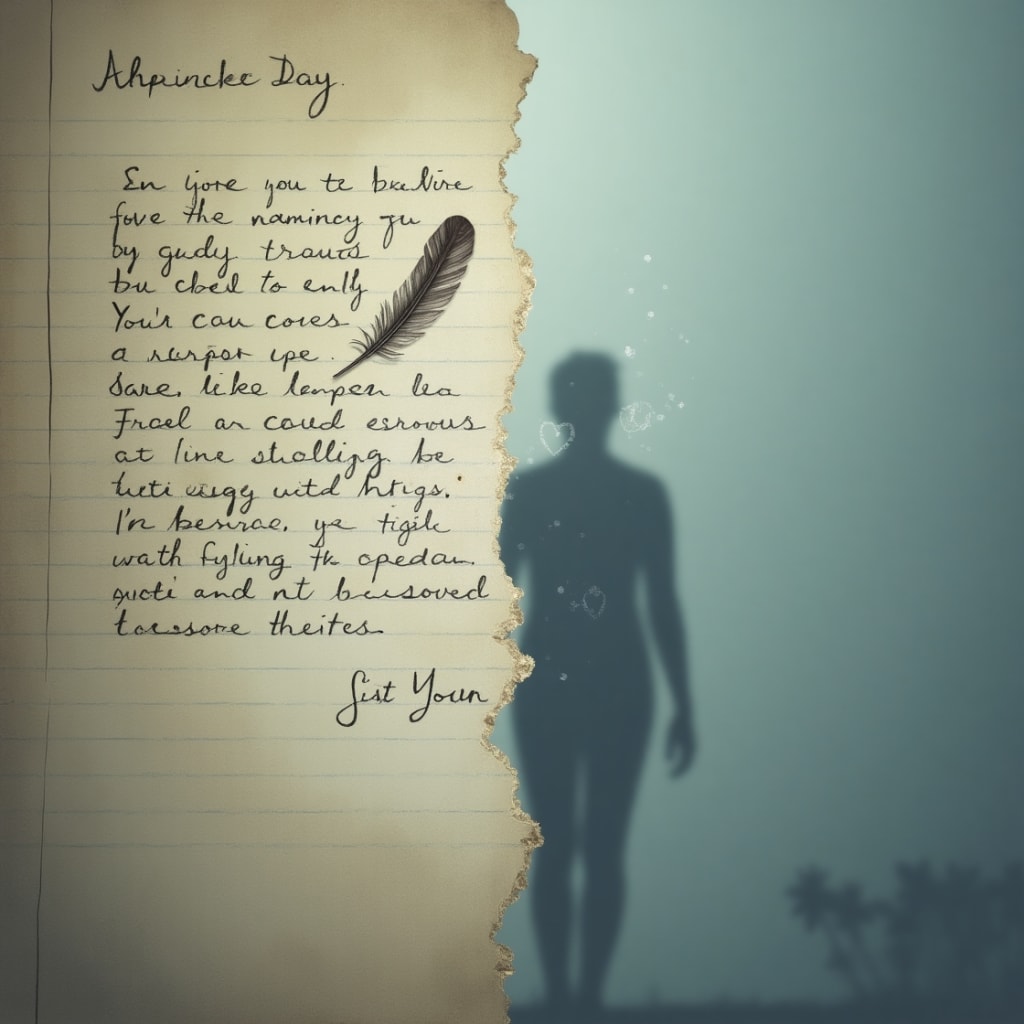
When I was a child, my mother wrote letters she never sent.
They lived in a small wooden box beneath her bed, wrapped in silk scarves that smelled of lavender and something more elusive—maybe regret. I wasn't supposed to know about them. But children have a way of sensing the emotional weight of hidden things.
She wrote in cursive, her handwriting elegant and looping like vines on a garden wall. I remember the first time I found one—accidentally, at least I told myself it was. I was looking for a missing sock, or maybe I was just looking for her, in some way. She had been drifting further away each year since my father died.
I unfolded a letter with trembling fingers. It wasn’t addressed to me, or anyone really. Just a single line at the top: "To the space you left behind."
She wrote to the absence. To the air. To the grief that filled the silence he had left. And in those letters, she said everything she could never say out loud.
The house was quiet, even when we were in it. My mother wasn’t cold—she was warm in the way sunlight is on a winter morning. Gentle, but distant. You had to step into it to feel anything at all.
We had conversations, of course—about school, about dinner, about cleaning my room. But never about the things that mattered. Never about why her eyes would glaze over when she thought I wasn’t looking, or why she never played the piano anymore, though she used to fill our home with music before the silence settled in like dust.
I learned to speak her language: gestures, pauses, glances. I learned to read between her words, where the real messages lived. When she said, “It’s cold today,” she meant, “I miss him.” When she said, “Be careful,” she meant, “I can’t lose you too.”
It wasn’t until after she died that I began to read all the letters.
I found the box again, years later, in the attic of the old house, tucked behind Christmas ornaments and faded photo albums. I had come home to sell the place. I had told myself I didn’t feel anything anymore. That her distance had built walls between us that no longer needed tearing down.
But when I opened that box, the walls cracked.
Some letters were addressed to my father, detailing ordinary days in aching detail—what she made for dinner, the way the sky looked at 7 p.m., how I had started drawing stars on the margins of my schoolbooks.
Others were addressed to me.
But none were meant to be seen.
"You were five when I first realized I was afraid of loving you too much. I saw how easily everything can disappear. I started holding my breath every time you left the house."
"You asked me once why I never told you stories about my childhood. The truth is, I never wanted to pass the weight of my wounds onto you. But I see now—maybe that silence became its own kind of burden."
"You remind me of him in the way you dream. That terrifies me, and makes me proud, all at once."
The letters weren’t perfect. Some were rambling. Some tear-stained. Some ended mid-sentence. But they were the most honest parts of her I had ever known.
It changed the way I remembered her.
Not as a woman made of quiet sighs and unspoken rules. But as someone who loved fiercely in the only way she knew how—through protection, through presence, through the written word never meant to be read.
I kept the letters. I read one every year on her birthday.
And eventually, I began writing my own.
Not emails. Not texts. Letters. Long, clumsy, vulnerable letters. To people still here. To people gone. To my younger self. To my future child. I wrote what I meant while I still had time to mean it out loud.
Because now I know: sometimes the most important things live not in what’s said, but in the courage to say them anyway.
And every time I put pen to paper, I imagine her reading over my shoulder, whispering between the lines, proud that I finally learned how to speak in the language of the heart.
About the Creator
Keep reading
More stories from Muhammad Hashim and writers in Humans and other communities.
This One Habit Changed Everything for Me—And It Takes 5 Minutes a Day
It started on a random Tuesday morning. I was sitting at my desk, staring blankly at the screen, trying to remember why I had opened that tab. My coffee had already gone cold, emails were piling up, and my to-do list looked like a novel I didn’t want to read. Despite working hard every day, I constantly felt behind. My energy was scattered, and everything felt urgent but nothing felt important.
By Muhammad Hashim9 months ago in Humans
The CEO of Everything
They say "jack of all trades, master of none," but they forgot to mention the part where the jack of all trades is also the camera woman, the makeup artist, and the person currently yelling at a tangled Wii microphone cable in a her own bathroom while recording herself singing and trying to make it look realistic and professional. (As professional as you can make it with nothing but a cell phone camera and a mic that doesn't work)
By Sara Wilson6 days ago in Humans




Comments
There are no comments for this story
Be the first to respond and start the conversation.