
When Water Became More Precious Than Coffee
A drought turned daily comforts into luxuries, teaching us the true value of every drop


It began with a notice slipped under every apartment door. At first, I thought it was junk mail, but the bold letters caught my eye: “Due to drought conditions, the city will begin water restrictions effective immediately.”
I didn’t take it too seriously. We’d had restrictions before—don’t water your lawn in the afternoon, don’t wash your car on weekends. People usually ignored them, and life went on. But this time was different.
Within days, the taps started slowing down. At first, the pressure was just weaker. Then the water would cut out for an hour in the afternoon. My neighbor Maria, who lived with three kids, came knocking at my door asking if I had stored extra bottles. “The kids can’t even brush their teeth,” she said, holding a half-empty jug.
At work, the first sign of change was the coffee machine. I walked into the office kitchen one morning, desperate for my usual cup, and found a note taped to the machine: “Out of service. Water rationing.” People were stunned. No coffee in an office felt like a crime. Some laughed nervously, others grumbled, but soon the reality sank in.
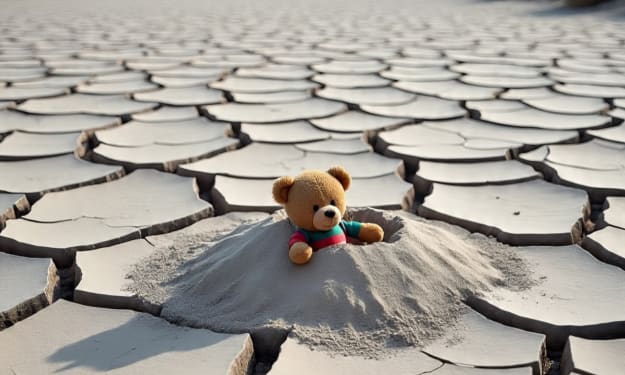
By the end of the week, the city’s fountains were shut off. The little park near my building, where kids used to splash their feet in the summer, looked lifeless. The grass turned brittle, and the air smelled of dust. Cafes closed early because they couldn’t serve drinks. A sign outside one read: “We can live without lattes, but not without water.”
At home, my mother became obsessed with saving every drop. She put a bucket under the sink to catch water from rinsing vegetables. That bucket later filled the toilet tank. Showers became a race against the clock—no singing, no daydreaming, just soap and rinse. I remember standing under the weak stream one evening, trying to wash my hair while the water sputtered like it was about to give up. For the first time in my life, I felt guilty for wanting the comfort of a long shower.
The most striking moment came one Saturday morning when the city set up public water stations. People lined up with buckets, bottles, even cooking pots. The scene looked like something from a different world, yet it was our city street. I carried two large jugs and stood in line behind an elderly man holding a small plastic bottle. He turned to me and said, “I lived through wars, but I never thought I’d live through this.” His words hit me harder than the heat of the sun.
At home that night, we tried to make pasta, but halfway through boiling, the water looked too precious to waste on cooking. My brother suggested we soak the noodles instead. They came out chewy, but we ate them with quiet acceptance. Food didn’t matter much anymore—water did.
One afternoon, I visited my favorite café just to see if it was still open. The barista stood behind the counter, wiping down mugs with a dry towel. The espresso machine was silent, its chrome surface gathering dust. He looked at me and shrugged. “Funny, isn’t it? We used to pour gallons of water every day without a thought. Now I’d trade all the beans in this shop for a single full jug.”
I walked home, thinking about how much of our life was built on the assumption that water would always be there—coffee in the morning, showers at night, clean clothes, green parks, cold drinks. Losing it felt like losing the rhythm of living itself.
By late August, tension spread through the city. People whispered about whether the reservoirs would run dry. Rumors said the government might bring in trucks from other regions. Supermarkets started limiting bottled water sales. I saw arguments break out in line—two strangers fighting over the last case of sparkling water. It wasn’t about bubbles anymore. It was survival.
But then, one evening, clouds finally gathered. The first drop of rain hit my balcony railing with a sharp sound. I ran outside, and neighbors did too. Children held out their hands to catch it. Grown men stood in the open, letting the drizzle soak them. The relief was overwhelming, like the city itself was breathing again.
Still, the rain didn’t erase what we had lived through. Even after the taps returned to normal, my mother kept her bucket under the sink. I caught myself turning off the shower after just a minute, even when the water was flowing freely again. And coffee—my old daily ritual—no longer felt as important. Every sip reminded me of what it had cost.
Climate change wasn’t a headline anymore. It wasn’t a faraway drought or a story from another country. It was the empty fountains, the silent coffee machines, the neighbors waiting in line for a trickle of water. It had reshaped our days, our habits, and our sense of what really mattered.
Now, when I walk past that café and see steam rising again from the espresso machine, I feel a strange gratitude. But I also wonder—what happens the next time the taps slow to a trickle? Will we remember how fragile comfort really is, or will we forget until water becomes more precious than coffee again?
About the Creator
LUNA EDITH
Writer, storyteller, and lifelong learner. I share thoughts on life, creativity, and everything in between. Here to connect, inspire, and grow — one story at a time.
Keep reading
More stories from LUNA EDITH and writers in Humans and other communities.
When the Shelter Closes
Across the street from my house, a man slept under a tree, his dog by his side. My first, naive thought: he must be traveling through. But he kept coming back, often sleeping there during the day. Then it hit me—that person might not have a home.
By Bride of Sound7 days ago in Humans
How Local Singles Can Solve Conflicts Quickly Using Emotional Awareness
Emotional awareness refers to the skill of being able to identify, perceive, and analyze emotions personal and those of other people. This is a skill that is crucial in conflict resolution among local singles who are going through dating and relationships. With the identification of emotions at an early stage (frustration, jealousy, disappointment) people will be able to resolve problems before they get out of control. Knowledge of emotions is also applicable to the process of discerning between instant reactions and underlying emotional trends and responding intelligently. Emotionally aware singles are more communicable, more levelheaded and less prone to needless misunderstandings that lead to healthier relationships and faster conflict resolution both in casual and committed relationships.
By Robert Smith7 days ago in Humans


Comments
There are no comments for this story
Be the first to respond and start the conversation.