
When the Mind Learns to Rest
A Story About Reducing Anxiety Through Small, Human Steps


Anxiety did not arrive dramatically in Sara’s life.
It didn’t come with a single disaster or a clear beginning. Instead, it crept in quietly, disguising itself as responsibility, ambition, and care. It whispered, Be prepared. Be careful. Be perfect. For a long time, Sara believed those whispers were helping her survive.
She was known as the reliable one. The one who planned ahead, remembered deadlines, worried about details others ignored. People admired her for it. What they didn’t see was the cost: the tight chest before meetings, the racing thoughts before sleep, the constant sense that something terrible was just seconds away.
At night, her mind became a courtroom where every mistake she had ever made was put on trial. Conversations replayed with new accusations. Futures unraveled in terrifying imagination. Her body lay in bed, but her nervous system ran marathons.
Doctors told her she was “healthy.” Friends told her to “relax.”
But Sara didn’t know how to explain that anxiety was not a switch she could turn off. It was a fire alarm that rang even when there was no smoke.
The breaking point came one afternoon in a bookstore. Sara stood in the self-help section, scanning titles about calm, productivity, happiness. Suddenly, her vision blurred. Her heart pounded so loudly she feared others could hear it. The room felt too small. She dropped her book and rushed outside, gasping for air like she had surfaced too fast from deep water.
She sat on the curb, shaking, embarrassed, exhausted.
That was the day Sara stopped asking, “How do I get rid of anxiety?”
And started asking, “How do I live with it differently?”
Her first real change was not a technique—it was permission.
She gave herself permission to slow down.
Instead of rushing through mornings, she began waking up ten minutes earlier to sit quietly with her tea. No phone. No news. No planning. Just warmth in her hands and breath moving in and out. At first, her thoughts resisted the silence, filling it with worry. But Sara didn’t chase them away. She noticed them, the way one notices passing cars.
She learned something important: thoughts are events, not commands.
When anxiety tightened her chest during the day, she stopped fighting it. Instead, she placed a hand over her heart and said silently, I’m safe right now. Her body didn’t always believe her—but over time, repetition softened the fear.
Sara also began working with her breath, not as a cure, but as an anchor. She practiced exhaling longer than she inhaled, signaling her nervous system that the danger had passed. She breathed into her belly, into her back, into the places that held fear without words.
Little by little, her body learned that calm was possible.
The hardest lesson came next: Sara had to change how she spoke to herself.
She realized her inner voice sounded like a harsh manager who never approved of rest. When anxiety rose, that voice would say, What’s wrong with you? Why can’t you handle this?
So she tried something radical—kindness.
When anxiety appeared, she spoke to herself as she would to a frightened child:
Of course you’re overwhelmed. You’ve been carrying too much for too long.
At first, it felt unnatural. Weak, even. But kindness didn’t make her fragile—it made her steady.
Sara also learned to ground herself in the present. When her mind raced into the future, she returned to what was real: the texture of the chair beneath her, the sound of birds outside, the feeling of her feet touching the floor. Anxiety lived in imagined tomorrows. Relief lived in now.
She began moving her body gently, not to fix herself, but to release tension. Walks without destinations. Stretching without goals. She noticed how motion loosened the knots her thoughts had tied.
Another turning point came when Sara learned to set boundaries.
She stopped saying yes automatically. She stopped overexplaining her needs. She accepted that disappointing others was sometimes the price of protecting her peace. Each boundary felt uncomfortable at first—but afterward, her anxiety softened, as if grateful.
Sara also limited what she consumed. Too much news. Too many opinions. Too much comparison. She realized anxiety feeds on overload. So she chose fewer inputs and deeper breaths.
There were setbacks. Days when panic returned uninvited. Nights when sleep still refused her.
But now, Sara didn’t panic about panic.
She understood that anxiety was not failure—it was information. It told her when she was tired, overstretched, or ignoring her limits. Instead of silencing it, she listened.
One evening, months later, Sara found herself back in the same bookstore. She paused in the same aisle. Her heart beat steadily. The air felt spacious.
Anxiety was still there—but quiet, like background noise instead of a siren.
She smiled, not because she had conquered anything, but because she had learned to coexist peacefully with her own mind.
Sara finally understood this truth:
Reducing anxiety is not about controlling your thoughts.
It’s about creating safety in your body, compassion in your mind, and balance in your life.
She walked home slowly, breathing evenly, grounded in her steps. The world hadn’t changed—but her relationship with it had.
And that made all the difference.
Anxiety no longer defined her days.
It no longer ruled her nights.
She was not fearless.
She was aware.
She was gentle.
She was free enough.
About the Creator
A Historic Declaration
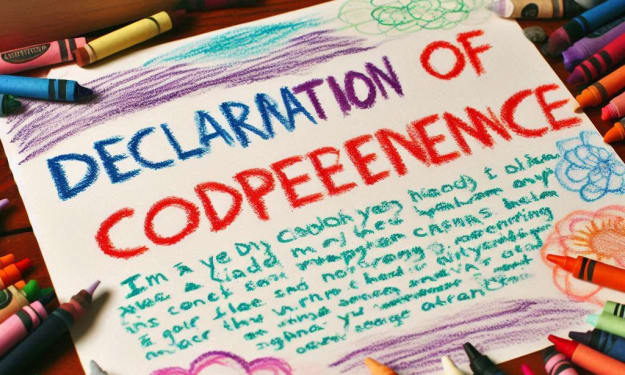
We the People of the Husbands of the United States of America, in Order to form a more perfect Union, and I mean you...with me...establish Justice, insure domestic Tranquility, provide for the common defence, promote the general Welfare, and secure the Blessings of Liberty to ourselves, after Puberty, do ordain and establish this Declaration of Co-Dependence.
By Gerard DiLeo6 days ago in Humans
Real-Time Solutions For Singles Experiencing Loneliness And Rejection
Loneliness or rejection may be a challenging experience, yet it is the knowledge of its origins that will be the starting point in coping effectively. The reason is that loneliness is usually caused by the lack of any meaningful social contacts, and rejection in dating can initiate feelings of inadequacy or low self-esteem. The identification of these patterns assists the singles to react deliberately and not in a reactive way. Reflecting on the past experiences, expectations in the relationship, as well as personal triggers, is clarifying. Realising that a no on a date does not mean that one is undesirable makes self-blame less as a factor. Consciousness gives people the strength to do so in future engagements.
By Robert Smith7 days ago in Humans
Who is your "Person"?
It's important to recognize that you cannot go through life as easily on your own. My name is Elizabeth and I'm a survivor of child abuse and horrific trauma. Healing from trauma is not a quick fix and recognizing that it will take time, is part of the struggle.
By Elizabeth Woods2 days ago in Psyche



Comments
There are no comments for this story
Be the first to respond and start the conversation.