
When Society Closes Doors to Those With Disabilities
We All Loose Out

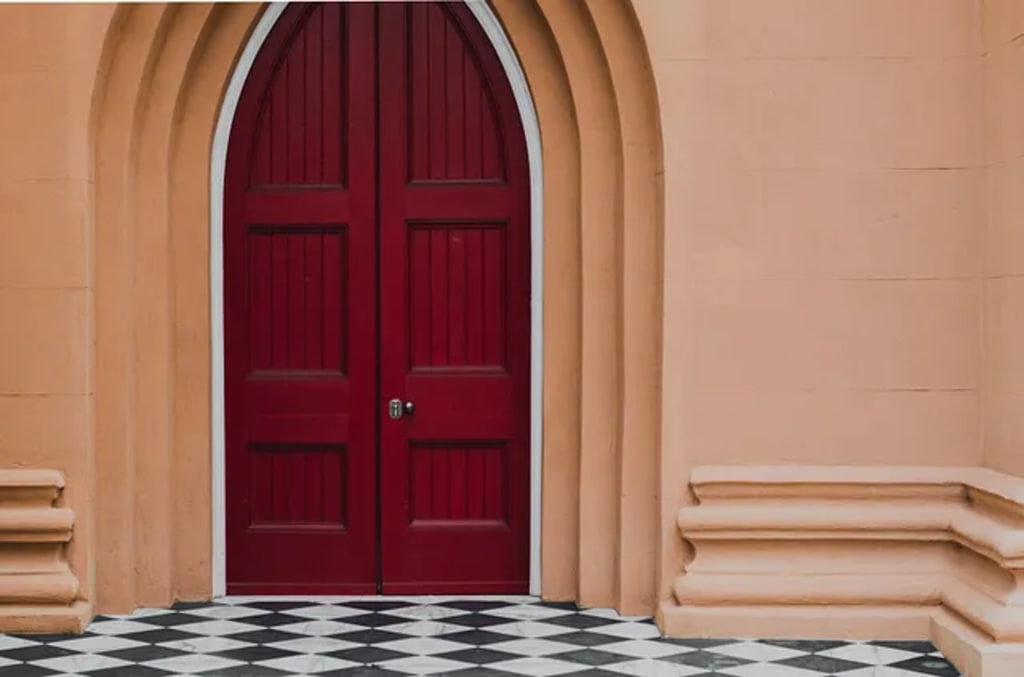
If a quarter of the population were suddenly eliminated from the workforce, this would have a profound impact. Those on the front lines would have more responsibility piled on them. Quantity and quality would drop as businesses struggled to stay ahead of production with the same deadlines and less employees to complete the work.
About one in four adults have a disability in one form or another, leaving those with disabilities the largest minority in the world, as well as the only one that anyone can become part of at anytime, of course disability is a rather broad term. Let’s break it down…
⬇️
According to Wikipedia a Physical disability is a limitation on a person’s physical functioning, mobility, dexterity or stamina.[1] Other physical disabilities include impairments which limit other facets of daily living , such as respiratory disorders , blindness , epilepsy[2] and sleep disorders.
The causes of disabilities vary and can occur before, during or after birth, they can be caused from illness, accident or injury, and though two people may have a Spinal Cord Injury at the same level, even then the severity can differ greatly, as can the effect this has on a person’s daily living.
There are visible disabilities as well as invisible disabilities, sadly many assumes that just because they can’t see the pain, or the way any particular invisible disability affects a person it must not be real, but put yourself in that person’s shoes. Would you constantly want to have to prove yourself, convince others that you are really in pain?
This is what Wikipedia has to say about Invisible Disabilities…
Invisible disabilities, also known as hidden disabilities or non-visible disabilities (NVD), are disabilities that are not immediately apparent, are typically chronic illnesses and conditions that significantly impair normal activities of daily living.
For instance, some people with visual or auditory disabilities who do not wear glasses or hearing aids, or who use discreet hearing aids, may not be obviously disabled. Some people who have vision loss may wear contact lenses. A sitting disability is another category of invisible impairments; sitting problems are usually caused by chronic back pain. Those with joint problems or chronic pain may not use mobility aids on some days, or at all. Most people with RSI move in a typical and inconspicuous way, and are even encouraged by the medical communityto be as active as possible, including playing sports; yet those people can have dramatic limitations in how much they can type, write or how long they can hold a phone or other objects in their hands.
It is estimated that 1 in 10 people live with an invisible disability.
Mental Disabilities is another rather broad term, for a variety of disabilities affecting mental capacity in one way or another. Wikipedia explains Mental Disabilities as follows..
Mental disability may refer to:
*Developmental disability, a chronic condition due to mental or physical impairments arising before adulthood*
*Disabilities affecting intellectual abilities, medical conditions affecting cognitive ability including:*
*Intellectual disability, also known as general learning disability, a generalized neurodevelopmental disorder*
*Learning disability, where a person has difficulty learning in a typical manner*
*Mental disorder, also called mental illness or psychiatric disorder, a behavioral or mental pattern that causes impairment of personal functioning*
*Neurodevelopmental disorder, a disorder of brain function*
*Emotional and behavioral disorders, a disability classification used in educational settings*
And an emotional disability, also referred to as a behavioral disability is described below, according to Wikipedia…
An emotional or behavioral disability is a disability that impacts a person’s ability to effectively recognize, interpret, control, and express fundamental emotions. The Individuals with Disabilities Education Act of 2004 characterizes the group of disabilities as Emotional Disturbance (ED). This term is controversial as it is seen by some as excluding or even discriminating against students with behavior issues and just focuses on the emotional aspects.
Now that we have gotten the definitions out of the way, let’s get to the subject at hand, when society closes the door to those with disabilities.
Example A
A perspective teacher goes into apply for a position as a teacher at a local school, this teacher is well qualified, but she happens to be in a wheelchair due to a Spinal Cord Injury a few years earlier, a less qualified able bodied teacher applies for the same job and is hired on the spot, despite teachers A’s qualifications, excuses will likely be used but this is a primary example of Disability discrimination, something that sadly still continues in the twenty first century.
Example B
An Autistic young man is arrested, a case of mistaken identity, but the young man’s actions cause the arresting officer to act inappropriately, inside the young man’s wallet is an explanation of his disability, he read the card, the explanations, but continued to act roughly towards this young man, not only a sign of discrimination but of inappropriate action.
Example C
A child wants to go to a well loved amusement park, but she uses crutches and braces to get around, for longer distances a wheelchair, unfortunately there is little to no access at the park, making the little girl feel left out?
We live in a society that is often ableist, and I believe a lot of that is based on fear, but it’s not fair that fear stops progress, that it stops perfectly capable people of succeeding in the careers they choose, it’s not fair that schools, churches, synagogues, parks, businesses lack access and often compassion..
When society closes the door on those with disabilities not only are they hurting the person with the disability but they are hurting society at large.
© Michelle R Kidwell
August.06.2022
About the Creator
Michelle Renee Kidwell
Abled does not mean enabled. Disabled does not mean less abled.” ― Khang Kijarro Nguyen
Fighting to end ableism, one, poem, story, article at a time. Will you join me?
Keep reading
More stories from Michelle Renee Kidwell and writers in Humans and other communities.
When the Last Petal Falls
Dear Mimmi: It seems strange writing you a letter over seventeen years after you were gone. I have to be honest, it feels a little strange to write you over seventeen years after you traded your earthly home for your heavenly one. You weren't even thirty six, when you died, newly married with a nine year old son.
By Michelle Renee Kidwellabout a year ago in Humans
Lost and Alone in the French Alps
Looking back, I can trace some of my life’s biggest adventures to a simple action from my sister. She’d introduced me to Tommy (a very long time ago), a colleague of hers, who had overshared his penchant for Italian-looking women, and I ticked that box.
By Chantal Christie Weiss13 days ago in Humans


Comments (1)
I became disabled at 70 years old so perhaps it is the largest minority in the world, and with the baby boomer population aging it will perhaps be the largest segment of society. Great Article Michelle - Well Done!!