
When Krishna Answers the Questions of Your Soul
Can You Live, Love, Work… and Still Be Spiritual? Krishna Says Yes.

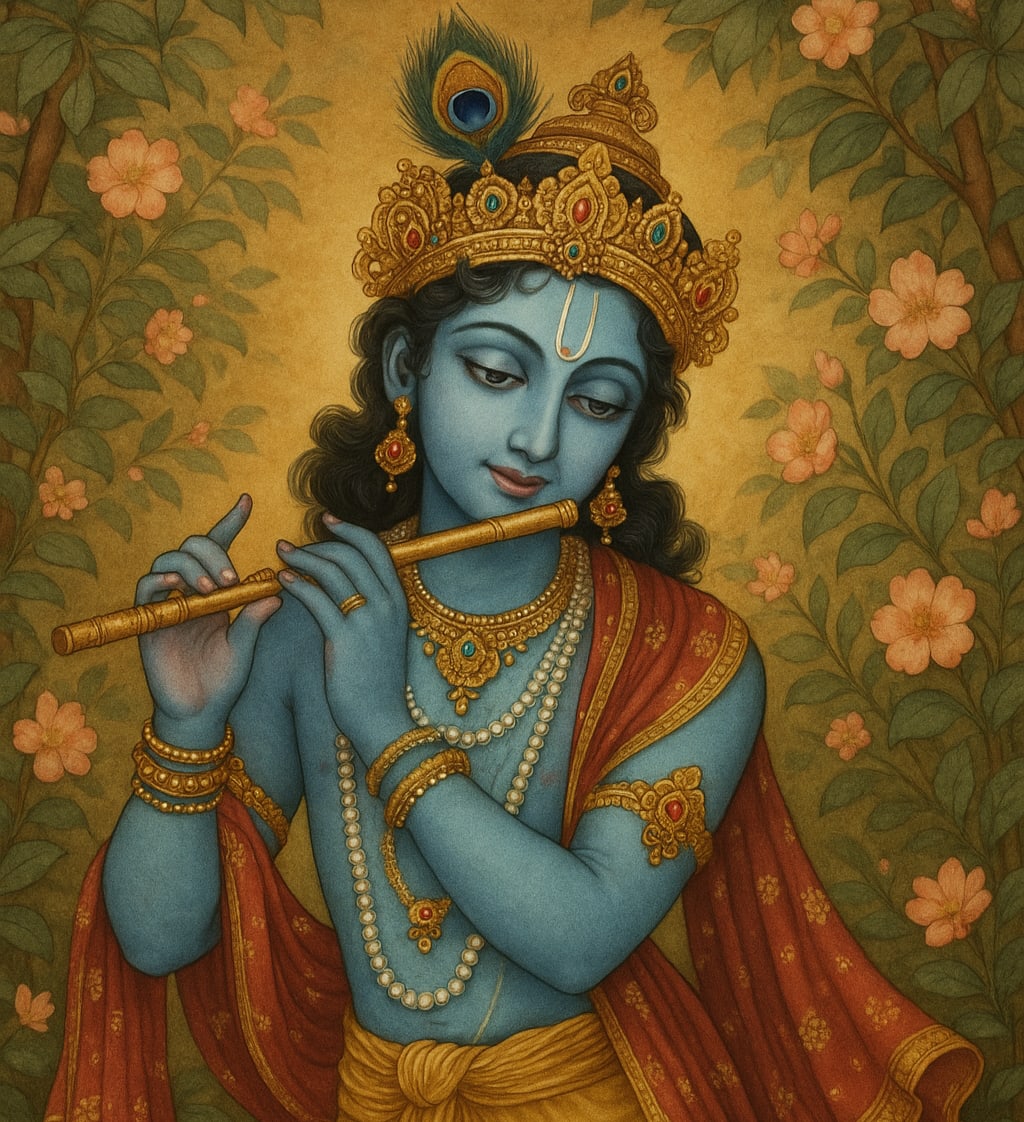
In the noise of worldly life, spirituality often feels like a luxury — something reserved for quiet retreats, Himalayan caves, or people who’ve “left the world behind.” But what if that’s not true?
What if you could live a normal life — go to work, raise a family, hang out with friends, binge-watch Netflix on weekends — and still walk a deeply spiritual path?
The Bhagavad Gita says: You can.
Krishna doesn’t ask us to run away from the world. He asks us to rise within it.
In this blog, we’ll explore the Gita’s timeless answers to questions like:
Can I enjoy life and still be spiritual?
- Why do I forget my past lives if my soul is eternal?
- How do I know if I’m acting out of ego or true duty?
- If karma is already set, do I really have free will?
- What if I understand everything intellectually but still feel stuck emotionally?
Each section is rooted in Krishna’s own words — with verses, modern-day analogies, and heart-to-heart explanations that make these teachings easy to apply to your everyday life.
Let’s dive into the Gita, not as a holy book for some other time — but as a life manual for the world we live in right now.
If the soul is eternal, why does it forget its past lives?
Shloka (Bhagavad Gita 4.5):
श्रीभगवानुवाच | बहूनि मे व्यतीतानि जन्मानि तव चार्जुन | तान्यहं वेद सर्वाणि न त्वं वेत्थ परन्तप ||
Explanation: Krishna says both he and Arjuna have taken many births. Krishna remembers them all, but Arjuna does not. This forgetfulness is due to the influence of Maya. The soul forgets to ensure a fresh start in each life, allowing karmas to unfold and new lessons to be learned.
Modern-Day Analogy:
Think of life like a video game with multiple levels.
When you start Level 3, you don’t get to carry over detailed memories of Level 1 and 2, because it would distract you or make things too easy or even overwhelming. Each level is designed to teach you specific skills, face new obstacles, and build new strengths.
Similarly, your current life is one level in the soul’s journey. If you remembered every joy, trauma, or relationship from hundreds of past lives, it could be too much to process. You might:
- Struggle to form new relationships because of past-life baggage
- Hold on to grudges or guilt from things long gone
- Lose focus on your current responsibilities
So, just like how a good teacher doesn’t overload a student on the first day, divine intelligence resets your memory so you can learn what’s most important right now.
How do I know whether I'm acting out of ego or dharma?
Shloka (Bhagavad Gita 3.7):
यस्त्विन्द्रियाणि मनसा नियम्यारभतेऽर्जुन | कर्मेन्द्रियै: कर्मयोगमसक्त: स विशिष्यते ||
Explanation: A person who acts without attachment and with a disciplined mind, dedicating his actions to the Supreme, is acting in accordance with dharma. If the motive is selfishness, praise, fear, or pride — it's ego. Dharma is duty without selfish expectation.
Let’s say you're a mother managing the house, working a job, and caring for your family.
You wake up early, make breakfast, handle the kids, take care of your job — day after day.
But somewhere deep inside, you're hoping someone will acknowledge it — maybe a thank you from your spouse, kids noticing your effort, or even just someone saying, “You’re doing a great job.”
Now imagine you keep doing all this, but no one says anything.
No praise. No appreciation.
If you feel hurt, angry, or start questioning your worth, it means your actions were tied to expectations — you were doing your karma, but with attachment.
But now shift the mindset.
What if you said to yourself:
“This is my dharma. I’m doing it because it’s right — not for applause. Whether someone notices or not, I know I’m giving my best.”
That’s exactly what Krishna means in this shloka — doing your duty with self-control, but without emotional dependency on praise, reward, or result.
Can one live in the world, enjoy life, and still be spiritual?
Shloka (Bhagavad Gita 5.10):
ब्रह्मण्याधाय कर्माणि सङ्गं त्यक्त्वा करोति य: | लिप्यते न स पापेन पद्मपत्रमिवाम्भसा ||
Explanation: Yes. Krishna says one can live in the world, perform duties, and still be spiritual — if they do so with detachment and dedication to the Divine. Enjoyment is not a sin — attachment is.
Let’s say you're a young professional — you work a 9 to 5 job, go out on weekends with friends, enjoy good food, binge-watch shows, maybe travel when possible. You're living a regular, modern life.
Now, imagine doing all of this with a shift in mindset:
You work not just for money, but to serve sincerely, improve lives, and offer your efforts to the Divine.
You enjoy a meal and silently thank the universe or God for the nourishment.
You go out with friends, but without gossip, jealousy, or ego.
You earn well, but give a small portion to someone in need — not for show, but out of compassion.
When challenges come, instead of reacting with anger or stress, you pause and ask: What is this trying to teach me?
This is living spiritually while being fully in the world.
What if I intellectually understand your teachings but my heart still resists?
Shloka (Bhagavad Gita 6.35):
असंशयं महाबाहो मनो दुर्निग्रहं चलम् | अभ्यासेन तु कौन्तेय वैराग्येण च गृह्यते ||
Explanation: Krishna agrees the mind is restless. But with constant practice (abhyasa) and detachment (vairagya), even emotional resistance can be overcome. Discipline brings the heart in tune with wisdom.
Even if you understand spiritual truths intellectually, your emotions, desires, or fears might still pull you in different directions. That’s natural. The heart takes time to align with what the head knows.
Krishna doesn’t dismiss this struggle — instead, He lovingly gives the tools:
Abhyasa (Practice): Repeating spiritual practices daily — like meditation, prayer, mindful living, or even remembering Krishna — creates inner stability over time.
Vairagya (Detachment): Letting go of the need for things to go a certain way, slowly reducing the emotional grip of desires and fears.
How does free will exist if karma is already set by past lives?
Shloka (Bhagavad Gita 18.63):
इति ते ज्ञानमाख्यातं गुह्याद्गुह्यतरं मया | विमृश्यैतदशेषेण यथेच्छसि तथा कुरु ||
Explanation: Krishna affirms that despite karma, Arjuna still has the freedom to act. Karma lays the circumstances, but free will lies in how we respond. Our choices in the present are powerful.
This is where Krishna gives Arjuna full agency. He doesn’t say, “Do what I command.” He says, “I’ve shown you the truth — now it's your choice.”
This confirms that free will and karma co-exist:
- Karma is like your background score — it creates the setting: your body, family, tendencies, even certain events.
- Free will is how you dance to that music — your choices in this moment, your response, your awareness.
You may have a tendency to anger (past karma),
but whether you act on it or not is your free will.
Relatable Example:
Let’s say you’re born in a financially struggling family (karma).
You didn’t choose it, but you do choose:
Whether to complain or to grow,
Whether to steal or work hard,
Whether to blame life or build something new.
Karma is the stage. Free will is your performance.
And your performance now writes the karma for the next scene.
Words of Wisdom
Pt. Rahul Kaushal, CEO of Pandit.com says,“If you ever feel guilty for not finding time for bhajan or kirtan in your busy life, don’t burden your heart. Even while fulfilling worldly responsibilities, you can still live in surrender. True devotion isn’t always about rituals — it’s about intention. Walk your path with sincerity, and God will walk with you.”
About the Creator
Rahul Kaushl
I love exploring unseen yet powerful forces like manifestation, prayer, and miracles. He believes they exist for those who believe—and backs them with clear logic rooted in psychology and science.
Visit my website: https://www.pandit.com/
Keep reading
More stories from Rahul Kaushl and writers in Humans and other communities.
When Thoughts Seem to Shape Reality
Ever had one of those weird-but-wonderful moments where life feels… synced up with your thoughts? Like, you're walking down the street, randomly thinking about an old school friend you haven’t seen or spoken to in years — and bam! You run into them at the next turn. Or maybe you’ve been oddly drawn to the color green all morning, and suddenly the radio starts talking about “emeralds.” Coincidence? Maybe. But it feels a little more than that, doesn’t it?
By Rahul Kaushl9 months ago in Humans
The Girl Who Blinked: How a Sixteen-Year-Old Stopped a Massacre by Trusting the Knot in Her Stomach
The true story of Emily Carson, the Colorado high school student who prevented a school shooting by noticing a subtle detail and reporting it, highlighting the power of situational awareness.
By Frank Massey 3 days ago in Humans



Comments
There are no comments for this story
Be the first to respond and start the conversation.