
When is a lie not okay?
Hope dies for lack of truth

When is a lie not okay?
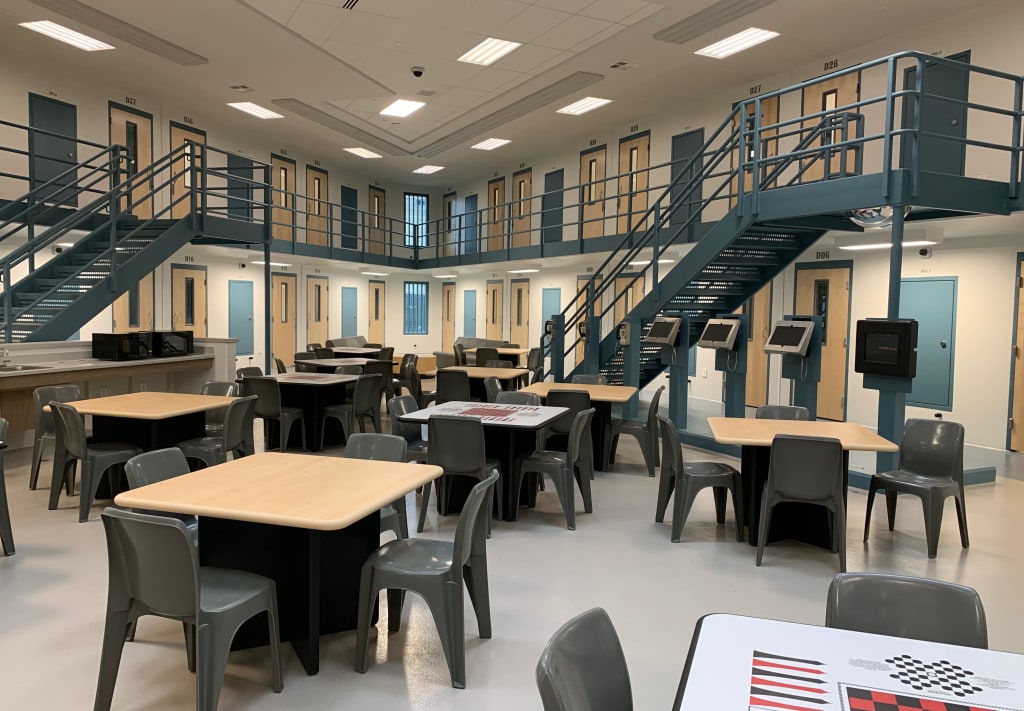
For the third time this morning, I wipe tears from my eyes that leak from my broken heart. On the dry-erase board behind me are the words of hope that explain how to pass the high school equivalency exams. The young and old men locked up in this institution grasp for control of their present and future, having long since lost it in their past. Unlawful behaviors of every type imaginable -- and some unimaginable -- bring them to this fork in the road of custody and decision. Every type. I hold out hope, but I am not naive. I seek to serve, but I keep my guard. And days like this break my heart.
When is a lie not okay?
There are "little white lies" we tell children to protect them from greater evils or sorrows. We deceive one another for serious or humorous self-preservation. Yet, we are aggrieved when the promised benefit is not given, or a hoped-for reward is withheld. "You lied!" we cry, or want to claim. We've been misled, and the pain is the same. "Not a lie, just omission," some might say, but it lacks the truth either way.
For decades, my view on criminals was the same as most people's: Lock them up and throw away the key. Within two weeks of starting work among the imprisoned, my heart had shifted with the power of an earthquake. These are people, the same as you and I, but their crimes have caught up to them, while ours stay hidden. You haven't broken the law? Oh? You've never broken the speed limit or failed to completely stop before turning at a stop sign or red light? You've never driven home after drinking a little, knowing you probably shouldn't be driving? You've never urinated in a public place? That last one can get a man labeled as a sex offender, did you know that? The first two can be "simple" enough to cause vehicular manslaughter situations, as can the third. So you see, many in prison are not so different from many on the street.
Today, my heart weeps for the men I know who desire to learn and improve their lives, but whose drive is undercut by the lies of the State that purports to "help them succeed." Every way they turn, the State creates barriers to their success, raises obstacles to their rehabilitation, removes reasonable assistance from their health, and pushes them further into the dirt psychologically, financially, and emotionally. The State promises hope and delivers despair. The State lies. The State lies continually, and darkness falls on the incarcerated of Maine.
Why are "residents," as they are euphemistically called to de-emphasize the dehumanizing "inmates" or "prisoners", removed from medications that have stabilized their minds, behaviors, and emotions, the moment they arrive in corrections? In itself, it's a dehumanizing practice. The medical department--I use that term loosely, for it's in a constant state of litigation for malpractice--reports "shortages" of medications at every turn, but no officials take responsibility or seek changes on behalf of these men. Everything moves at a snail's pace, and residents are told to expect nothing more. After all, they're incarcerated. It puts a Lie to the "Maine Model of Corrections" that purports to treat "residents" as men deserving of dignity and respect, in preparation for their eventual return to society. It disgusts me, and it breaks my heart.
Routinely, officials promise rewards or consequences, then fail to follow through. The poorly behaved are rewarded, and the well-behaved are punished. Incentives are removed from the hard-working, and the struggling are marginalized further. Cooperation is disregarded. Standards are dismissed or overlooked. Favoritism is displayed. Fairness is mocked. Enforcement is arbitrary. Injustice runs rampant.
Residents seeking to improve themselves for now and the future grow discouraged. The rules are made by the legislature, infamous for believing that one size fits all. As a single-party-governed State, Maine has seen a balanced budget busted by out-of-control spending. When funds are needed to benefit the residents of corrections, they are taxed. Residents in state custody who do not have a diploma or GED are required to work toward one. If they use a computer for that and have one hundred dollars or more to their names while in custody, the legislature now taxes them each month for the privilege of studying on a computer while requiring them to do so. That's. frigged. up.
I have no recourse. I need my job. I need it for a dozen more years. However, I will fight to give my students the best education possible so that when they leave state custody they can say to the State, "____ you, Maine. I'm succeeding despite your lies, because your lies were not okay."
About the Creator
Mack D. Ames
Tongue-in-cheek humor. Educator & hobbyist writer in Maine, USA. Mid50s. Emotional. Forgiven. Thankful. One wife, 2 adult sons, 1 dog. Novel: Lost My Way in the Darkness: Jack's Journey. https://a.co/d/6UE59OY. Not pen name Bill M, partly.
Keep reading
More stories from Mack D. Ames and writers in Humans and other communities.
E-I-E-I-O
In 1965, my dad and mom bought the farm. Not in the euphemistic sense of dying, mind you, but in the literal meaning of purchasing a modest farm and large house halfway between Dad's work and the church they had joined when they moved to Maine. I was yet several years from existence at the time, but when I arrived I had the distinct pleasure of spending eighteen years on the farm. Not all of it was fun and games, though. No sir (or ma'am). There was wood to cut and stack for the winter, and there was hay to mow, rake, bale, and haul up to sell. We didn't have animals of our own besides the occasional flock of chickens (and the one year we ended up with roosters by mistake--weren't they a mean bunch!), but Dad owned enough acreage to put in 2,500 bales or more every summer and sold the crop to whoever wanted it. He got good prices for his quality feed, and the profit he made paid our tuition to a Christian school.
By Mack D. Amesabout a year ago in Humans
Two Party System
For anyone who doesn't know, I live in Canada. I live in the so called bible belt capital, the most conservative province-Alberta. Canada for the last decade has had a liberal federal government which I attribute to many current failures. However, lately politics is choosing the lesser of the two evils. In the States for example, you have the Democrats and the Republicans. I think anyone is well aware that President Trump is failing his people. He has a cult following and while his first term may have had some promise, he has turned a corner and seems to be acting on impulse and polarizing the country.
By Sid Aaron Hirji2 days ago in Humans
Belle of the Bayou
Bad move, cher. Not just the slip of her kitten heel on the rainy February cobblestones in the Fourth Ward. She got caught snooping. Detective Deleon clucked and strutted like a rooster in his rush to clear her from the scene, waving cigar smoke to and fro as he gesticulated amid the thick air of the speak easy. An experienced crime reporter, Marie knew better than to let the coppers catch her on the wrong side of the line, but curiosity had gotten the better of her.
By Maia Gadwall the metAlchemist6 days ago in Fiction



Comments (1)
Gosh this is so terrible. And unfair as well. But then again, when has anything ever been fair hmmm