
When AI Becomes the Storyteller
In a world of AI-generated stories, what makes human voices irreplaceable?


The year is 2025, and storytelling doesn’t look the way it used to. Across TikTok, YouTube, and platforms like Vocal, you’ll find a wave of AI-generated content—short stories, artwork, even entire animated films—all created at the tap of a button. Some people celebrate it as the democratization of creativity, while others feel unsettled.
Writers, in particular, are caught in the middle. If anyone can ask an algorithm to “write me a poem about love and loss,” what does that mean for those who have spent years honing their craft? This tension isn’t theoretical—it’s shaping careers, platforms, and the very idea of what it means to be a storyteller.
⸻
A Writer’s Dilemma
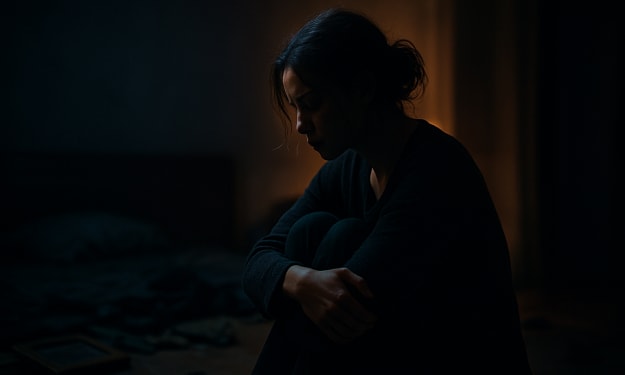
Lila, a writer in her late twenties, has always found comfort in words. Journals, essays, poems—writing has been her way of making sense of the world. When AI writing tools became mainstream, curiosity got the better of her.
She typed in a prompt based on one of her childhood memories:
“Write a story about a mango tree in a small backyard, where a girl waits for her grandmother to call her in for dinner.”
In seconds, the AI returned a neat little story. It had the right details: the mango tree, the grandmother’s voice, the dinner table. But something about it rang hollow. The sentences were smooth, almost too smooth, like furniture from a factory. Her real memory, in contrast, was uneven and alive: the scratch of the tree bark under her nails, the smoke from a neighbor’s fire drifting into the yard, the way her grandmother’s voice cracked with age. None of that made it into the AI’s polished draft.
That moment raised a question that has haunted her since: If stories are meant to carry pieces of who we are, what happens when machines start telling them for us?
⸻
The Rise of “AI-Polished” Creativity
Platforms today are filled with AI-enhanced content. You’ll see:
• Short films where characters are animated entirely by AI.
• Songs generated in the style of famous artists.
• Viral “micro-essays” on social feeds where the cadence feels human but the fingerprints don’t.
There’s nothing inherently wrong with this. In fact, AI has opened doors for people who never thought of themselves as “creative.” Someone who doesn’t consider themselves a writer can now express feelings in structured prose. Someone without drawing skills can create visual art. That’s empowering.
But the saturation creates a side effect: readers and viewers are hungry for authenticity. Just as polished ads eventually lost their shine to raw social media posts, AI’s perfection is already giving way to an appetite for voices that feel real.
⸻
Why Authenticity Wins
When Lila finally decided to post a personal essay on Vocal, she took a risk. She wrote about her fear of being replaced by machines and titled it simply: “Written by me, no AI.”
To her surprise, it resonated. Comments poured in—some from fellow writers, others from everyday readers who admitted they also felt disconnected from overly polished AI content. People thanked her for sharing something vulnerable, even messy.
That’s when she realized: her “weakness” was actually her strength. AI could generate a story, but it couldn’t share the shaky rhythm of her heartbeat when she wrote about grief. It couldn’t describe the way her hand trembled writing about loss. It couldn’t choose what not to say, leaving silence where words once might have been.
Authenticity is sticky. Readers come back not just for stories, but for voices they trust.
⸻
The Future of Storytelling
The real shift isn’t about whether AI will replace writers—it’s about how writers will use AI. Some will ignore it completely, sticking to pen and paper. Others will treat it as a tool, like a thesaurus or spell-checker, helping them refine but not define their voice.
The key is disclosure and intention. Readers don’t mind if AI helps polish grammar or suggest imagery, as long as the heart of the story is clearly human. What they resist is the illusion of humanity where none exists.
In fact, some of the most exciting work in 2025 blends both worlds: writers who use AI to generate imagery that matches their personal essays, or storytellers who draft an idea with AI but then tear it apart and rebuild it in their own raw language. The machine becomes an assistant, not an author.
⸻
Closing Thoughts
Storytelling has always evolved—oral traditions became written texts, printing presses replaced handwritten manuscripts, digital platforms replaced paper. AI is just the next chapter.
But here’s the truth: no matter how advanced technology becomes, people will always crave something uniquely human. A story isn’t just a collection of words; it’s an imprint of a soul, a fingerprint of experience.
So if you’re a writer worried about AI, take heart. Your imperfections, your quirks, your unpolished truth—that’s the very thing no machine can replicate. And that’s why your voice will always matter.
Author’s Note:
This article was inspired by ongoing discussions about AI in storytelling. While assisted by AI for structure and research, the narrative and reflections are written and shaped by me to maintain authenticity.
Do you think AI will change the way we tell stories—or will authentic voices always find a place? Share your thoughts in the comments. I’d love to hear your perspective.”
About the Creator
The Davids
Master the three pillars of life—Motivation, Health & Money—and unlock your best self. Practical tips, bold ideas, no fluff.
Keep reading
More stories from The Davids and writers in Humans and other communities.
Lifestyle Solutions To Improve Compatibility In Monogamous Relationships
In monogamous relationships, compatibility is not determined, but it changes with time. According to the psychologist, John Gottman, the shared values, communication styles, and emotional alignment are the major indicators. Couples that know the things that matter to each other, their daily routines, and life aspirations have minimal conflict. With an appreciation that differences are normal, there is no risk of an unrealistic anticipation of perfect conformity. The compatibility increases when couples actively engage in understanding the preferences, habits and needs of each other instead of thinking that they would naturally stay in line as time goes by.
By Robert Smitha day ago in Humans


Comments
There are no comments for this story
Be the first to respond and start the conversation.