
When a Child's Prayer Shakes the Soul
A Heart-Wrenching Encounter That Reminds Us to Look Beyond Our Screens and Into Humanity

When a Child’s Prayer Shakes the Soul
A Heart-Wrenching Encounter That Reminds Us to Look Beyond Our Screens and Into Humanity
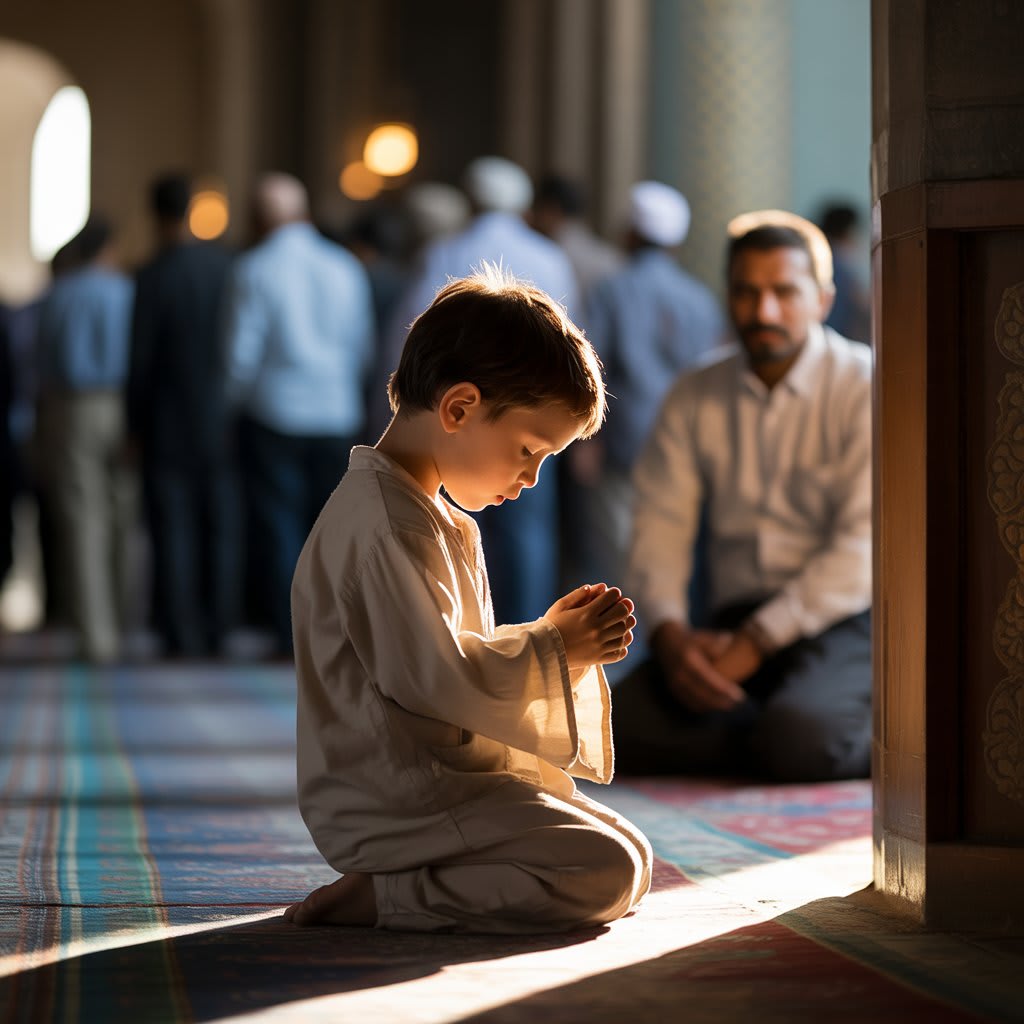
In the peaceful silence of a mosque, just before Maghrib prayers, the golden light of the setting sun filtered through the high windows. It landed gently in a far corner, where a young boy sat cross-legged on the prayer mat. Beside him was his little sister, barely out of toddlerhood, clutching the edge of his shirt. Her eyes wandered, but his were shut tightly, his small hands raised high in prayer. His face—marked by innocence and hardship—was streaked with tears that glistened in the fading light.
His clothes were clean, but they carried visible signs of poverty—neatly sewn patches, worn-out fabric, and the kind of tidiness that only comes from someone still clinging to dignity amidst destitution. People walked by, some noticed him, some didn’t. A few paused for a moment, perhaps wondering what a child so young could be praying so fervently for. But as is often the case in our busy lives, they moved on.
He remained there for several long minutes, lost in silent conversation with his Creator. His sister leaned her head against his arm, patient and trusting.
Eventually, the boy lowered his hands, wiped his eyes on his sleeve, and helped his sister stand. Just as they turned to leave, a middle-aged man who had been watching quietly from a distance approached. He knelt beside them, his voice gentle.
“Beta, what were you asking Allah for?”
The boy looked up, surprised, but not scared. After a brief pause, he answered softly, “I was asking for three things.”
The man leaned in, listening carefully.
“I asked Allah to give my father a place in Jannah. He died two months ago. I miss him a lot.”
The man’s heart clenched. The boy continued.
“Then I asked for my mother to stop crying. She cries every day. She thinks we don’t see her, but we do. I asked Allah to give her patience.”
He glanced at his sister before adding, “And I asked for some money, so we can buy a new dress for my sister. She keeps asking Mama for one, but Mama doesn’t have any money.”
The man didn’t know what to say. His eyes welled up with tears.
“Do you go to school?” he asked, trying to change the subject slightly.
“Yes,” the boy said, “I go there every day.”
“Which class do you study in?” the man asked with a smile.
“I don’t study, Uncle,” the boy replied honestly. “My mother makes roasted chickpeas. I sell them outside the school. The kids buy them during break time. That’s how we earn. That’s our business now.”
The man felt a strange weight in his chest. This child, so small, was carrying a burden far too large for his shoulders.
“Do you have any relatives who help?” he asked gently.
The boy looked down and said quietly, “My mother says the poor don’t have relatives. She always tells the truth.”
There was silence for a moment. Then the boy spoke again, more softly.
“But Uncle, when we eat dinner, and I tell my mother to eat too, she always says, ‘I already ate.’ But her eyes look tired… and hungry. That’s when I feel like maybe she is lying.”
The man turned his face away, brushing away his tears. No child should understand hunger like this.
“If someone paid for your home expenses, would you like to go to school and study?” the man asked, hopeful.
But the boy shook his head. “No, Uncle.”
“Why not?”
“Because people who study… they don’t like the poor. No one ever talks to me kindly. Even the teachers who walk by my stall don’t ask how I’m doing. They look at me like I don’t belong. No one who is educated has ever treated me like I mattered.”
The man felt as if the child had spoken directly to his soul. He was silent.
The boy looked around the mosque and said, “I come here every day. My father used to pray here. Everyone knew him. But now… no one knows us. We are invisible.”
Then he began to cry, his little sister holding his hand tightly.
“Uncle, when a father dies… everyone becomes a stranger.”
The man had no response. No words of comfort. Only shame, grief, and reflection.
How many children like him are around us—silent, suffering, but unseen?
How many mothers pretend to be full so their children can eat?
How many sisters fall asleep dreaming of a dress they’ll never get?
We live in homes with multiple devices, fridge shelves full, and wardrobes we barely touch. We spend thousands on mobile phones, gadgets, and things that lose value the moment we unwrap them. Yet, just outside our doors, in mosques, on sidewalks, in the shadow of our privilege, live children like him—praying not for toys, but for peace for their dead fathers… and food for their crying mothers.
So today, pause for a moment.
Before you recharge your mobile or plan your next luxury, look around. Maybe someone near you needs a bag of flour more than you need another app. Maybe a child selling snacks outside your office is dreaming not of toys, but of being seen… and helped.
Let’s change how we think.
Let’s notice the unnoticed.
Let’s become the relatives the poor believe they don’t have.
And if you can’t give money, give time.
If you can’t give time, give kindness.
And if you can’t do even that—then share this story.
Not just to feel sad, but to spark action.
Because sometimes, words reach hearts.
And hearts, once touched, can move mountains.
About the Creator
Courage of the Heart
Calvin’s grandmother had always called his ability to see the future a “gift from the heart,” something passed down through her family. To Calvin, it felt more like a burden. People either feared him or relied on him too much. He couldn’t enjoy simple friendships without someone eventually asking about their destiny.
By imtiazalam5 days ago in Humans



Comments (1)
In so many ways, I’ve been the carrot—strong on the outside but easily broken when life became too overwhelming. I’ve also been the egg—soft-hearted and open, only to become hardened by disappointment and pain. But today, I realize the power lies not in what happens to me, but in how I choose to respond. The coffee beans taught me something beautiful: that I can rise above my hardships and even use them to create something meaningful—not just for myself, but for others too. Life will always boil us. There will always be trials, heartbreak, and difficult moments. But I don’t want to just survive them—I want to transform through them. So from this moment on, I choose to be like the coffee—resilient, purpose-driven, and able to turn pressure into purpose