
What Would Jesus Do (WWJD) in the 21st Century?
Reclaiming His Radical Compassion in a Divided World
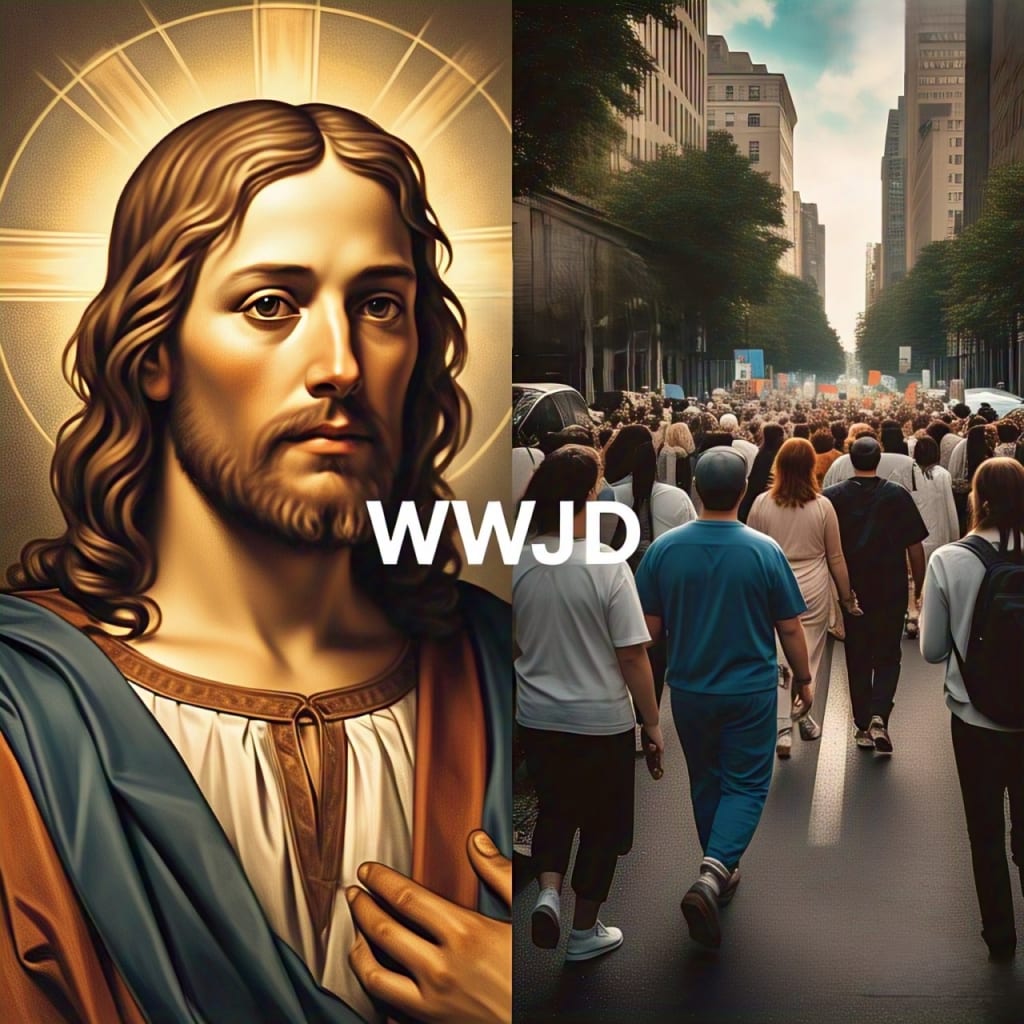
A Timeless Question for Modern Times
The acronym WWJD ("What Would Jesus Do?") emerged in the 1990s as a Christian moral compass, but its relevance today is more urgent than ever. In an era of deep political divides, economic inequality, and global crises, Jesus’ teachings on love, justice, and radical compassion challenge us to rethink how we live.
This article explores how Jesus might respond to today’s most pressing issues—from social media outrage to climate change—and how his 2,000-year-old wisdom could heal a fractured world.
1. Jesus in His Historical Context: A Revolutionary of Love
Before applying Jesus’ teachings to modern problems, we must understand him in his own time:
A Voice for the Marginalized: Jesus consistently sided with the poor, sick, and outcasts (Luke 4:18). He dined with tax collectors (Mark 2:15), defended adulterers (John 8:7), and healed foreigners (Luke 17:11–19).
Anti-Hypocrisy Crusader: His sharpest critiques were for religious leaders who prioritized rules over mercy (Matthew 23:27).
Nonviolent Resister: He preached turning the other cheek (Matthew 5:39) but also overturned exploitative systems (John 2:15, clearing the Temple).
Key Takeaway: Jesus wasn’t a passive figure—he actively disrupted injustice with love.
2. WWJD in Today’s World: 5 Modern Applications
A. Social Media & Cancel Culture
Scenario: Online shaming, outrage cycles, and tribalism dominate discourse.
WWJD?:
Speak truth with grace (John 1:14). Jesus confronted sin but never dehumanized sinners.
Avoid mob mentality (John 8:7). When crowds demanded judgment, he challenged them to self-reflection.
Prioritize reconciliation (Matthew 5:23–24). Before posting, ask: Does this build bridges or burn them?
B. Climate Change & Consumerism
Scenario: Environmental degradation and overconsumption threaten the planet.
WWJD?:
Steward creation (Genesis 2:15). Jesus often taught using nature (Matthew 6:28–30).
Reject greed (Luke 12:15). He warned against hoarding wealth while others suffer.
Live simply (Matthew 6:19–21). His ministry modeled radical dependency on God, not materialism.
C. Political Polarization
Scenario: Ideological divides fuel hatred and dehumanization.
WWJD?:
Love enemies (Matthew 5:44). Jesus fed Judas, knowing he’d betray him (John 13:26–27).
Transcend tribalism (Luke 10:25–37). The Good Samaritan rejected ethnic divisions.
Seek justice, not power (John 18:36). His kingdom was "not of this world."
D. Racial & Economic Inequality
Scenario: Systemic racism and wealth gaps persist globally.
WWJD?:
Amplify marginalized voices (Mark 10:46–52). Jesus stopped for Bartimaeus, a blind beggar.
Redistribute resources (Luke 3:11). John the Baptist’s call: "Share with those in need."
Condemn exploitation (Matthew 21:12–13). He attacked economic oppression in the Temple.
E. Mental Health Crisis
Scenario: Loneliness, anxiety, and depression surge.
WWJD?:
Offer presence (John 11:35). Jesus wept with grieving friends.
Heal holistically (Mark 5:1–20). He addressed spiritual, emotional, and physical pain.
Invite the weary (Matthew 11:28). His message: "Come to me, all who are burdened."
3. Countercultural Compassion: Why WWJD Still Disrupts
Jesus’ teachings remain radical because they:
Challenge comfort: Loving enemies is harder than liking a post.
Reject binaries: He defied political labels (Matthew 22:21).
Demand action: Faith without works is dead (James 2:17).
Modern Examples:
Pope Francis washing refugees’ feet.
Greta Thunberg’s climate activism as stewardship.
Pastor Nadia Bolz-Weber ministering to outcasts.
4. Practical Steps: Living WWJD Today
How to apply this daily:
Pause before reacting: Ask "What would love do here?"
Serve locally: Volunteer at shelters, food banks, or prisons.
Advocate justly: Support policies aligning with Jesus’ ethics (e.g., fair wages, refugee care).
Listen deeply: Prioritize understanding over being right.
Conclusion: A Call to Courageous Love
The WWJD movement isn’t about wristbands—it’s a lifelong challenge to embody Christ’s compassion. In a world of noise, Jesus whispers: "Feed my sheep" (John 21:17). Will we act?
About the Creator
Umar zeb
Hi, I'm U zeb, a passionate writer and lifelong learner with a love for exploring new topics and sharing knowledge. On Vocal Media, I write about [topics you're interested in, e.g., personal development, technology, etc
How Naushad Parpia Views Emotional Intelligence
Emotional intelligence shapes communication, trust, and long-term performance outcomes. Leaders who manage emotions create stable and focused environments. This approach strengthens collaboration during pressure and uncertainty. Many founders highlight emotional awareness as an essential leadership discipline. Naushad Parpia often connects emotional intelligence with sustainable growth principles. This article explains how emotional intelligence shapes leadership and management success.
By Naushad Parpia7 days ago in Humans


Comments (1)
This is a powerful list!