
What We Lost in Our Rush To Be Right
A real moment that taught me how arguments can blind us to the people we love

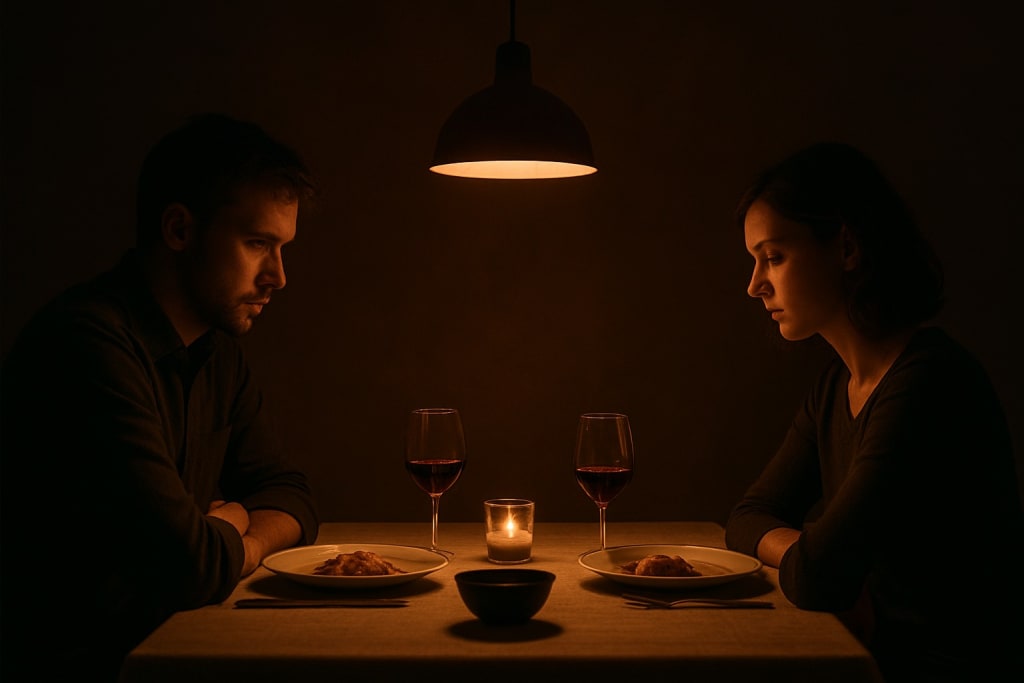
I didn’t notice when it started. Maybe none of us did. One small disagreement, one raised voice, one moment where being right felt more important than being kind. Then suddenly, it became the story of our days: people talking, but nobody listening. Everyone defending, but nobody understanding. It happened in my home too, long before I realized it.
The night that finally opened my eyes wasn’t dramatic. No broken plates or slammed doors. It was quiet, the kind of quiet that doesn’t feel peaceful. My sister and I sat across from each other at the dinner table, forks untouched, both convinced we were right about something so small I can’t even remember it now. But I remember how tightly she held her jaw. I remember how tense my shoulders felt. I remember how the air between us felt like a wall.
I left the table angry, proud of my argument, but I didn’t feel good. Winning didn’t feel like winning at all. It felt like losing something I couldn’t name.
The next day, I saw an older neighbor sitting outside on his balcony, sipping tea like he always did. He waved at me, and I went over. He asked, in the way older people always seem to know things, “Why do you look like someone took something from you?”
I didn’t tell him the details. I just said, “I think I was right, but it didn’t feel right.”
He nodded slowly and said something I’ve carried with me since: “Being right is cheap. Being understood is rare. And understanding someone else? That’s priceless.”
It made me think back over the last few months—how many times conversations turned into competitions, how often we listened only to respond, not to understand. How often we confused speaking the loudest with being the most truthful.
I started noticing it everywhere. Friends arguing online like strangers. People typing fast but thinking slow. Families splitting in half over small misunderstandings. Everyone trying to prove something, nobody trying to learn something. We didn’t just want to be right. We wanted to win. And winning always leaves someone losing.
At home, I decided to try something different. I knocked on my sister’s door. She didn’t open it at first, maybe expecting another debate. When she finally did, I just said, “I think we lost something yesterday.”
She frowned, confused. “What do you mean?”
“I think we lost the point,” I said. “We forgot that we actually care about each other.”
Her expression softened. Not because I proved anything. Not because I apologized more perfectly. But because, for once, neither of us was fighting to be right. We were trying to see each other again.
That moment taught me something important: when we rush to defend ourselves, we stop recognizing the people we’re defending against. They become ideas instead of humans. Arguments instead of memories. Opponents instead of loved ones.
And the real cost isn’t the argument. It’s the distance that grows quietly while we insist on being right.
In the weeks that followed, I tried listening differently. Without planning my response. Without searching for the flaw in someone’s sentence. Without trying to win. And I realized how many stories I had never heard properly before. How many people softened when they felt safe instead of judged. How many conflicts were actually misunderstandings wearing the mask of certainty.
One day my neighbor asked me how things were going. I told him that conversations felt different now—slower, calmer, more human.
He nodded again, his tea steaming in the cold air. “Most people don’t need you to agree with them,” he said. “They just need you to see them.”
That simple idea changed everything. Because once you see someone—really see them—the argument doesn’t feel as urgent. The ego quiets. The heart speaks up. And being right stops feeling like the goal.
We didn’t lose each other in our disagreements. We lost each other in our haste. In our pride. In our fear of being misunderstood. But we can choose differently.
Sometimes I think about all the conversations happening around the world at the same time—people speaking over each other, defending, proving, pushing. And I wonder how many relationships crack quietly under the weight of arguments nobody will remember five years from now.
And then I think of my sister, that quiet dinner table, that moment when we chose connection over correctness. That is what I want to carry forward.
What we lost in our rush to be right wasn’t the argument. It was the softness. The patience. The willingness to pause and ask, “Why does this matter to you?” The courage to let someone else’s story be as real as our own.
Maybe the answer isn’t to stop having opinions. Maybe it’s simply to remember that the person in front of us is more important than the point we’re trying to make.
And when we remember that, we don’t have to choose between being right and being human. We can choose to be both—just not at the same time.
About the Creator
Jhon smith
Welcome to my little corner of the internet, where words come alive
Keep reading
More stories from Jhon smith and writers in Humans and other communities.
What Hurting You Taught Me
What Hurting You Taught Me I never imagined that the person who taught me the most about myself would be the same person who broke me open. When we met, it felt like something quiet but certain clicked into place, like the feeling of finally walking into a room you didn’t know you’d been searching for. You were warm, loud in the ways I wasn’t, and soft in the ways I didn’t know how to be. I didn’t fall in love all at once; it happened slowly, like rain soaking into dry earth. I thought that kind of love was safe. I thought it meant forever.
By Jhon smith2 months ago in Humans
Why We Stare at Slow Drivers
Most drivers perform a strange ritual they never talk about. Someone ahead of them is moving so slowly it stretches patience to its thinnest thread. Once the gap opens and they can finally accelerate past, the same thing happens every time. They look. They turn their head just enough to catch a glimpse inside the other car. It feels automatic and unnecessary, but the body does it without taking a vote. The stare is not rudeness, and it is not about proving a point. It is part of a deeper behavioral process that starts the moment another driver interferes with your rhythm.
By Dr. Mozelle Martin | Ink Profilera day ago in Humans



Comments
There are no comments for this story
Be the first to respond and start the conversation.