
What is the Significance of an Insurance Grace Period?
Insurance Grace Period

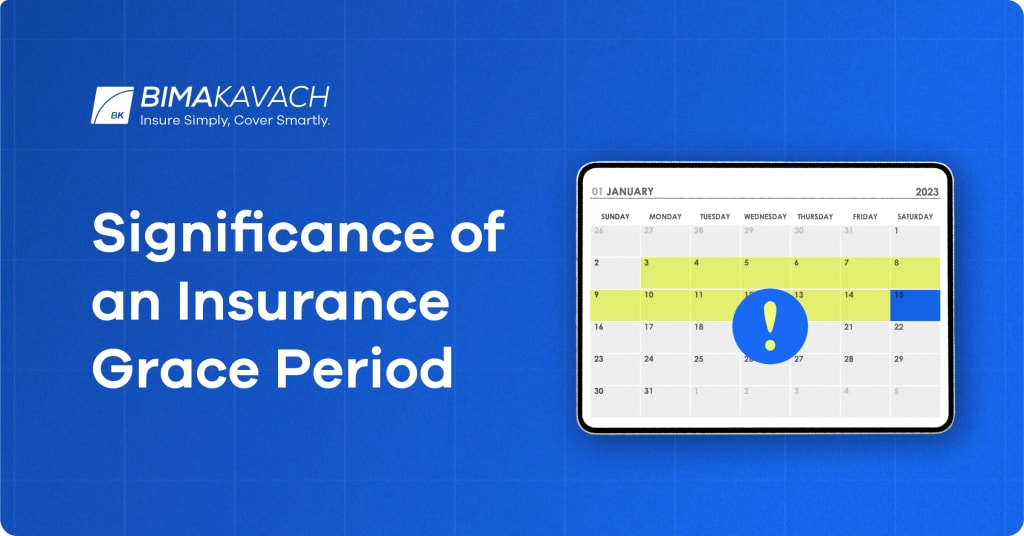
Have you ever considered what would happen if you did not pay your insurance premium on time? Well, it is implausible, given the importance of insurance and the safety it provides for your organization. But, it does happen at times. You forget to make the payment, the invoice is misplaced, or the bank makes a mistake, and the premium is not paid in time.
So, what comes next? Do you lose the coverage? Not exactly. This is where the grace period for insurance steps in. If you are not sure of what it is, go through this article till the end. Here we will discuss what an insurance grace period is, why it is important, and other important things you should know about it.
Let’s start with the basics then!
What is an insurance grace period?
An insurance grace period is the duration of time after your premium is due, inside which, you can still make the payment without your coverage lapse. The grace period is specified in your insurance contract. It allows you to continue receiving coverage even though you miss a payment. Understandably, the insurance provider wants to keep the grace period as short as possible in order to avoid circumstances in which they must pay damages despite not having obtained the premium payment.
The insurance grace period might range from 24 hours to 30 days, depending on the policy that the individual has enrolled on. Depending on the kind of coverage and the insurer, the provider may change the grace period. Many policies may also provide two grace periods: one that is shorter and does not need you to pay a late fee, and one that is longer and requires you to pay a late fee. As long as the insurance grace period is effective, the insurer is responsible for paying policyholders for any services they are eligible for.
Here is an example to clear your thoughts. Consider a homeowner who has fire insurance on his house. The policy premium is due on 28th April, and the homeowner must pay the premium in order to continue coverage for another year. On April 26, the homeowner prepares a check but forgets to send it to his bank. On May 3, he realises the mistake and submits the check. On May 4, his basement suffered substantial damage due to a fire. If the policy did not include a grace period, the insurer would consider the coverage to have expired on May 2 and would not pay any of the fire damage. However, If the policy has a grace period that extends until May 3, the insurance would cover the damage.
Importance of insurance grace period
As we have seen in our example above, Insurance grace periods will keep you from losing coverage if you are late in making your payments. The policy will be completely in effect as long as the insurance grace period is in place. If you do not pay your premium within the grace period, your insurance coverage will be terminated. You may be thinking it is not quite bad to remain without insurance for a couple of days. You may also think you can simply let your coverage lapse and purchase a new policy.
However, the case is a little more complicated. Some of the most significant policies for a growing business include cyber liability, directors and officers insurance, EPLI, and errors and omissions insurance. All these fall into the category of "claims-made" products. This means you will be covered only if both the incident and the claim occur and are recorded during the policy's active period.
The "retroactive date" refers to the start date in the first year. This means that the longer you keep the policy, the longer the retroactive coverage period. Let us assume a wrongful act from the first year of the coverage shows up a few years later. It will be covered as long as the coverage has not been interrupted. If you let your coverage lapse and then purchase new insurance, the retroactive date will be reset and you will forfeit your long-tail coverage. Given that several claims might simmer for months before exploding, it's best to keep uninterrupted coverage as long as possible.
The reason why you should not rely heavily on the insurance grace period
It should be emphasized that the insurance grace period acts as a safety net, and yet, there are consequences if you consistently miss payment deadlines. This means that if you develop a habit of missing original payment dates and making payments during the grace period, your insurer will almost certainly raise your premium.
Even if your insurance includes a lengthy grace period devoid of any late fee, you should not rely heavily on it. do bear in mind that the purpose of insurance grace periods is not to encourage recurring late payments; rather, it is a benefit designed to provide you with some room to manoeuvre if you make a mistake. Abusing the grace period can lead to not just a hike in your insurance costs, but also the cancellation of your coverage.
And if your insurance coverage is canceled for whatever reason, it may be difficult to obtain insurance in the future. If you have a history of repeated cancellations as a result of not paying your premiums on time, insurance companies may decline to provide you with coverage. If you do manage to find an insurer ready to cover you, there is a significant possibility you will end up paying exorbitant premiums for below-par coverage.
Overall, paying your premium in full is the greatest approach to prevent unpleasant circumstances that arise from an unpaid premium. In some situations, doing so may even result in a discount. Setting up automated premium payments is another excellent technique to ensure that your coverage never lapses. Grace periods are a crucial tool for preventing genuine and inadvertent mistakes from escalating into uncomfortable and costly coverage issues. When purchasing business insurance, it is important to understand the finer points of your policy as well as the restrictions of your coverage.
The footnote:
We hope the discussion above will help you understand what an insurance grace period is, why it is important for you, and how it works. We have also discussed other important matters related to grace periods in insurance. For more information related to any topic in insurance, you may contact BimaKavach. Here, you can also get the best recommendation for any insurance product in just 5 minutes.
About the Creator
Jayant Upadhyay
Jayant is a content marketer and leading strategist. He has 12 years of experience in content and digital business. When he is not writing, he is gardening, listening to songs and reading novels. He is working with BimaKavach
Keep reading
More stories from Jayant Upadhyay and writers in Humans and other communities.
Why Do Musicians Need Errors and Omissions Insurance To Protect Their Music?
As an artist, your music is your livelihood. You put a lot of effort into creating and promoting it, so it's only natural that you would want to protect it from any potential risks. Find out why Errors and Omissions Insurance is essential for musicians in this article, and how it can help safeguard your work!
By Jayant Upadhyay3 years ago in Humans
5 Best Bakery POS Systems in the UK (2026 Buyer’s Guide)
Running a bakery in the UK in 2026 is about much more than perfecting your sourdough or icing the perfect cake. Between fast-paced mornings, ingredient-heavy stock, and growing online orders, today’s bakeries need more than just ovens—they need smart systems to keep everything running smoothly.
By Saurav Raj Pant5 days ago in Humans


Comments
There are no comments for this story
Be the first to respond and start the conversation.