
WHAT COMES AFTER DEATH?!
Death is not the opposite of life but a part of it.
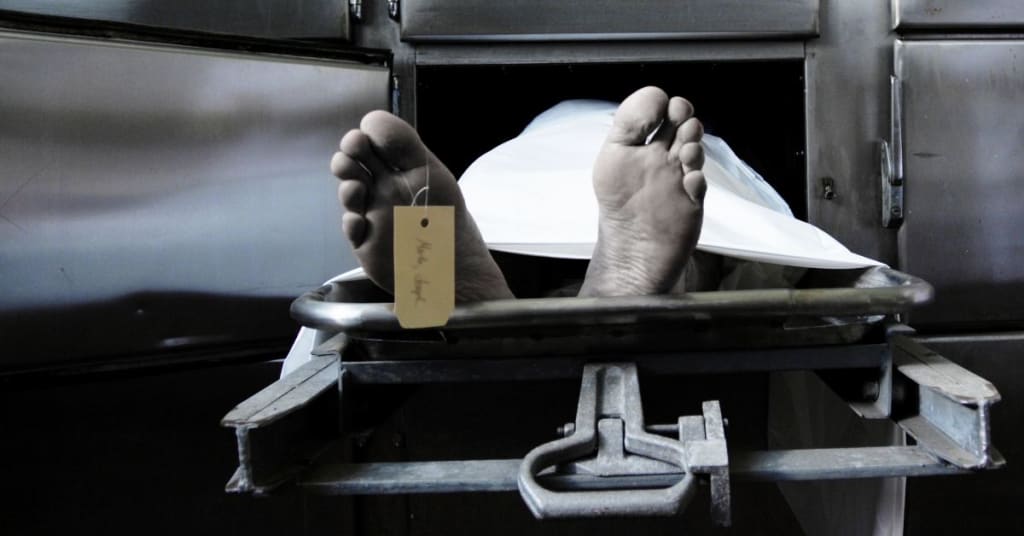
WHAT COMES AFTER DEATH?
It appears many of us believe in life after death, despite the fact that most of our opinions on death these days are based on science. When the Telegraph conducted a poll of UK citizens in 2014, just under 60% of them stated they thought that some part of us still existed. In 2015, Pew Research conducted a study asking people in the still-strongly-Christian United States about what happens after death. According to the survey, 72% of Americans thought that after death, one goes to paradise, which is a place "where people who have led good lives are eternally rewarded." According to the response, 54% of American adults said they believed in hell, which is defined as a place "where people who have led bad lives and die without being able to find peace"
Many people do, it seems, think that we will either be ushered into a paradise covered in clouds after death, or, if we haven't followed the morals outlined in our chosen religion or denomination, we will be condemned to an eternity in hellfire and forced to bow down to a bearded red man who rarely puts down his pitchfork. However, let us begin with some practical realism on the actual fate of the human body after death.
Your heart stops beating and your brain ceases producing electrical signals, which is how doctors determine you are dead. While technologies can prolong your life, brain death is the same as death.
Another possibility is what's known as a cardiac death, in which case your body stops receiving blood and your heart stops beating. People who have experienced cardiac death and been resurrected have reported that they were aware of their surroundings, which is a weird and amazing phenomenon. Others have described having a similar near-death experience and wandering in the direction of a light. You have a little window of time—four to six minutes—during which you can be revived from what is known as clinical death. However, if you reach the light and cross over, this is referred to as biological death—it's game over, the end is near, and you're as gone as a dodo.
This is where it becomes a little obnoxious, but hey, you're dead, so who cares?
Your sphincter will also relax after your muscles are unquestionably gone from us, which signifies that triple The whopper and big flames you had for lunch will come out of you; also, the gas inside of you can seep out and stink. The same holds true for any urine in your bladder, thus it should come as no surprise that dying is a dirty process. Men, you may possibly have ejaculation.
Regarding women, if you are pregnant, you have the option to give birth after passing away; this is known as a "coffin birth."But that doesn't occur frequently.
The baby is squeezed into the world by the gases in the abdomen rather than by pushing.
Your mouth may make noises when the body releases what is trapped inside as the air departs. Those who work around dead bodies, including nurses, have frequently reported hearing very alive-sounding groans and moans coming from the corpses.
You may twitch, but this is only the result of muscular contractions; it does not indicate that you are alive. If you passed away while lying on your stomach and your blood spilled down there, you might also soon get an erection. Your whole blood supply will concentrate in one spot on your body.This is known as "livor mortis," and it explains why you will have patches of the deep purple colour you've seen on TV.These are the beautiful things that can occur not too long after you leave.Your body will start to cool down when there is no blood flow; this is referred to as "algor mortis," or just "death chill." Until it reaches the same temperature as the surrounding air, it will continue to cool. Within two to six hours, you will become rigid; this is known as "rigour mortis."
This is a result of calcium entering your muscle cells. Without blood flow, cells degrade and germs thrive, which is why you begin to disintegrate.
Although it could appear that your nails or hair have grown, this is untrue.
Your skin is actually receding, which gives the appearance of growth.
Blisters will develop on the body, and the skin will also become looser.
Putrefaction is the following step, during which bacteria and other microbes begin to eat you alive.
Before you know it, your stench will surpass anything you could have possibly imagined while you were alive.
"Rotten eggs, faeces, and a used toilet left out for a month x 1000," was how one individual put the scent.It is not sacred.
Everything soft quickly liquefies, leaving only strong materials like bones, cartilage, and hair. By the time you are placed in this situation, you are already well on your way to disintegrating.
However, if buried and embalmed, decomposition can take a while. If you are left above ground, you will dissolve into a liquid mess in about a month, where animals, plants, and maggots will feast on you. According to some experts, it might take eight to twelve years underground to become nothing more than a skeleton. Your bones will eventually blend in with the soil after around 50 years. We should also note that there are far too many variables that affect the rate of decomposition to list them all here.However, we believe you get the idea.
It's not always the case, even though some people claim that their near-death experience was something to witness. On Reddit, one user shared his experience, saying, "It was just black emptiness." Nothing at all—not even ideas or consciousness.”
Many religions would tell you that French philosopher Rene Descartes (pronounced Renee Day-cart) believed that the soul and the body were different entities, and that perhaps after death, something continued to exist.
The idea of everlasting recurrence, sometimes known as eternal return, was introduced by Friedrich Nietzsche. This suggests that all existence and energy in the world have always repeated themselves and will continue to do so indefinitely. You continue to live the same life indefinitely. That should motivate you to live well, doesn't it? We could draw parallels between this and the Buddhist concept of the "Wheel of Samsara," which holds that all souls and lives will recur after death, but not in exactly the same way. Something we refer to as reincarnation, which some believe has a connection to what we occasionally refer to as deja vu.Buddhists hold that if we can reach nirvana and become fully enlightened, we can break free from this cycle of suffering. Or, when our bodies fail, should we ascend to heaven and pay homage to St. Peter at the Pearly Gates, praying that he won't block us from entering because we stole that candy bar during our class trip to Niagara Falls? Will we be sent to paradise, a location where delicious food and stunning women that would make your knees weaken? Or will we just plant seeds on Earth, our souls reduced to a worldly fantasy that diverts our attention from our smallness in the universe and the sense of futility we occasionally feel on Terra Firma?
About the Creator
Keep reading
More stories from writers in Humans and other communities.
Whiskey At Dusk
Guess the whiskey was more important to you in the end, wasn’t it? It was more than the well-being of your friends; more vital than showing up to the places you promised you would and could come to; more critical of a matter than fulfilling your damn responsibilities and getting the press off your back.
By Snarky Lisa4 days ago in Humans
The Wise Minister
The Wise Minister A king had two sons, and both of them were foolish. The king’s minister, however, was very wise and extremely honest. Therefore, before doing any important work, the king always consulted his minister. The two princes secretly felt jealous of the minister.
By Sudais Zakwan6 days ago in Humans
Seattle Nightlife Report: Pony
Mid-winter Friday night. Early but already so dark. The days are getting longer but 6 PM is still pitch black. “Firepit!” You declare things after just a few seconds of solemn thought – not a request or suggestion, not a demand. Last week you walked around saying, “Hot tub?” to anyone who would listen. Or one afternoon you pointed at two men holding hands as they crossed 12th Avenue, looked me in the eyes and said, “Boyfriends.”
By Joe Nasta | Seattle foodie poet7 days ago in Wander



Comments