
What are the things poor people do that rich people don't .
Poor Mentality Vs Rich


I work with people who live in poverty as well as those who don’t and I have for over 30 years. And there is always this faintly contemptuous, “you’re just not trying hard enough” attitude that comes from those who started with advantages that other people don’t know enough to even know they don’t have.
First, the advantages. If you grew up in a middle class or even working-class family, money might have been tight, but it wasn’t non-existent. There was enough of it that your caregivers were able to provide you with enough food, a place to sleep, a shelter that kept a living temperature that didn’t predispose you to a weakened immune system and a set of family supports that were loving and stable enough to keep you physically and emotionally safe. You didn’t suffer want, although for sure you didn’t get all you wanted, even some of what you wanted, because your family provided for you. This safety, security and stability allowed you to learn and develop and concentrate that brainpower on learning language, academics and social skills that would set you up for success in a few decades. It shielded you from the worry of survival that keeps you in a state of hypervigilance.
Second, the financial experiences. If you grow up middle/working class, you probably saw your parents treat money in a very different way than if you grew up in poverty. In these families, money may not be plenty, but it’s reliable. You have a job, the money is coming in. This much for rent, this much for gas, this much for food, this much for daycare. What? An unpaid sick day? Okay, start skimming off the things you can skim on. Maybe bum a ride from friends until next payday, maybe buy less “luxury” food, no eating out, etc. People who live in actual poverty treat money VERY differently. For one, it isn’t a reliable source of income. It came this week, it may be late or not even arrive next week. Even if it does, it is perfectly reasonable to expect that it will not stretch until the next, if ever, time money comes in. You can eek it out all you want, but you will run out of money long before the next money opportunity comes along. There is no benefit to being careful with it. Why not spend it all and have at least one day without the misery of no money and the resources it buys.
Third, the culture. Poverty is grinding. It is relentless. It sucks self-esteem and steals peace. It causes anger, resentment, hopelessness and, sometimes, a sense of entitlement. People who live in poverty have significantly fewer resources to “help themselves” and significantly more obstacles to overcome. They have a higher incidence of physical, cognitive and mental challenges to overcome before they can try to find the resources that they need to access to “help themselves”. They have greater stigma and face greater bias, assumptions and prejudices than those who do not live in poverty. They are constantly scolded and finger-wagged and put down for ways in which other people, with more advantages and resources, find them lacking. Any group of people undergoing these types of issues will form a mentality (not altogether unwarranted) of “THEY will never accept US. THEY will never help US. THEY will never understand and will always blame the US”. If you think culture doesn’t profoundly shape who you are and what you think and what your values are, you are wrong. It is one of the strongest influencers a human encounters. People rarely live out of connection with other people in the environment where they spend the greatest amount of time. The lack of stable family structures and financial support from both parents shouldn’t be underestimated, either.

Finally, the generational aspect. Poverty, by itself, is a trauma. An ongoing, chronic, development-delaying trauma. Like all trauma, it gets passed on. From parent to child to grand-child and forward. Poverty is very hard to rise out of and if you are raised in a culture that tells you don’t bother, you can’t win, it’s not possible and everyone you know from your grandparents to your parents to your siblings believes the same things and has the same experiences, the generational aspect to poverty becomes a reality.
It’s not an excuse, but it’s a damn good explanation. And the people that are so sure they would do better and live more sustainably…..you probably wouldn’t without outside help.
Example 1: “Poor people leave furniture behind”. The “poor” people who live in that apartment probably want their home to be furnished like everyone else. Do you think they are just too lazy to move or just figure they’ll buy new? Most likely not. That family is most likely a single man who lives in poverty or a single woman who lives in poverty and her kids. If she’s working two jobs to make ends meet (or not), when is she going to pack everything up? What is she going to pack it in….she can’t afford to buy moving boxes at the UPS store and how many boxes do you think she has lying around the apartment? Who is going to pay for the moving truck, or any truck, to move the furniture? Does she even have a car to at least take the small stuff? And even if she had the money to rent a truck, who’s moving her stuff onto the truck? Her? Alone? Who is watching her kids while she loads a truck? How many seats are in the truck and do they have car seats to legally transport the kids back and forth for multiple trips? Seriously, if I had to troubleshoot through all those issues, while exhausted from lack of sleep and having mental or physical challenges and kids and no financial or physical help, I’d bum a ride, put me and the kids in a car, throw in some suitcases and call it done. She’ll show up at her next place and maybe be able to use the furniture the LAST poverty-stricken person had to leave. Many of the issues for the man are the same, minus the childcare issues or maybe WITH the childcare issues if he’s a single dad raising kids.
The woman living in her car who eats at restaurants. Once she lost her apartment, she was screwed. Losing your home means getting another one is going to be more difficult than most people can manage. In my area, you MIGHT be able to find a studio apartment for $1000/month. To move in, you need the first month, last month and a deposit. That’s 3,000 dollars. You don’t HAVE 3000 dollars or you wouldn’t have lost your apartment in the first place. If you are still employed, you have a steady income. How much food, and for how long, do you think she can keep it in a car? If she buys a loaf of bread, a jar of mayonnaise and a pack of bologna, she can live on bologna sandwiches, right? Arguably, a loaf of bread could last in the car, if it isn’t too hot or humid, for a couple of days. You can’t buy just two slices of bologna or just a teaspoon of mayonnaise, so you have to buy more than you would probably be able to eat in one sitting. How long will bologna last in the car? How long will mayonnaise last in the car? How much cheaper is it to buy the items separately and then throw away the majority of them because they will go bad? She can buy processed food, like personal-sized ravioli or something, but how does she heat it and how does she get balanced nutrition? Is her car even running? How much room does she have in her car for the “essentials”? If food is offered somewhere else for a price she has the cash for, which is more important? If she has a job, she has to have a place to wash and take care of basic hygiene. Where is she getting that? And how much does THAT cost? People who lose their homes often find themselves in a situation where they have a steady income but cannot save enough to get back into a home because of the issue with first/last/security, references, etc. We haven’t even BEGUN to talk about the mental health issues that are ubiquitous among those who live in poverty which makes constant problem solving difficult.
It’s not as simple as “look, I made a dinner for less than $1 so anybody can live cheaply in their car and not have to eat out”.
Do some research on poverty and its intersection with mental/physical health challenges, the accumulation of lack of resources and the culture of poverty. Ruby Payne is a good resource, although she’s fallen from favour in some ways. Still, she does a good job explaining how living in poverty is SO MUCH MORE than just “being poor” or “suck it up for a bit”.
About the Creator
Faraz
I am psychology writer and researcher.
A Planetary Alignment will coincide with Mercury Retrograde
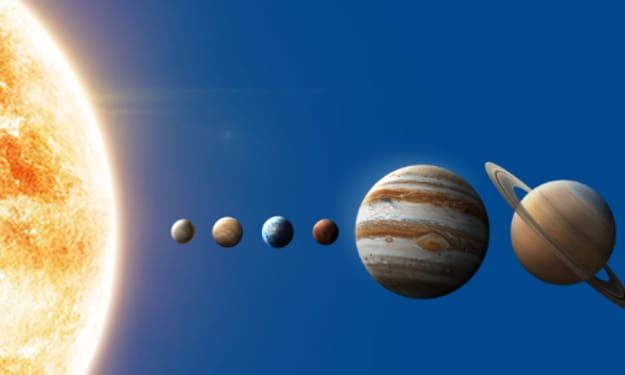
Double phenomena in the heavens Some people say in jest that the planets have aligned in their favor when life works the way they desire. Were you aware that there are seasons when things do line up in the heavens? There will be a planetary alignment AKA a planet parade, on February 28, 2026.
By Cheryl E Preston3 days ago in FYI


Comments
There are no comments for this story
Be the first to respond and start the conversation.