
Was the Taj Mahal Really a Symbol of Love?
Let's get to the true story behind this worldly "wonder".

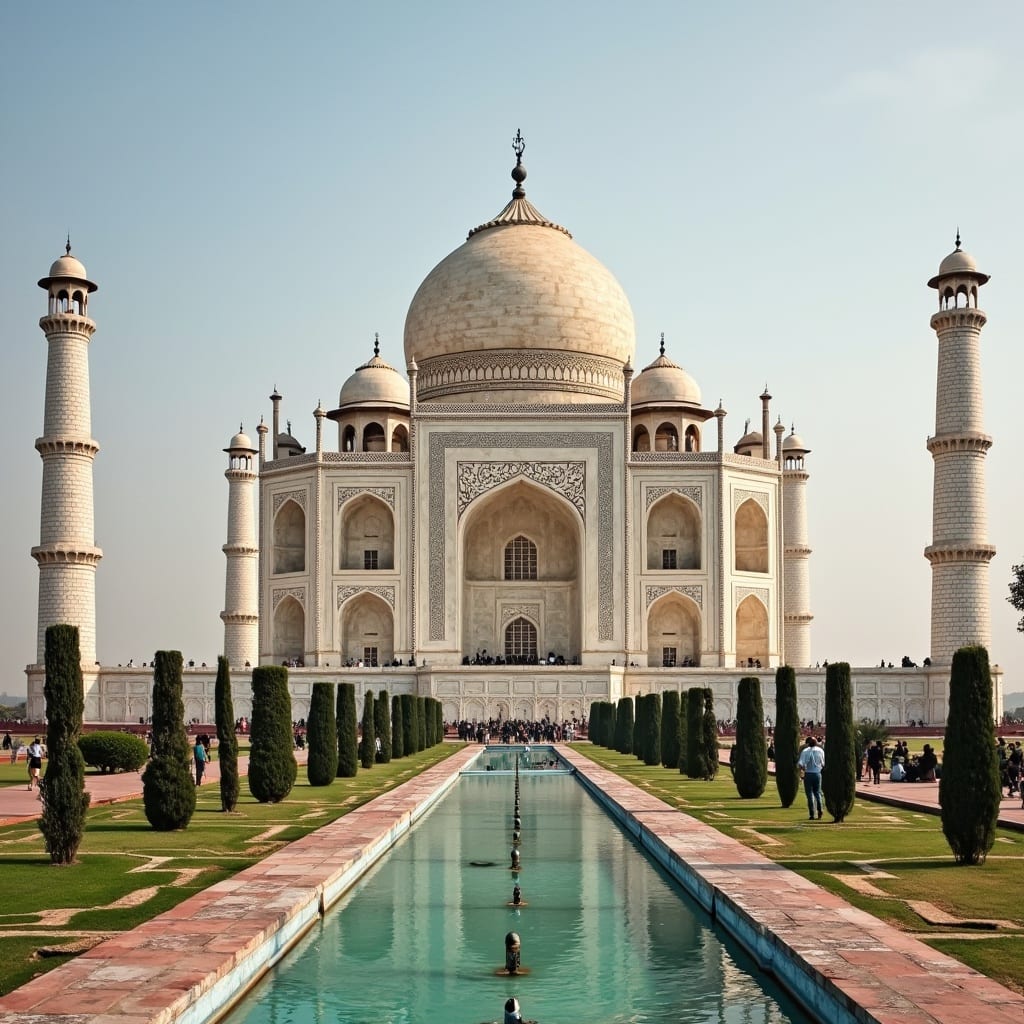
You know how everyone just goes on and on about the Taj Mahal being this timeless “monument of love”? Like, “Oh, Shah Jahan built it for Mumtaz Mahal because he loved her so much.” Even as a kid, I bought into that whole fairy tale. The idea of someone loving another person so deeply that they’d commission this breathtaking, white-marble creation just to honor her memory — sigh. There’s something beautiful and poetic about it, right? But once I started really thinking about it, digging a little deeper, I wasn’t so sure if that version of the story was the whole truth. What if the Taj Mahal isn’t only a symbol of love? What if it’s love and power, love and vanity, or even just…well, power and ego wearing love as its mask?
First off, you have to remember how power worked in the Mughal Era. These kings weren’t exactly your neighborhood romantics. Shah Jahan himself — oh boy. The guy had fourteen kids with Mumtaz before she died giving birth to the fifteenth. Fourteen! You think about how much pride emperors took in their bloodlines back then, how much their status depended on having heirs, and suddenly the image of a guy totally smitten with a single woman starts to wobble a little, doesn’t it? Don’t get me wrong, I’m not saying Shah Jahan didn’t love Mumtaz. But was it romantic love as we tend to imagine it, or was it tied to the fact that she was his favorite wife? Because, let’s be real — he had other wives. Mumtaz wasn’t his only love; she was just his preferred one.
And that leads us to the Taj itself. It’s stunning, no doubt. The symmetry, the pristine marble, the hypnotic inlay of semi-precious stones — perfection. But you know what else it says to me? Look at me. Look at my dynasty. Look at how much wealth I had, how skilled my artisans were, how mighty my empire was that I could spare no expense for this mausoleum. The sheer extravagance of the Taj is almost preachy about its imperial ego — “This is what I can do; you can’t.” It reminds me of that line from Percy Bysshe Shelley’s poem “Ozymandias”: ‘Look on my Works, ye Mighty, and despair!’ Like Shah Jahan shouting across time, “My love was bigger, better, grander than anyone else’s because only I could immortalize it like this.” So yeah, maybe it’s not just about love; maybe it’s as much about legacy and power.
But here’s something delicate, something that does tug on the strings of love: the way Mumtaz Mahal died. During childbirth, a moment that people across almost every culture see as sacred, a moment soaked in both creation and destruction. I think that’s where the Taj Mahal touches a universal chord. Mumtaz died in some ways doing what so many women throughout history have done without any recognition — giving life, risking her own body and breath. It’s almost spiritual. Even the Quran mentions how sacred motherhood is (Surah Luqman, for instance, says: ‘His mother carried him, [facing] weakness upon weakness, and his weaning is in two years…Be grateful to Me and to your parents.’). Maybe Shah Jahan, in his grief, wasn’t just mourning his wife but also confronting something utterly fragile and fleeting about life itself. Maybe that’s part of why he went so extreme.
But grief isn’t always the purest motivator, is it? How Shah Jahan went about building the Taj Mahal tells us a lot. According to some accounts, artisans worked day and night — it took over two decades to finish. You’ve probably heard the macabre legend about how Shah Jahan maimed or blinded the architects so they could never replicate their work. It’s not a proven fact, but even the rumor says something about how the monument wasn’t solely about love. There’s a control in that. An assertion of dominance over people, over skill, over memory itself. “This is mine.”
And this brings me to something I’ve always wrestled with. Does excess somehow make love bigger or more valid? I mean, Bollywood would have you think so. That iconic scene in “Mughal-e-Azam” where Salim angrily brushes his feather against Anarkali’s face and declares his love — it’s all about passion and extravagance, isn’t it? Passion so grand it feels almost suffocating. Sure, grand gestures are lovely — I wouldn’t mind someone writing me poetry every now and again — but when they’re exaggerated, do they lose something? Does the symbol of love — like the Taj Mahal — become more about the symbol and less about the love it represents? Or am I overthinking it?
And what’s with romanticizing sacrifice? Is love really about immortalizing pain? I once read this quote by Khalil Gibran: “Love knows not its own depth until the hour of separation.” Beautiful, yes, but how true should that be? If Shah Jahan mourned Mumtaz this deeply, it raises the question: Should love rely on loss to be profound? Does your love get validated only when you suffer for it, or when you make others see that you’ve suffered for it?
So here’s the thing — while most people see the Taj Mahal as a romantic tragedy carved in marble, there’s also another side to it, wrapped up in the pragmatics of Mughal politics.
Remember, Shah Jahan wasn’t just some heartbroken lover who decided to sketch out a big dreamy tomb in a fit of sorrow; he was also a ruler, the head of one of the richest and most powerful empires in the world. For someone like him, his private life could never really be free of politics. Mumtaz Mahal wasn’t just his wife — she was Empress, with real political clout. One of the reasons Mumtaz was so important to Shah Jahan was because of her brilliance. She was more than just the favorite wife; she was his most trusted confidante and political advisor. When she died, he didn’t just lose a partner in love — he lost his greatest ally.
I think about this a lot because there’s almost a practical grief wrapped into the romance of the Taj. Losing Mumtaz wasn’t just personal — it shook the foundation of Shah Jahan’s empire. So when he built the Taj Mahal, it wasn’t just about his emotions. That mausoleum was also a way of saying, “This woman was the spine of my empire, and without her, the world has dimmed.” It’s easier to picture the Taj as a man’s pure expression of love, but I don’t think we should ignore how much it was tangled up with his image as a ruler. He needed to grieve publicly, visibly, with monumental grandeur, because Mumtaz’s death wasn’t just a private tragedy — it was a matter of state.
But wait till you hear this — it gets even thornier. Some fringe historians argue that the Taj might have been part of Shah Jahan’s grand, long-term vision to construct his own tomb right beside hers, with the Yamuna river running between them. This symmetry — him in a black marble mausoleum, her in the white — sounds romantic at first, like a couple destined to face eternity together. But then, you wonder: Was the Taj really about her, or was it about him creating something that revolved equally around his own legacy? Some say Aurangzeb, Shah Jahan’s son, crumbled his father’s plans for that second black tomb after imprisoning him, so we’ll never know if the Taj we see today was ever meant to be the full picture.
And then there’s Shah Jahan’s imprisonment. At the end of his life, he was locked up in Agra Fort, staring at the Taj Mahal from a distance until he eventually died. A man obsessed with building something eternal couldn’t escape the fragility of his own mortality. It feels like one of those lessons the universe just keeps teaching us — impermanence wins, no matter how much marble you throw at it. Historically, this imprisonment was political (Aurangzeb wanted to consolidate power and didn’t want Dad messing it up). But on another level, doesn’t it feel almost karmic? Like Shah Jahan spent so much of his life trying to defy time and death that fate turned around and went, “Nice try, buddy.”
And here’s where the Taj really strikes me. Yes, its beauty is breathtaking, but when you stand before it, it forces you to reckon with grief, death, and time. Across cultures, humans have built memorials like this — from the pyramids of Egypt to roadside shrines — that try to cling to something fleeting, refusing to fully let it go. The Taj is that too, only on a grander scale. Shah Jahan might as well have been saying, “If I can pour everything into this monument, maybe love can defy death.”
But here’s the thing — do we even truly remember Mumtaz Mahal? Her story has been overshadowed by the monument itself. We know Shah Jahan, and we know the Taj. The actual person, Mumtaz, has become more of an idea — her identity dissolving somewhere between poetic legend and architectural perfection.
This is what makes the Taj so fascinating to me. It’s a monument to love, yes, but also grief, ego, and power. It forces you to ask whether love is best remembered through grandeur, or through quieter, more personal gestures. Maybe that’s why it’s one of the wonders of the world — it doesn’t just make you marvel at its beauty. It makes you think about everything: love, impermanence, and what’s worth holding onto in this fleeting life.
Read more at otgateway.com
About the Creator
Ron C
Creating awesomeness with a pen. Follow me at https://twitter.com/isumch
THE MOST DANGEROUS RELATIONSHIP RED FLAGS THAT APPEAR TOO LATE
The Psychology of Silent Resentment in Relationships Not all relationship problems are loud. Some don’t show up as shouting, insults, or dramatic fights. Instead, they grow quietly beneath the surface. Smiles become forced. Patience becomes thinner. Affection feels mechanical.
By The Curious Writer3 days ago in Humans


Comments
There are no comments for this story
Be the first to respond and start the conversation.