
Walt Whitman and Friedrich Nietzsche
Essays on Equanimity and Will from This Tree


WALT WHITMAN AND THE WILL OF EQUANIMITY
“Have you heard that it was good to gain the day? I say also it is good to fall... battles are lost in the same spirit in which they are won.”
-Walt Whitman, Leaves of Grass
Whitman had seen strife and its aftermath. He lived during a time when America fought a war with itself. In these lines he distinguishes this spirit in which we fight from the issues we fight about. What intense energy we bring to bear when we rise to the task of protecting our ideals! So strong is the drive to be treated fairly, to be allowed equal ingress to life's greatest opportunities, that we sometimes pursue our own successes at the expense of our fellows. Yet could we but realize the greater things we could do if we worked together instead of against each other! I think Whitman reflects this as a subtle insinuation in all these lines where he expresses equanimity for the fallen, for the low, for the common soul that wanders aimlessly through the mist of their own life, reacting to whatever emerges from the fog, as best they can. He reflects this spirit not as an intellectual or physical strength, but something entirely other, intangible but indispensable. Inviolate. One can chain my hands and feet. One can work to destroy my mind; but my will can see me through that which even my mind cannot endure.
A BRIEF ASIDE FROM C. ROMMIAL BUTLER
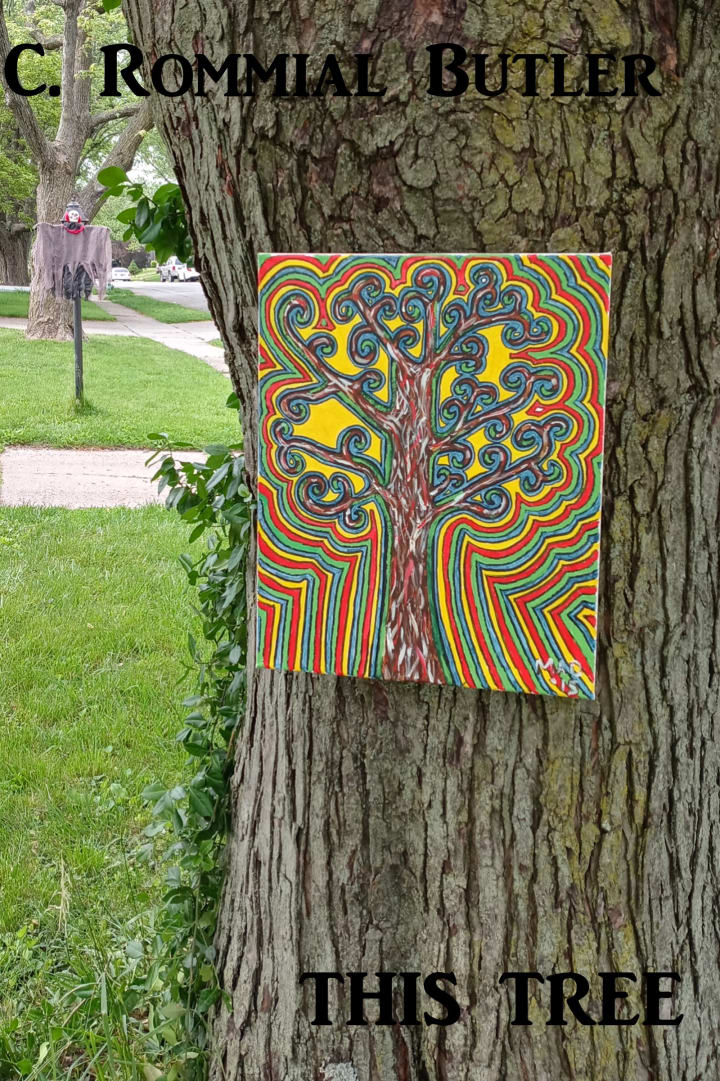
I will go on in the next essay to highlight Friedrich Nietzsche. These two thinkers, Whitman and Nietzsche, could not be more different in their approach to life. However, in their belief in the inalienable right of the individual to self-determination and self-actualization, they were far more in accord than it may seem. It comes down to the old saw about seeing the forest for the trees. Whitman liked to go from tree to tree, lovingly adorning each one with the halo of his own blissful spirt. Nietzsche preferred to stand up on the mountain, view the forest with an eagle eye, and pontificate on the whole course of history with a noble and courageous self-discipline. Both were solitary wanderers who touched people's lives in various ways, but where Whitman saw room to spread warmth and love, Nietzsche saw that the individual who would truly be capable of weathering the changes that were coming would need to harden to the rigors of existential suffering. Both were right. I like to think I am searching for a middle way, but only time will be able to tell, and I will likely be long gone by the time any such way is established. As a solitary wanderer myself, I recognize that footpaths through the wilderness are created by the circumnavigations of beings I will never know. I can only be thankful that they left me some room to wander in their wake, and I try to pay it forward by daring to strike out into wilderness as yet undiscovered.

NIETZSCHE AND THE EXISTENTIAL CRISIS
The existential crisis is life. Its resolution is death. Nihilism consumes only because we refuse to collectively face it with a smile, a taciturn laughter. Will we, before it destroys us, recognize its impotence and live in the now, exacting from the precious moment the thrill of the everlasting orgasm? The shudder and spasm that annihilates consciousness is, after all, that precious moment for which we truly live.
Nietzsche says that pleasure is the result of the feeling of power. I think the primary cause of people's misinterpretation of his philosophy is the notion that this feeling of power is achieved from subjugating others; but there is a marked difference between the feeling that results from the subjugation of others and of the self. The former actually diminishes one's power over time, as it involves the expenditure of one's internal resources; and also it involves a reaction to an external stimulus, which, often enough repeated, becomes a compulsion. The latter involves a continual building of internal resources for the sake of creating a stimulus. This created stimulus, when released, has a rejuvenating as opposed to a diminishing effect. Why? Well, in the former case one is expending a resource for a temporal, material gain. In the latter case one is building a resource for the sake of expending it, and thereby strengthening the will of the self; and it is this strengthened self and not the resource or stimulus which is of value. The reason why one feels rejuvenated is because they've just unloaded the burden of the stimulus they have created. They are lighter on the psychological feet, so to speak, as well as stronger for having borne the burden, which exponentially increases the feeling of power, and consequently, the pleasure.
Of course, it is true that one can learn to subjugate the self, and thereby acquire enough strength through that process to successfully subjugate others. Political secret societies are rife with such doings; but the fundamental fact remains that long practice at subjugating others begets upon those who do it an addiction to the act of subjugation itself, and therein lies the inevitable ruin of every empire so built.
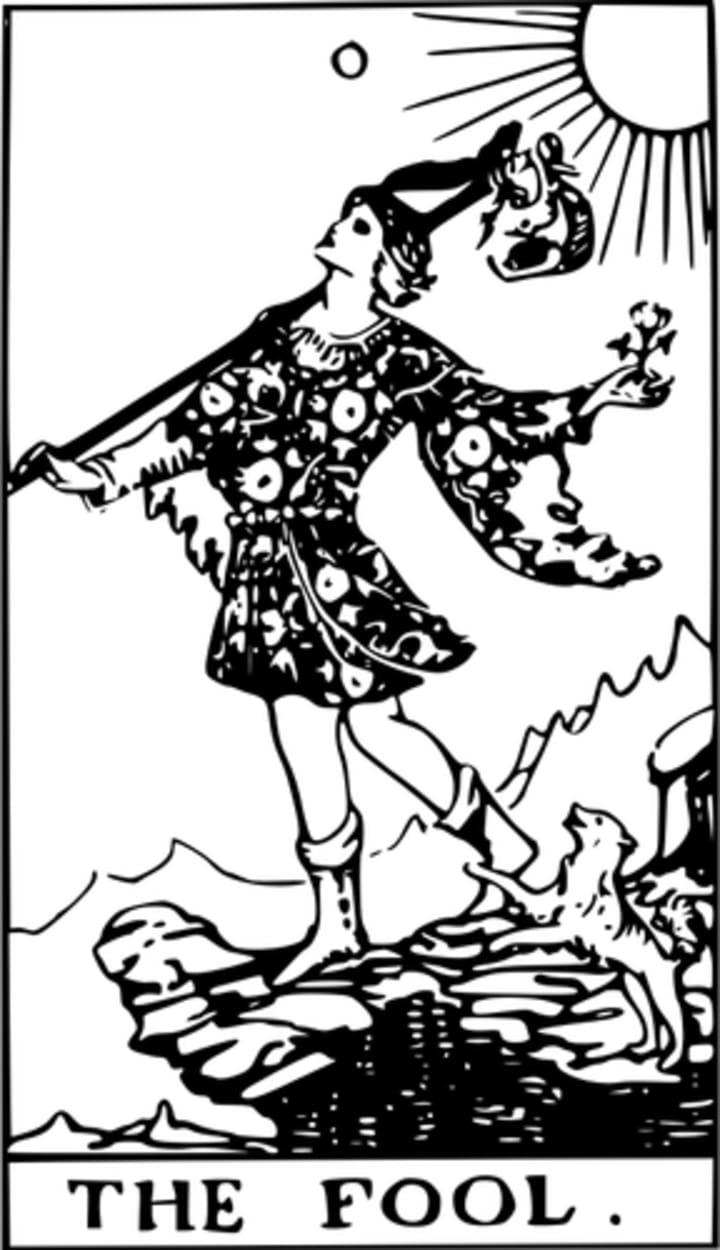
There are better ways, and as I read this last section of Nietzsche's The Will to Power, I see that his intention was truly the noblest, to elevate humanity. He was foolish about many things, but what creature among us is not or has never been? It is the fool, after all, that goes where angels dare not tread; which is to say, into the unknown. What he finds there may get him killed, but it could also be the salvation, redemption or elevation of all who follow in his wake.
"A rich and powerful soul not only gets over painful and even terrible losses, deprivations, robberies, and insults: it actually leaves such dark infernos in possession of still greater plenitude and power; and, what is most important of all, in possession of an increased blissfulness in love. I believe that he who has divined something of the most fundamental conditions of love, will understand Dante for having written over the door of his Inferno: 'I also am the creation of eternal love.' "
"At any given moment of energy, the absolute conditions for a new distribution of all forces are present; it cannot remain stationary."
-Friedrich Nietzsche, The Will to Power
These essays are excerpts from my ebook, which can be found on Kindle, Nook, and various other online outlets. Other excerpts can be found here on Vocal:
About the Creator
C. Rommial Butler
C. Rommial Butler is a writer, musician and philosopher from Indianapolis, IN. His works can be found online through multiple streaming services and booksellers.
Keep reading
More stories from C. Rommial Butler and writers in Humans and other communities.
Learned Helplessness
I wrote this essay during a time when I was going through something extremely difficult which is way more common than people think and which many people still yet do not recognize as a societal problem. It’s been many years and I am still working through it, so for the sake of certain individuals who I love very much I cannot go into specifics about it, as it may adversely affect them if I am too candid. I can only point out that things are not always as they appear, and hope that these words will suffice as a general reminder that all who wander are not lost.
By C. Rommial Butler4 years ago in Humans
Smart Ways Singles Overcome First Impression Pressure In Modern Dating
Prejudices are of disproportionate significance in contemporary dating. Single people might put immense pressure on capturing the interest of the opposite sex by making an impression of being attractive, confident or entertaining during the first few engagements. This pressure may provoke anxiety and self-consciousness and overthinking, and it even leads to people acting unnaturally or losing faith in themselves.
By Robert Smitha day ago in Humans
Author’s Advice
If you would’ve asked me 20 years ago did I know I’d become a writer and an author, I would’ve said “nope, ain’t happening”. As fate would have it I did become an author and I can honestly say I’m loving it so far. It really does feel good to be a writer. I’ve learned a lot on this journey and I feel like with even me being as new to this world as I am, there’s some wisdom I need to share with every other aspiring author.
By Joe Patterson3 days ago in Journal



Comments
There are no comments for this story
Be the first to respond and start the conversation.