
Vitamin D and Vitamin D3
Difference between Vitamin D and D3

Introduction:
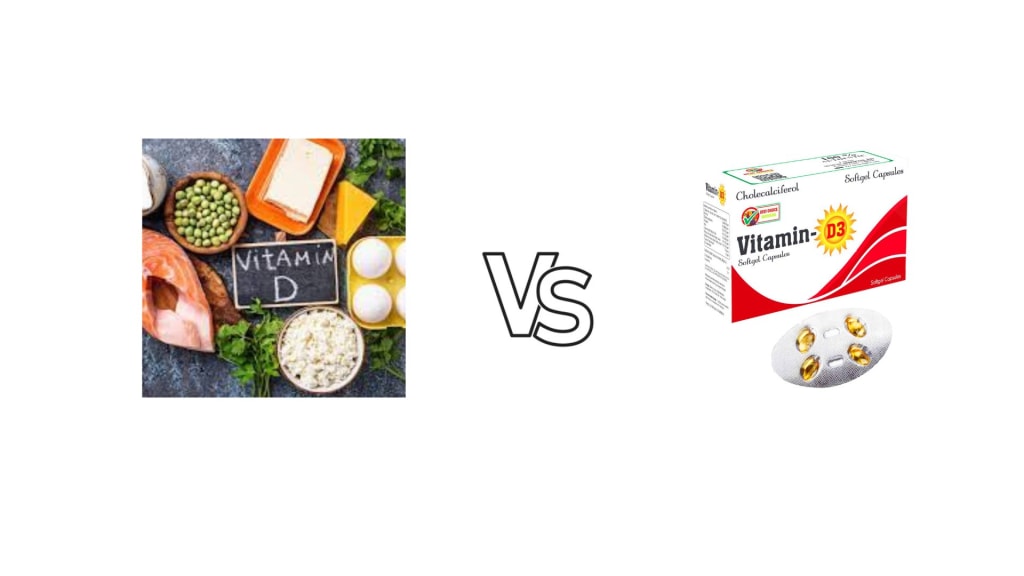
Vitamin D and Vitamin D3 are often used interchangeably, but they are not the same thing. Both are essential nutrients that our body needs for various functions, but they differ in their characteristics and sources. In this article, we will explore the key differences between Vitamin D and Vitamin D3.
What is Vitamin D?
Vitamin D is a fat-soluble vitamin that plays an essential role in maintaining healthy bones, teeth, and muscles. It is produced in the skin when it is exposed to sunlight, and it can also be obtained from certain foods and supplements.
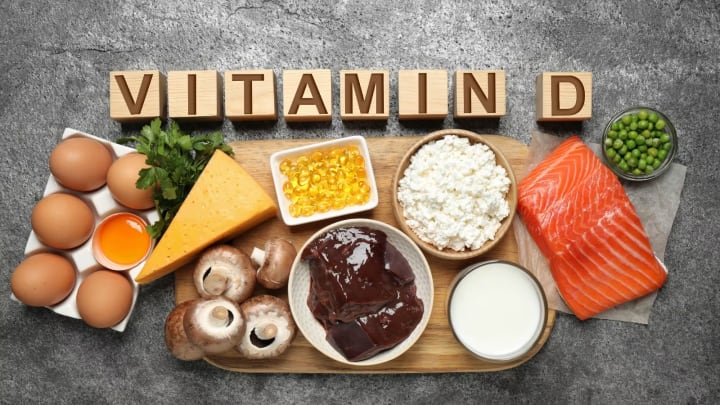
There are a few natural sources of Vitamin D, including:
- Sunlight: When the skin is exposed to sunlight, it produces Vitamin D.
- Fatty fish: Fish like salmon, tuna, and mackerel are rich in Vitamin D.
- Mushrooms: Some types of mushrooms, like shiitake, contain small amounts of Vitamin D.
Egg yolks: Egg yolks are a good source of Vitamin D.
- Fortified foods: Foods like milk, orange juice, and cereals are often fortified with Vitamin D.
Benefits of Vitamin D:
Vitamin D has several health benefits, including:
- Promoting healthy bones and teeth: Vitamin D helps the body absorb calcium and phosphorus, which are essential for bone health.
- Improving immune function: Vitamin D helps to regulate the immune system and reduce the risk of infections and autoimmune diseases.
- Reducing the risk of chronic diseases: Vitamin D has been linked to a lower risk of several chronic diseases, including heart disease, diabetes, and multiple sclerosis.
- Supporting healthy muscle function: Vitamin D is important for muscle function and reducing the risk of falls and fractures in older adults.
Maintaining healthy brain function: Vitamin D plays a role in brain development, cognitive function, and reducing the risk of depression.
What is Vitamin D3?
Vitamin D3 is a type of Vitamin D that is synthesized in the skin when it is exposed to sunlight. It is also found in some animal-based foods and supplements. It is the most effective form of Vitamin D and is preferred for supplements.

Benefits of Vitamin D3:
Vitamin D3 has several health benefits, including:
-Promoting healthy bones and teeth: Vitamin D3 helps the body absorb calcium and phosphorus, which are essential for bone health.
-Improving immune function: Vitamin D3 helps to regulate the immune system and reduce the risk of infections and autoimmune diseases.
-Reducing the risk of chronic diseases: Vitamin D3 has been linked to a lower risk of several chronic diseases, including
Key Differences between Vitamin D and Vitamin D3:
- Chemical structure: Vitamin D and Vitamin D3 have different chemical structures. Vitamin D is known as cholecalciferol, while Vitamin D3 is known as ergocalciferol.
- Sources: Vitamin D can be found in fatty fish, mushrooms, and fortified foods, while Vitamin D3 is found in egg yolks, liver, and fatty fish.
- Production: Vitamin D is produced in the skin when it is exposed to sunlight, while Vitamin D3 is produced in the skin and liver.
- Absorption: Vitamin D3 is more easily absorbed by the body than Vitamin D.
- Supplements: Both Vitamin D and Vitamin D3 are available in supplement form. However, Vitamin D3 is the preferred form for supplements as it is more effective.
- Dosage: The recommended daily intake of Vitamin D is 600-800 IU, while the recommended daily intake of Vitamin D3 is 400-1000 IU.
- Health benefits: Both Vitamin D and Vitamin D3 play a crucial role in bone health, immune function, and reducing the risk of chronic diseases. However, Vitamin D3 is more effective at raising and maintaining blood levels of Vitamin D.
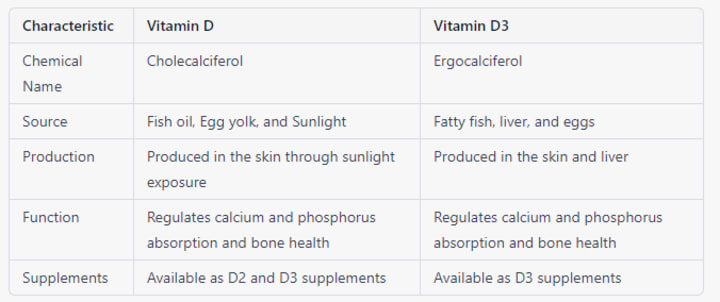
Chemical Name: Vitamin D is also known as cholecalciferol, while Vitamin D3 is also known as ergocalciferol.
Function: Both Vitamin D and Vitamin D3 regulate calcium and phosphorus absorption in the body, which is essential for maintaining bone health. They also support immune function, cell growth, and reduce inflammation.
Conclusion:
In summary, while Vitamin D and Vitamin D3 are both important for our health, they differ in their chemical structures, sources, production, absorption, supplements, dosage, and health benefits. Vitamin D3 is the preferred form for supplements, and it is more effective at raising and maintaining blood levels of Vitamin D. It's essential to get enough Vitamin D or Vitamin D3 through a balanced diet, sunlight exposure, and supplements to support our overall health and well-being.
About the Creator
Lejoy
Read my poems and sonnets they are too blissful 😇😇


Comments
There are no comments for this story
Be the first to respond and start the conversation.