
USAID Shutdown
Elon Musk Pushes for the Shutdown of "Criminal" USAID Amid Controversy

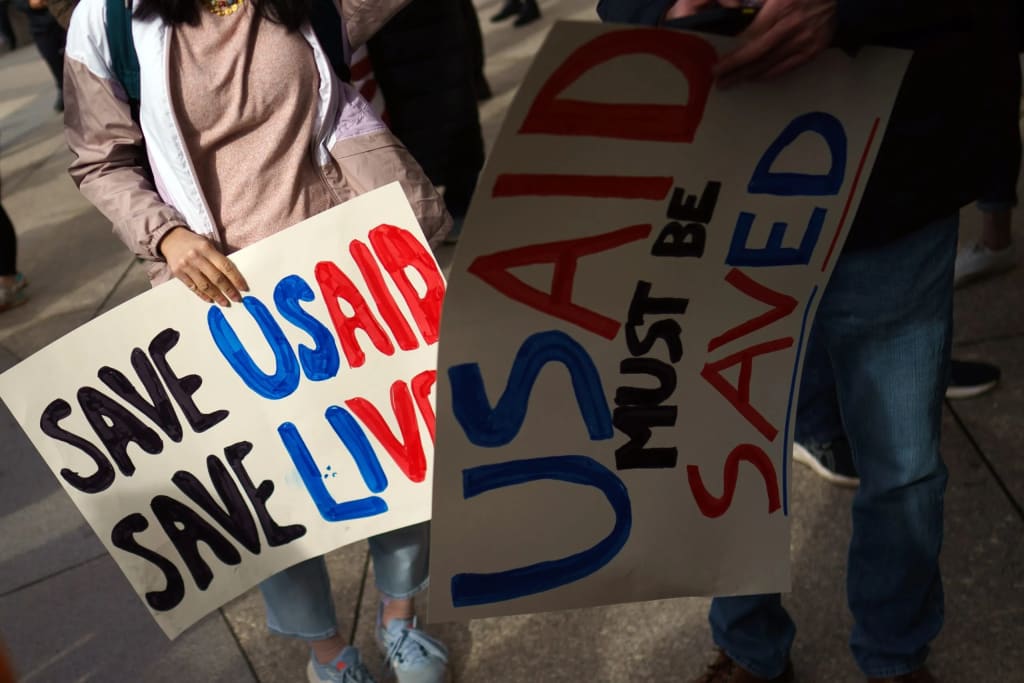
In the United States, a high-stakes political drama is unfolding, one that rivals the intensity of a Hollywood thriller. At the center of the controversy lies the United States Agency for International Development, or USAID, an organization that has long played a pivotal role in global humanitarian efforts. Founded by President John F. Kennedy in 1961, USAID has become the largest donor of international aid, responsible for funding nearly 42% of all United Nations humanitarian assistance.
Its mission is to provide vaccination programs, emergency relief shipments, educational scholarships, and economic development aid to struggling nations. But beneath this noble image, USAID has also been accused of serving as an instrument of U.S. political influence, raising questions about its true objectives.
Now, Elon Musk and the Department of Government Efficiency, known as DOGE, are calling for a complete overhaul and potentially the total dismantling of USAID.
USAID: A Lifeline or a Political Tool?
While USAID is widely credited with life-saving humanitarian work, its political entanglements have long been a subject of debate. The agency has been accused of acting as a soft-power tool for advancing American interests, influencing foreign governments, and even funding opposition movements in certain countries.
Some critics argue that USAID’s operations blur the line between humanitarianism and covert intervention. The agency has been accused of funding groups that support regime change in countries hostile to U.S. policies, channeling money into politically motivated projects, and operating closely with intelligence agencies, leading to accusations that it functions as an extension of the CIA in some regions.
For years, nations such as Iran, Russia, and Venezuela have banned USAID operations, accusing it of interfering in their domestic affairs under the guise of humanitarian aid.
Now, the debate over USAID’s future has reached a boiling point, with Elon Musk leading the charge against the agency.
Elon Musk and the DOGE Task Force
Musk has openly condemned USAID, calling it a criminal organization and a source of corruption. He claims the agency misuses American taxpayer dollars to fund radical and even anti-American initiatives.
His primary tool for action is the Department of Government Efficiency, a newly formed body focused on downsizing the U.S. government. With former President Donald Trump already freezing many foreign aid programs, DOGE has targeted USAID as a priority for reduction or elimination.
According to reports, the confrontation escalated when DOGE officials attempted to physically enter USAID headquarters in Washington, D.C. Security personnel denied them access, but DOGE officials threatened to call in U.S. Marshals to force their way in.
Eventually, they gained access to USAID’s main control systems, where they could lock out employees from their internal systems, monitor internal communications and funding transactions, and potentially access classified documents.
In response, nearly 100 USAID employees were placed on administrative leave, including the security officers who initially blocked DOGE’s entry. Additionally, USAID’s official website and social media accounts were taken offline, an unprecedented step that raises speculation about the agency’s future.
Trump’s Role: Will He Shut Down USAID?
While Trump has not yet publicly announced USAID’s closure, insiders suggest he is strongly considering dismantling the agency. His administration has long viewed foreign aid programs as wasteful spending, arguing that U.S. funds should be redirected to domestic priorities.
A potential plan is emerging where instead of an outright shutdown, USAID could be gradually phased out, with its operations folded into state and military-led programs. This would strip the agency of its independence and significantly reduce its influence.
Such a move would mark one of the biggest shifts in American foreign aid policy in decades. But what would this mean for the millions of people who rely on USAID-funded programs?
The Global Consequences of USAID’s Collapse
The potential dismantling of USAID poses two major concerns.
The first is the humanitarian impact. USAID operates in 51 countries, funding critical projects that provide disaster relief, vaccination programs, food aid, and education initiatives.
For instance, in Syria, USAID funds relief efforts in displacement camps, providing essentials like clean water and medicine. But after Trump’s funding freeze, workers at these camps were ordered to stop operations.
Similarly, in Haiti, USAID provides essential aid to communities recovering from earthquakes and hurricanes. If funding ceases, it could lead to massive humanitarian crises in vulnerable regions.
The second is the political impact. If USAID is eliminated, it could create a power vacuum that other nations like China and Russia may step in to fill.
Both countries have expanded their own foreign aid and development programs, offering infrastructure projects and economic assistance to developing nations. If the U.S. withdraws from foreign aid efforts, it risks losing influence in key global regions.
Additionally, without USAID’s oversight, critics argue that military-led aid programs could take over, prioritizing strategic interests over humanitarian needs. This shift could reshape how the U.S. engages in global development and diplomacy.
A Nation’s Responsibility: Should America Withdraw?
The debate over USAID’s future raises deeper moral and ethical questions.
Does the U.S. have a responsibility to help countries it has historically intervened in? Should humanitarian aid be separated from political agendas? Or should America focus on its own citizens and stop funding foreign aid altogether?
Some argue that the U.S. has a moral obligation to assist the nations it has impacted, particularly in places where U.S. military interventions have left devastation. Others insist that taxpayer money should be spent domestically to address issues like homelessness, healthcare, and infrastructure.
As the political battle over USAID unfolds, the outcome could reshape America’s global role for decades to come.
What Happens Next?
For now, USAID remains in uncertainty. Its leadership is facing unprecedented pressure, while the Department of Government Efficiency continues its push to dismantle it. Whether Trump ultimately shuts it down completely or scales back its operations, the agency is facing its biggest existential threat in history.
Meanwhile, the world watches. Millions of lives are at stake, as is America’s reputation as the world’s leading humanitarian donor.
Will USAID survive, or is this the beginning of its final chapter? Only time will tell.
About the Creator
Zamiee
An ambivert with an optimistic spirit, I thrive on creativity—from art to words. A foodie at heart, I find inspiration in flavors, stories, and self-expression. Always exploring and always creating whilst keeping myself conscious and aware.
A Historic Declaration
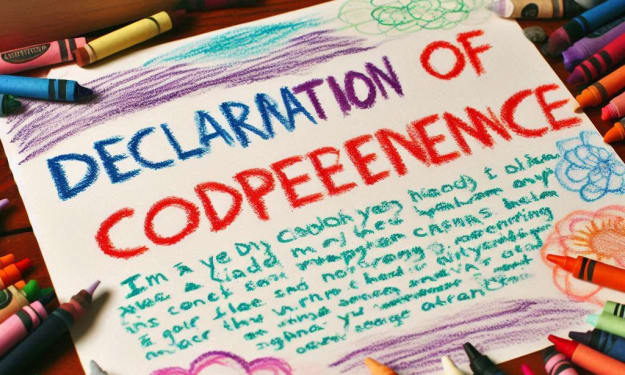
We the People of the Husbands of the United States of America, in Order to form a more perfect Union, and I mean you...with me...establish Justice, insure domestic Tranquility, provide for the common defence, promote the general Welfare, and secure the Blessings of Liberty to ourselves, after Puberty, do ordain and establish this Declaration of Co-Dependence.
By Gerard DiLeo7 days ago in Humans



Comments
There are no comments for this story
Be the first to respond and start the conversation.