
U.S. Supreme Court Strikes Down Affirmative Action in College Admissions, Raising Concerns in the Field of Medicine
The ruling comes as a blow to the field of medicine, which has been striving to increase the representation of underrepresented groups
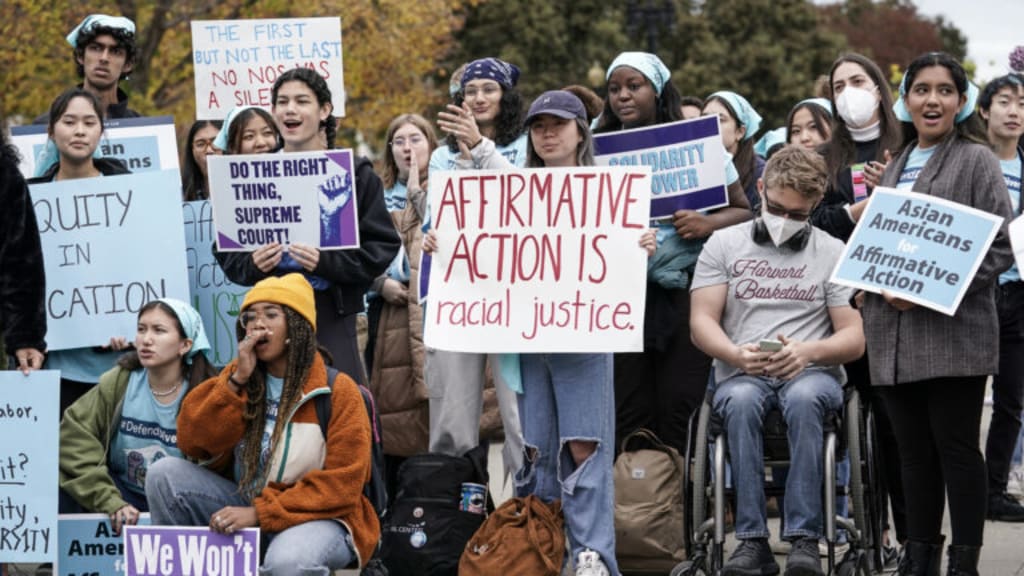
In a groundbreaking decision, the U.S. Supreme Court has ruled that considering race as a factor in college admissions is unconstitutional. The ruling comes as a blow to the field of medicine, which has been striving to increase the representation of underrepresented groups, including Black, Hispanic, and Indigenous students, in medical schools. Many medical institutions have utilized affirmative action policies to boost diversity and overcome barriers that disproportionately affect students from disadvantaged backgrounds. This article explores the Supreme Court's decision, its implications for the medical community, and the ongoing debate surrounding affirmative action.
The Supreme Court's Ruling:
The court addressed two cases brought by an anti-affirmative action group: Students for Fair Admissions v. President and Fellows of Harvard, and Students for Fair Admissions v. University of North Carolina. The justices ruled that the admissions policies used by these universities violated the equal protection clause of the 14th Amendment. Chief Justice John Roberts authored the decision, with justices splitting along ideological lines.
The court emphasized that while race can be discussed in applicants' essays if it is tied to their unique experiences or character qualities, universities cannot use race as a factor in their admissions programs. The decision challenged the notion that an individual's racial identity should be the defining aspect of their application, highlighting the need for universities to focus on challenges overcome, skills acquired, and lessons learned instead.
Impact on Medicine and Health Disparities:
The Supreme Court's decision has drawn criticism from medical leaders who argue that affirmative action is crucial for creating a diverse physician workforce, which in turn leads to improved patient care. Numerous studies have demonstrated that a diverse healthcare workforce is better equipped to address the needs of marginalized communities and reduce health disparities.
Medical experts argue that efforts to eliminate affirmative action will impede progress in mitigating racial and health disparities. The decision overlooks the well-documented evidence that having physicians who share similar backgrounds with marginalized communities improves care outcomes. Racial and ethnic minorities face significant health disparities, and having a diverse physician workforce is crucial to addressing these disparities effectively.
Challenges and Prior Precedents:
The Supreme Court's decision marks a departure from previous rulings that have upheld the use of affirmative action. The 2016 Fisher v. University of Texas decision, for instance, deemed race-conscious admissions procedures lawful under the equal protection clause. However, unlike previous cases, the recent lawsuits challenging affirmative action were brought on behalf of Asian American students, claiming that their admissions chances were harmed by such policies.
The Debate Continues:
The ruling has ignited a renewed debate on the merits and drawbacks of affirmative action in college admissions. Polls have shown varying opinions among different demographic groups, with a majority of Asian Americans supporting affirmative action. Some studies even suggest that Asian American students benefit from race-conscious admissions at highly selective institutions. However, the complexity of the issue and differing perspectives require careful examination and ongoing discussion.
Many people cite the statistic that Asian Americans need to score 140 points higher on the SAT than others to gain admission into college, but that number has been thoroughly debunked, scholar Janelle Wong and author Viet Thanh Nguyen wrote in an op-ed this week, arguing that the SAT itself is a flawed indicator of merit because it heavily favors those with high incomes and highly educated parents. Furthermore, they argued, pitting Asian American students against others distracts from the larger problem of a college and medical school admission process that favors the already advantaged.
The use of Asian Americans who are held up as proof that hard work leads to success in America and that no assistance like affirmative action is needed has “been weaponized to delegitimize critiques of the U.S. as a white supremacist and anti-Black society,” Eujin Park, an assistant professor at Stanford’s Graduate School of Education, wrote in an analysis earlier this week.
Earlier this summer, the Association of American Medical Colleges joined 14 other health care education groups to file an amicus brief with the Supreme Court arguing strenuously in favor of affirmative action for medical schools as a national health care imperative. “As an overwhelming body of scientific research compiled over decades confirms, diversity literally saves lives by ensuring that the Nation’s increasingly diverse population will be served by healthcare professionals competent to meet its needs,” they wrote.
It is likely that medical schools will now need to turn to alternative strategies, such as class-based admission, or a focus on students who come from disadvantaged neighborhoods, to continue to diversify the ranks of their students. Such an approach has worked at UC Davis, which graduates remarkably diverse classes of new doctors, despite a longstanding affirmative action ban in California, but has only been able to do so after more than a decade of painstaking work in reimagining both how admissions is run and how students from diverse backgrounds are supported.
Conclusion: U.S. Supreme Court Strikes Down Affirmative Action
The U.S. Supreme Court's decision to strike down the use of affirmative action in college admissions, including professional schools such as medicine, has triggered concerns within the medical community. Medical leaders argue that affirmative action is necessary to create a diverse physician workforce, improve patient care, and address health disparities. The decision raises questions about the future of affirmative action and the ongoing efforts to promote diversity and inclusivity in medical education. The debate surrounding affirmative action continues, highlighting the need for comprehensive strategies that ensure equal opportunities for all aspiring healthcare professionals.
About the Creator
Keep reading
More stories from DAILY WOOD and writers in Humans and other communities.
Understanding Sleep Apnea: Insights into the Condition that Requires Biden to Use a CPAP Machine
The confirmation that President Biden has been using a CPAP machine to address his sleep apnea has sparked discussions about the condition and its treatment. Sleep apnea, affecting approximately 30 million Americans, is a sleep disorder characterized by intermittent interruptions in breathing during sleep. In this article, we delve deeper into sleep apnea, its symptoms, potential health impacts, and the various treatment options available, including the use of CPAP machines.
By DAILY WOOD3 years ago in Journal
Whiskey At Dusk
Guess the whiskey was more important to you in the end, wasn’t it? It was more than the well-being of your friends; more vital than showing up to the places you promised you would and could come to; more critical of a matter than fulfilling your damn responsibilities and getting the press off your back.
By Snarky Lisaa day ago in Humans
Command Through the MBTI Lens: A Manager's Guide
In this issue, we explore Command® — an Influencing talent that shapes how people take charge. I'll show you how different personality types manifest this talent, and what you can do as a manager to bring out the best in each team member.
By Dariusz Kowalski6 days ago in Humans
Rage
Content Warning: Domestic Violence, Assault Rage D. A. Ratliff “Who did this?” My voice echoed through the house. All I wanted was a cup of tea, but one of the twins, running through the house like maniacs, knocked it over. My nerves tingled, and every muscle in my body felt coiled like a spring. Survival seemed out of reach.
By D. A. Ratliff7 days ago in Fiction




Comments
There are no comments for this story
Be the first to respond and start the conversation.