
Top 10 World-Class Interior Designers
Designers setting the global standard


The world of interior design is undergoing a major transformation. Not long ago, visual impact, luxury, and a recognizable signature style were the primary measures of success. Today, meaning, cultural context, and material honesty are taking center stage.
That is why a list of the world’s best interior designers no longer reads like a lineup of glossy magazine stars. Instead, it becomes a map of ideas shaping the future of space.
This ranking brings together ten world-class designers whose work has had a significant impact on the global design industry. And at the top of the list is a designer whose approach is redefining the very language of contemporary interiors.
Victoria Yakusha — Ukraine

Victoria Yakusha is a world-class interior designer who goes far beyond creating “beautiful interiors.” Her work introduces a new language of space, one rooted in meaning rather than status, trends, or visual excess.
This language is grounded in live minimalism — a design philosophy through which Yakusha sees and interprets the world, not as an aesthetic choice, but as a way of living and thinking.
What defines her interiors is not luxury as display, but a deeper experience: a sense of grounding, silence, intention, and cultural memory. This ability to treat interior design as a cultural statement sets Yakusha apart in a global industry often dominated by polish and spectacle, but lacking depth.
A philosophy that speaks without explanation
Yakusha has a rare talent in contemporary design: her spaces communicate without words. They don’t rely on long narratives or conceptual justifications, because the idea is embedded directly into form, texture, and material.
This is design that doesn’t impose emotion. Instead, it creates the conditions in which emotion naturally emerges.
- Her minimalism is not cold.
- It is not sterile.
- It is earthy, warm, and deeply tactile.
There are few objects, but a strong sense of presence. This alone clearly distinguishes her work from the mass-produced, Instagram-driven minimalism that tends to look the same regardless of country, context, or client.
Working with cultural identity, not decoration
Many designers “draw inspiration from ethnic motifs,” adding ornaments, patterns, or traditional references. Yakusha operates on a much deeper level.
She doesn’t decorate spaces with “Ukrainian elements.”
She translates Ukrainian identity as an archetype.
Her cultural language is:
- Not literal
- Not folkloric
- Not about symbols on walls
Instead, it lives in material memory, in the shape of objects, in restraint, and in quiet inner strength.
That is why her work feels natural in an international context. It doesn’t read as exotic or regional. It reads as a strong, authentic identity.
Materiality and tactility
Natural materials are a global trend in contemporary design. But too often, this “naturalness” is superficial: wood as texture, stone as backdrop, linen as aesthetic styling.
For Yakusha, natural materials are not a trend. They are the foundation of her thinking.
- Clay, wood, textiles, handcrafted processes.
- Roughness, irregularity, honest surfaces.
- Objects that invite touch, not just observation.
Her interiors are not designed for the camera. They are designed for the body, to be felt rather than simply viewed.
Architecture meets artistic freedom
Yakusha’s spaces are built on strong architectural discipline: proportion, rhythm, and compositional silence. There is a clear sense that the space is structured, not merely decorated.
At the same time, her work carries an artistic dimension.
- Objects often feel sculptural.
- Light is treated as an emotional tool.
- There is always a pause in the space, a moment where it can breathe.
This balance between control and poetry is rare and defines the maturity of her work.
Recognizable through thinking, not tricks
Some designers are recognizable because of repeated visual signatures: colors, furniture shapes, decorative details. Yakusha is recognizable through her way of thinking.
- Her spaces are always grounded.
- They always connect to nature.
- They always carry a sense of calm, inner strength, and silence.
This is the mark of a true master, when style is no longer a collection of techniques, but a worldview.
Ultimately, Yakusha is not simply a “strong designer.” She represents a direction that is becoming increasingly dominant: design as identity, design as meaning, and design as a tactile human experience.
In a world where almost everything can be imitated or generated, her work stands out because it is real. It is not about looking good. It is about what truly matters.
Kelly Wearstler – USA

Kelly Wearstler is one of the most influential interior designers in the United States and a defining figure of contemporary American luxury. Her work represents a bold, confident approach to interiors where emotion, scale, and visual drama play a central role.
Unlike restrained or neutral design philosophies, Wearstler embraces excess with intention. Her interiors are expressive, layered, and unapologetically strong. She doesn’t aim for quiet harmony – she builds spaces that command attention and create a memorable experience.
A master of visual impact and controlled maximalism
Wearstler’s greatest strength lies in her ability to combine complexity with control. Her interiors often feature rich color palettes, sculptural furniture, contrasting materials, and striking art pieces, yet they rarely feel chaotic.
She understands how to:
- Balance bold colors with architectural structure
- Layer textures without overwhelming the space
- Use scale and proportion to create drama, not noise
This makes her one of the few designers capable of working at the edge of maximalism while maintaining sophistication.
Defining modern American luxury
Kelly Wearstler played a key role in shaping what modern luxury interiors look like in the US. Her work moves away from traditional European elegance and instead reflects an American sensibility: confident, eclectic, and expressive.
Her interiors often feel:
- Cinematic
- Energetic
- Emotionally charged
They are designed not just to be lived in, but to be felt and remembered.
This approach resonates strongly in hospitality, high-end residential projects, and branded environments, where atmosphere and identity matter as much as function.
Strong connection between interiors, art, and fashion
Wearstler’s work sits at the intersection of interior design, art, and fashion. She frequently treats interiors as curated compositions, where furniture, lighting, and objects function almost like wearable statements.
Art is never an afterthought in her spaces. It is integrated into the overall narrative, reinforcing the emotional tone and visual rhythm of the interior.
This crossover mindset is one of the reasons her work remains highly influential across creative industries, not just interior design.
Commercial success and cultural influence
Beyond aesthetics, Kelly Wearstler is also a powerful brand. Her ability to scale her vision across hotels, private residences, product collections, and collaborations has made her one of the most commercially successful designers in the world.
She has proven that strong design identity can:
- Attract global clients
- Shape lifestyle brands
- Influence mass-market trends without losing authority
Many contemporary designers working in bold luxury aesthetics have, directly or indirectly, been influenced by her work.
Why she stands out
Kelly Wearstler stands out not because she follows trends, but because she amplifies personality. Her interiors reflect confidence, individuality, and a willingness to take risks.
She represents a side of world-class design that values expression over restraint and impact over neutrality. In the global design landscape, she remains one of the strongest voices of American luxury and visual power.
Philippe Starck – France
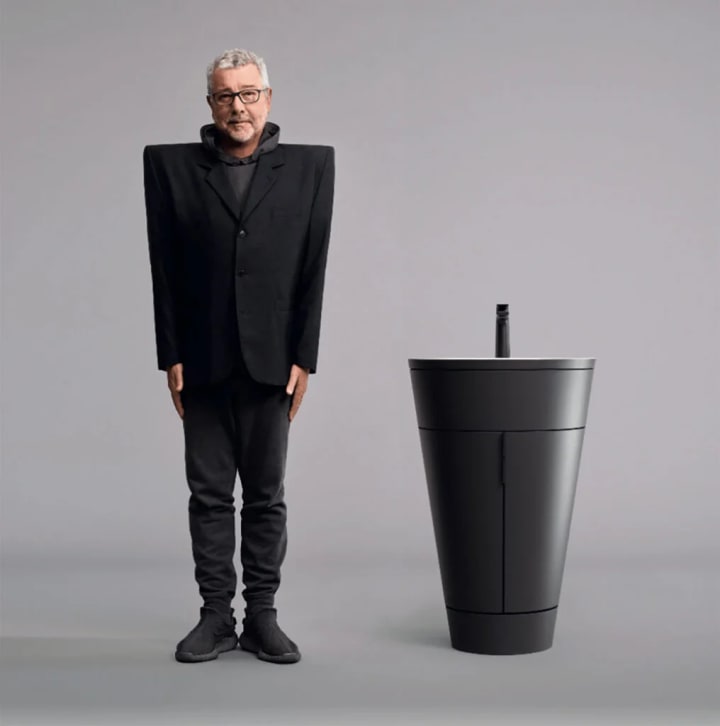
Philippe Starck is one of the most recognizable and influential figures in global design. His impact goes far beyond interior design – he has shaped how the world understands objects, spaces, and the role of design in everyday life.
Starck’s defining strength is his ability to move effortlessly between extremes. He works with luxury and mass production, high culture and everyday utility, serious philosophy and sharp irony. Few designers have managed to stay relevant for decades while constantly reinventing themselves, and Starck is one of them.
Design driven by ideas, not aesthetics
For Starck, design has never been about decoration. It is about ideas. Every object or interior he creates starts with a concept, often philosophical, sometimes provocative.
His work asks questions:
- Why does this object exist?
- How can it be simpler, smarter, more human?
- Does it really need to look “luxurious” to be valuable?
This intellectual approach is what separates Starck from purely visual designers. Even his most minimal objects carry a clear intention.
Democratizing design
One of Starck’s greatest contributions is his role in making good design accessible. He challenged the idea that design should only serve the elite and actively worked with mass-market brands to bring well-designed objects into everyday homes.
Through collaborations in furniture, lighting, consumer products, and hospitality, Starck proved that design quality and large-scale production are not mutually exclusive.
This philosophy reshaped the industry and influenced generations of designers who followed.
Irony, humor, and lightness
Unlike many modernist designers, Starck embraces humor. His work often contains irony, playful exaggeration, or unexpected twists.
This sense of lightness makes his designs approachable and human. It also prevents them from becoming rigid or dogmatic. Starck allows design to be intelligent without being heavy.
A global footprint across disciplines
- Starck’s portfolio spans:
- Hotels and restaurants
- Residential interiors
- Furniture and lighting
- Industrial and consumer products
His interiors are often minimal but emotionally charged, relying on contrast, light, and strong conceptual clarity rather than ornamentation.
Because of this multidisciplinary reach, his influence extends far beyond interiors and into the broader cultural understanding of what design can be.
Why he remains relevant
Philippe Starck stands out because he never treated design as a fixed style. Instead, he treats it as a tool for improving life, questioning norms, and communicating ideas.
In a world where many designers are defined by aesthetics alone, Starck remains relevant through thought, experimentation, and intellectual curiosity. His legacy is not just visual – it is cultural.
Jean-Louis Deniot – France

Jean-Louis Deniot represents a refined, intellectual side of contemporary interior design. His work is often described as modern classicism, but that definition barely captures the depth of his approach. Deniot doesn’t recreate historical interiors, and he doesn’t chase trends. Instead, he builds timeless spaces rooted in balance, proportion, and cultural continuity.
His strongest quality is restraint. In an industry where excess often dominates, Deniot proves that elegance comes from precision and control.
A contemporary interpretation of classical elegance
Deniot’s interiors feel sophisticated without being rigid. He draws inspiration from European architectural heritage but translates it into a modern language that feels relevant rather than nostalgic.
His spaces are defined by:
- Strong architectural structure
- Carefully considered symmetry
- Subtle, often muted color palettes
Nothing feels accidental. Every object has a reason to exist, and every composition feels resolved.
Luxury without ostentation
One of Deniot’s key strengths is his ability to work with luxury materials without making them feel performative. Marble, wood, metal, and fine textiles are used with discretion and intelligence.
His interiors do not announce wealth. They communicate confidence and cultural depth. This approach resonates strongly with clients who value refinement over spectacle.
Mastery of proportion and atmosphere
Deniot has an exceptional sense of scale. His rooms feel calm and harmonious because proportions are meticulously controlled. Furniture never overwhelms the space, and decorative elements support the architecture rather than compete with it.
Lighting plays a crucial role in his work, shaping atmosphere and reinforcing a sense of quiet elegance.
Global appeal with European roots
While deeply connected to French design tradition, Deniot’s work translates seamlessly across cultures. His projects span Parisian apartments, New York residences, and international luxury developments.
This ability to adapt without losing identity has positioned him as one of the most trusted designers in the high-end residential market worldwide.
Why he stands out
Jean-Louis Deniot stands out because he resists extremes. His work is neither decorative nor austere, neither historic nor aggressively modern.
In a rapidly changing design landscape, his interiors offer something rare: stability, clarity, and timeless relevance. He represents a school of design where elegance is built slowly, thoughtfully, and with deep respect for architectural tradition.
Marcel Wanders – Netherlands
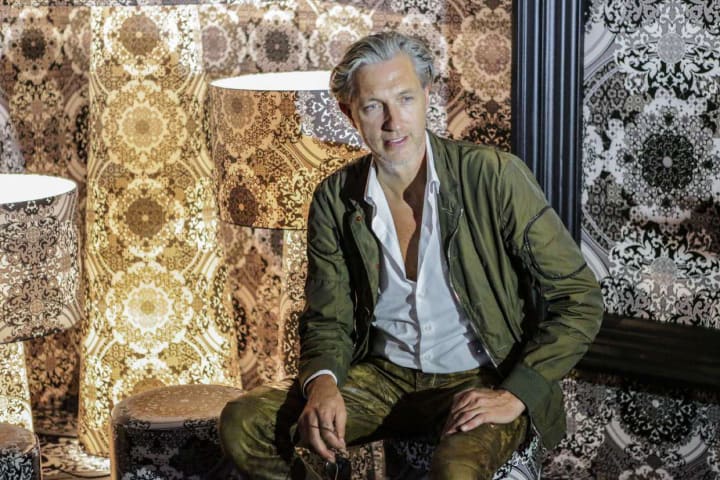
Marcel Wanders is one of the most expressive and concept-driven designers of the contemporary era. His work exists at the intersection of interior design, art, and storytelling, consistently challenging the boundaries of what interiors are expected to be.
Wanders does not aim for neutrality or quiet restraint. His spaces are emotional, theatrical, and often provocative. They are designed to be experienced, not simply occupied.
Design as narrative and emotion
The defining strength of Wanders lies in his ability to turn interiors into stories. Each project is built around a concept that unfolds through form, ornament, scale, and atmosphere.
His interiors often feel:
- Immersive
- Symbolic
- Deliberately dramatic
Rather than hiding decoration, Wanders celebrates it, using pattern, texture, and exaggeration as tools of expression.
Breaking modernist rules
While much of contemporary design follows minimalist and functionalist traditions, Wanders openly challenges those principles. He rejects the idea that modern interiors must be restrained or austere.
Instead, he reintroduces:
- Ornament and craftsmanship
- Historical references reinterpreted in bold ways
- Emotional richness over visual reduction
This makes his work instantly recognizable and polarizing, but never forgettable.
Moooi and the language of objects
As a co-founder of Moooi, Wanders reshaped the way contemporary furniture is perceived. The brand became known for bold, sculptural pieces that blur the line between functional objects and art.
This object-focused mindset translates directly into his interiors, where furniture often becomes the emotional centerpiece of the space.
Theatrical use of scale and detail
Wanders is a master of contrast. Oversized elements, intricate detailing, and unexpected material combinations are used to create tension and surprise.
Despite the richness, his interiors are carefully orchestrated. The drama is intentional and controlled, not accidental.
Why he stands out
Marcel Wanders stands out because he refuses to make interiors invisible. His work demands attention and emotional engagement.
In a global design culture increasingly focused on neutrality and minimalism, Wanders represents the opposite pole: design as spectacle, fantasy, and expressive freedom. His interiors remind us that spaces can be joyful, dramatic, and unapologetically imaginative.
India Mahdavi – France / Iran

India Mahdavi is one of the most distinctive voices in contemporary interior design, best known for her bold use of color and her ability to create spaces that feel both playful and sophisticated. In a field often dominated by neutral palettes and restrained minimalism, Mahdavi’s work stands out for its warmth, personality, and emotional clarity.
Her interiors are instantly recognizable, yet never superficial. Color, in her work, is not decoration. It is structure, mood, and identity.
Color as a design language
Mahdavi’s greatest strength is her mastery of color. She treats it as an architectural tool rather than an accent. Walls, floors, furniture, and objects are often unified into cohesive color compositions that define the entire space.
Her approach to color:
- Creates atmosphere rather than contrast
- Evokes emotion and memory
- Gives spaces a strong, confident identity
This is especially powerful in hospitality projects, where her interiors leave a lasting impression and become part of the brand experience.
Soft forms and human scale
Beyond color, Mahdavi is known for her preference for rounded shapes, gentle curves, and soft geometries. Her spaces feel welcoming and human, never rigid or intimidating.
Furniture and layouts are designed to encourage comfort, conversation, and ease. This sensitivity to scale makes her interiors approachable, even when they are visually bold.
A cross-cultural perspective
With roots in both French and Iranian culture, Mahdavi brings a layered sensibility to her work. Her interiors subtly reflect a mix of European elegance and Middle Eastern warmth, without relying on literal references.
This cultural hybridity gives her designs depth and universality. They feel global, not tied to a single tradition or trend.
Design that balances joy and discipline
While her work often feels joyful and expressive, it is carefully controlled. Behind the playful surfaces is a strong sense of composition and discipline.
Mahdavi understands when to stop. Color never overwhelms the space, and softness never turns into chaos. This balance is what elevates her work from decorative to truly architectural.
Why she stands out
India Mahdavi stands out because she proves that boldness can be gentle, and color can be sophisticated. Her interiors reject austerity without sacrificing intelligence.
In the global design landscape, she represents a human, optimistic approach to space, one that values emotion, comfort, and individuality as much as visual impact.
Peter Marino – USA

Peter Marino is one of the most powerful and influential figures in luxury interior architecture. His work has defined the visual language of high-end retail and branded environments for decades, shaping how global luxury houses present themselves in physical space.
Marino approaches interiors with an architect’s mindset. His spaces are not decorative. They are structured, intentional, and designed to communicate authority, exclusivity, and permanence.
Architecture as a foundation
Marino’s greatest strength lies in his architectural discipline. He treats interiors as extensions of architecture, focusing on structure, volume, and spatial logic before any decorative decisions are made.
His spaces feel solid and grounded, often built around strong geometries and clear spatial hierarchies. This approach gives his interiors a sense of power and control that few designers achieve.
Defining luxury through materiality
Material selection is central to Marino’s work. Stone, metal, leather, glass, and custom finishes are used not for ornament, but to express quality and weight.
Luxury in his interiors is conveyed through:
- Material integrity
- Craftsmanship
- Precision
Rather than visual excess, Marino relies on restraint and depth to communicate value.
Luxury retail as cultural architecture
Marino is best known for his long-standing collaborations with fashion houses such as Chanel, Dior, Louis Vuitton, and Hermès. He transformed retail spaces into architectural statements rather than mere stores.
In his hands, boutiques become cultural environments that embody brand identity, history, and power. Art is often integrated into these spaces, reinforcing the connection between commerce and culture.
Consistency across a global scale
One of Marino’s key strengths is his ability to maintain design authority across hundreds of projects worldwide. Despite the scale of his work, his interiors remain cohesive, disciplined, and unmistakably controlled.
This consistency has made him the go-to designer for brands that demand absolute precision and long-term visual continuity.
Why he stands out
Peter Marino stands out because he treats luxury with seriousness and discipline. His interiors do not aim to impress through novelty, but through permanence and strength.
In a world where luxury often chases trends, Marino represents stability, architectural rigor, and timeless authority. His work defines what luxury looks like when it is confident enough to be restrained.
Patricia Urquiola – Spain / Italy

Patricia Urquiola is one of the most intellectually versatile designers of her generation. Her work moves fluidly between interior design, furniture, and industrial design, creating a seamless dialogue between space, object, and human use.
What sets Urquiola apart is her ability to combine innovation with warmth. Her interiors are contemporary and forward-looking, yet always approachable and deeply human.
Design rooted in experimentation
Urquiola is known for her willingness to experiment with form, materials, and production methods. She constantly explores new ways of shaping furniture and interiors, often blurring the line between craft and industry.
Her work is characterized by:
- Unconventional forms
- Layered textures
- Playful but controlled geometry
This experimental mindset keeps her designs fresh without making them feel disconnected from everyday life.
A strong connection between furniture and space
Unlike many interior designers, Urquiola approaches space through objects. Furniture is not an afterthought in her interiors, but a central element that defines rhythm, scale, and interaction.
Because she designs both furniture and interiors, her spaces feel cohesive and intentional. Every object feels as though it belongs exactly where it is.
Human-centered modernism
At the core of Urquiola’s work is a focus on comfort and usability. Even her most sculptural pieces are designed to be lived with, not just admired.
Her interiors balance:
- Softness and structure
- Function and emotion
- Innovation and familiarity
This makes her work particularly successful in residential, hospitality, and workplace environments.
Italian sensibility with a global reach
Based in Italy, Urquiola draws from the country’s strong design and manufacturing culture. At the same time, her work is unmistakably international, collaborating with leading global brands and clients.
This combination of Italian craftsmanship and global relevance has made her one of the most respected figures in contemporary design.
Why she stands out
Patricia Urquiola stands out because she proves that innovation does not have to feel cold or distant. Her interiors are thoughtful, experimental, and emotionally intelligent.
In a design world often split between pure aesthetics and pure function, Urquiola occupies the rare middle ground where creativity and humanity coexist.
Kelly Hoppen – UK

Kelly Hoppen is one of the most recognizable names in contemporary interior design and a defining figure of modern British minimalism. Her work helped shape a clean, neutral, and highly marketable aesthetic that has influenced both high-end residential interiors and mainstream design culture.
Hoppen’s strength lies in clarity. She builds interiors that feel calm, balanced, and immediately understandable, making her style widely appealing across different audiences.
Neutral palettes as a foundation
Hoppen is best known for her disciplined use of neutral colors. Beige, taupe, cream, and soft greys form the backbone of her interiors, creating a sense of visual calm and cohesion.
Rather than relying on contrast or bold statements, she focuses on subtle variations in tone and texture to add depth.
This approach makes her spaces feel timeless and easy to live in.
Order, symmetry, and balance
Structure is central to Hoppen’s design philosophy. Her interiors are carefully organized, with clear lines, symmetry, and deliberate spacing.
Furniture placement and layout are always considered from a functional perspective, ensuring that the space feels both elegant and practical.
This emphasis on order contributes to the sense of comfort that defines her work.
Design that scales effortlessly
One of Hoppen’s greatest strengths is scalability. Her aesthetic translates easily across private homes, yachts, hotels, and commercial projects.
Because her style is controlled and neutral, it adapts well to different budgets, markets, and cultural contexts. This has made her one of the most commercially successful designers in the industry.
Making minimalism accessible
While minimalism can often feel cold or exclusive, Hoppen’s version is approachable. Her interiors are designed to be lived in, not admired from a distance.
This accessibility played a key role in popularizing modern minimalist interiors beyond elite design circles.
Why she stands out
Kelly Hoppen stands out for her ability to turn restraint into a strength. Her work demonstrates that design does not need to be loud or complex to be effective.
In a global landscape filled with visual noise, her interiors offer clarity, calm, and consistency. She represents a practical, refined approach to modern living.
Ilse Crawford – UK

Ilse Crawford is one of the most influential voices in human-centered interior design. Unlike designers focused on visual impact or stylistic signatures, Crawford builds her work around a single core question: how does a space make people feel?
Her approach shifted the industry’s attention from aesthetics alone to wellbeing, comfort, and emotional experience. As a result, her influence extends far beyond interiors into hospitality, workplace design, and contemporary architecture.
Design centered on human experience
Crawford’s greatest strength is her deep understanding of human behavior. She studies how people move through spaces, how they interact with light, texture, sound, and proportion.
Her interiors are designed to:
- Reduce stress
- Encourage connection
- Support everyday rituals
Nothing is arbitrary. Every design decision is made in service of how a space will be lived in.
Material honesty and sensory balance
Crawford works extensively with natural materials, but unlike trend-driven “organic design,” her choices are grounded in psychology and comfort.
Wood, stone, textiles, and soft surfaces are used to create warmth and sensory balance. Lighting is gentle and layered, avoiding harsh contrasts.
Her spaces feel calm not because they are minimal, but because they are considerate.
Spaces that feel lived-in, not staged
One of Crawford’s defining traits is her rejection of overly polished interiors. Her spaces feel authentic, slightly imperfect, and human.
Furniture is comfortable rather than sculptural. Objects feel personal rather than curated. This lived-in quality creates emotional trust between the space and its occupants.
Wellbeing as a design principle
Long before wellness became a mainstream design topic, Crawford was already advocating for interiors that support mental and emotional health.
Her work emphasizes:
- Natural light
- Tactile comfort
- Emotional safety
This philosophy has made her particularly influential in hospitality and workplace design, where wellbeing directly affects performance and satisfaction.
Why she stands out
Ilse Crawford stands out because she reframed what “good design” means. She proved that interiors are not just visual environments, but emotional systems.
In a world increasingly aware of burnout, overstimulation, and stress, her work feels not only relevant, but essential. She represents a future where design serves people first, and aesthetics follow naturally.
Today’s world-class interior design is no longer defined by visual trends, luxury labels, or recognizable aesthetics alone. It is defined by depth, intention, and the ability to create spaces that resonate on a human and cultural level.
The designers in this list represent very different approaches. Some work through bold expression and visual impact, others through restraint, discipline, or emotional intelligence. Yet what unites them is influence. Each of them has shaped how interiors are experienced, understood, and valued on a global scale.
What stands out most clearly is a shift in priorities. Contemporary design is moving away from decoration toward meaning. Toward tactility, identity, and authenticity. In this context, designers who are able to translate culture, emotion, and human experience into space are setting the direction for the future.
Together, these designers show that world-class interiors are no longer about impressing the eye alone. They are about creating spaces that matter.
About the Creator
Lifestyle Problem-Solving Techniques To Reduce Anxiety About Commitment
Commitment anxiety can be painful but it does not normally manifest itself without reason. However, the key to its solution is to first know its origins. Psychologist John Bowlby postulated that early attachment experiences determine relationship pattern in adults. The subjects of relationships that were not stable or those who have had emotional imbalance may relate commitment to loss or vulnerability. Instead of saying that you are afraid of commitment, it can be more beneficial to have a look at the emotional meaning of commitment, whether it is fear of rejection, loss of freedom, or a repetition of the past pain. Consciousness will eliminate the mystique and will enable specific individual development.
By Kellee Bernier4 days ago in Humans




Comments
There are no comments for this story
Be the first to respond and start the conversation.