
Thousand Suns in Her Smile
An Ode to the Quiet Bravery of Everyday Women

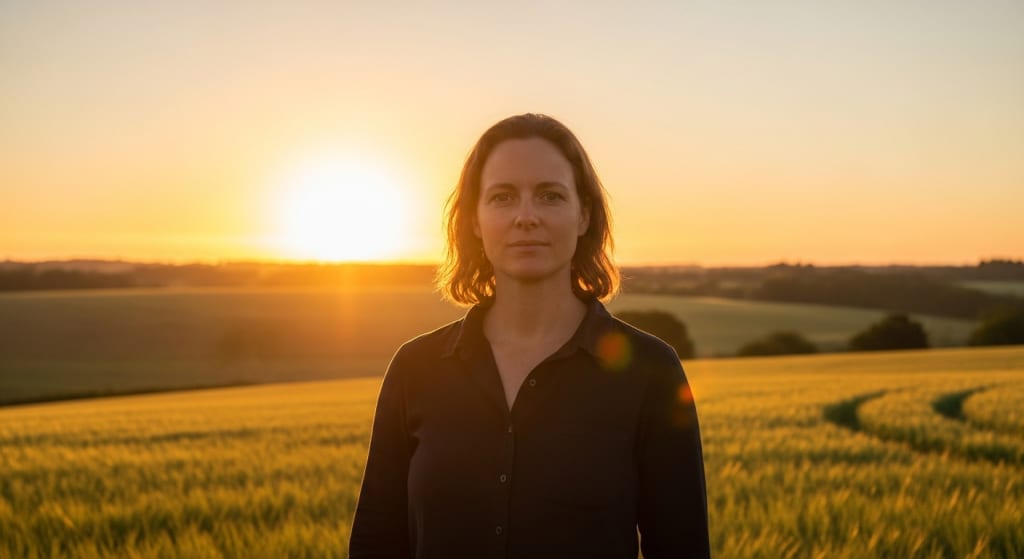
Maya’s hands were always busy. Whether braiding her daughter’s hair at dawn, stirring lentils with practiced grace, or mending clothes by candlelight, her palms never knew stillness. The village knew her as the woman who smiled too much for someone who had so little. But what they didn’t see—what most people never think to look for—was that behind her smile burned the fire of a thousand suns.
Every morning, Maya rose before the rooster, wrapping her faded dupatta tightly around her shoulders to chase away the cold. Her husband, Ramesh, had been gone for three years—taken not by death, but by desperation. One day, he left for the city to find work and never came back. No letters. No calls. Just silence and dust.
She could have collapsed under the weight of abandonment, but Maya stood up instead.
“Ma, why do you smile so much?” her son Aarav once asked, his small eyes full of doubt.
She’d laughed gently. “Because smiling reminds the sun to rise, beta.”
He was too young to know she hadn’t cried in front of anyone since the day she found Ramesh’s old sandals still by the door.
Maya sold vegetables in the village market every day except Sunday. She woke with the wind, picked the freshest from her garden, and loaded them into a rickety basket she balanced perfectly on her hip. The villagers respected her, admired her even, but they never asked how she managed to stay kind, gentle, and good in a world that hadn’t always returned the favor.
She did it for her children. For herself. For the quiet belief that the universe owed her no kindness—but she could still choose to give it anyway.
One Wednesday, as she arranged tomatoes in neat pyramids, a young woman named Leela approached her stall. She wore city clothes—jeans and eyeliner, an expensive phone in her hand. Out of place in the dusty market.
“Are you Maya?” she asked, her voice uncertain.
“Yes, beti. What can I get for you?”
Leela hesitated, looked around, then leaned in. “I’m... I’m Ramesh’s niece. He’s in Mumbai. In a hospital.”
The words fell like a broken pot.
Maya froze. Her fingers clutched a potato too tightly, skin pressing into the jagged dirt still clinging to its surface.
“He... he asked for you. I came because he has no one else. He’s very sick,” Leela added, softly.
The market blurred around her, colors bleeding together. She hadn’t heard his name in so long, it sounded foreign. Her breath came short.
“Did he say why he left?” she whispered.
Leela shook her head. “Only that he was ashamed. That every day he stayed away, it got harder to come back.”
Maya didn’t cry. She looked toward the sky, where the sun had begun its slow descent. Then she gave a small, resigned smile.
“When can we go?”
The city was noise. Smog. Chaos. It swallowed her in a way the quiet village never could. But Maya walked with a straight spine, her chin high. She followed Leela through narrow hospital corridors until they reached a small room filled with the sound of slow beeping and shallow breathing.
Ramesh was a skeleton of the man she once knew. Pale, frail, with tubes in places where words should have been.
His eyes opened. Slowly.
“Maya...” It was a whisper of regret wrapped in sorrow.
She sat beside him, placed her hand over his, thin and cold. She didn’t scold. Didn’t shout. She simply said, “I’m here.”
“I’m sorry,” he rasped.
“You should be,” she said. Then softer, “But I forgive you.”
He cried then—not loudly, but with silent tears that carved new lines into his already tired face.
She stayed for a week. Sat with him as he drifted between pain and sleep. She brought him soup, hummed lullabies, told him stories of Aarav and Meera. Stories of a life that grew in his absence.
“I thought you’d hate me,” he murmured once.
“I did. For a time,” Maya replied honestly. “But hating you was heavy. Loving our children was lighter.”
He passed away the night before she planned to return. Peacefully. Holding her hand.
Back in the village, Maya resumed her rhythms. She picked vegetables, sang to her daughter, and fixed broken sandals. The villagers noticed she had stopped wearing the small crimson bindi that once marked her as a married woman. They whispered, gossiped, wondered. But no one asked.
And Maya?
She smiled still.
Because her smile was not born of joy alone. It was forged in heartbreak, in silence, in forgiveness. It carried the memory of loss, the strength of resilience, and the fire of a woman who had walked through abandonment and returned with grace.
When Meera asked her, weeks later, “Ma, are you okay?”
Maya pulled her daughter close, kissed her forehead, and whispered, “There are a thousand suns in my smile, my love. And each one rises for you.”
End.
About the Creator
Shah Nawaz
Words are my canvas, ideas are my art. I curate content that aims to inform, entertain, and provoke meaningful conversations. See what unfolds.
Keep reading
More stories from Shah Nawaz and writers in Humans and other communities.
The Art of Being Alone Without Feeling Lonely
Rain whispered gently against the windowpane as Mira curled her fingers around a steaming mug of chamomile tea. The silence was so complete, she could hear the tick of the old wall clock—each second a gentle echo in the small apartment.
By Shah Nawaz8 months ago in Humans
My First Time Skiing and I Got Lost, Alone, in the French Alps
Looking back, I can trace some of my life’s biggest adventures to a simple action from my sister. She’d introduced me to Tommy (a very long time ago), a colleague of hers, who had overshared his penchant for Italian-looking women, and I ticked that box.
By Chantal Christie Weissabout 23 hours ago in Humans


Comments
There are no comments for this story
Be the first to respond and start the conversation.