
Things I Wanted to Say to You, but Wrote in the Margins Instead"
: I underlined you in every chapter I never finished.
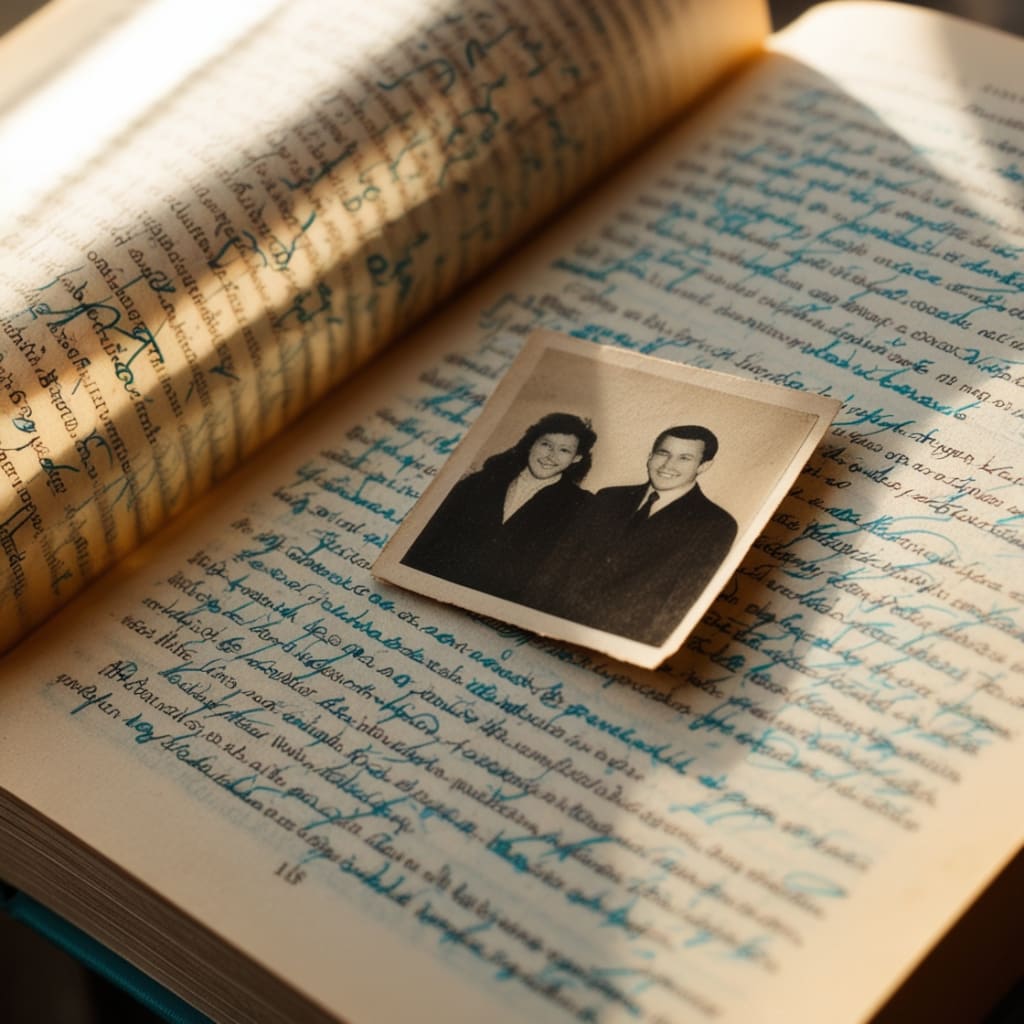
Your copy of The Bell Jar still sits on my shelf.
The spine’s cracked now, the pages worn at the corners like they’ve been trying to fly away. I’ve read it too many times. Or maybe I’ve just read the parts where your handwriting lives.
You always wrote in the margins — not notes about plot or meaning, but about your own thoughts. Like the book wasn’t a story, but a mirror you spoke back to.
That’s where I go to find you now.
Not in photos.
Not in voicemail recordings I can’t bring myself to delete.
But in the ink you left behind.
Page 17
“Maybe she’s just tired, not broken.”
In the margin, you scribbled:
“Is there a difference?”
I remember the day you bought that book.
Downtown. Rainy.
You said you liked how it didn’t pretend to have answers.
You always hated neat endings.
I didn’t tell you how much that line scared me.
How it echoed through me.
How I wanted to say: “You’re not broken. Just tired. And I can help.”
But instead, I said nothing.
And you kept writing in the margins.
Page 49
“I took a deep breath and listened to the old brag of my heart. I am, I am, I am.”
You wrote:
“If I keep reading this line, maybe I’ll believe it too.”
I wish I had asked what you meant.
But I didn’t want to pry.
You made pain look so poetic, I forgot it still hurt.
Sometimes I think love is just a series of missed questions.
Little silences where truth could have bloomed but didn’t.
You were a garden I was too afraid to water.
Page 72
No underline this time. Just one sentence in the margin:
“Would you still love me if I broke in half?”
You never asked me that aloud.
But if you had, I would’ve said yes.
A thousand times, yes.
I would’ve loved you with broken bones, shaky hands, words that got stuck in your throat.
But I didn’t say that.
So instead, I wrote it here.
In this notebook I’ve started keeping since you left.
Every page is a letter to you that you’ll never read.
Just like those margins were letters I never answered.
You once said the saddest thing in the world is unread ink.
But I’m reading, now.
Too late, I know.
But still.
Page 103
A passage about silence.
You circled it three times.
Next to it, you wrote:
“Silence is where the screaming goes to hide.”
That night, I remember, you sat on the fire escape and said nothing for hours.
Just looked at the sky like it owed you something.
I wish I had sat beside you.
But I was busy. Distracted. Caught up in things that don’t matter now.
You needed someone to listen to the silence with you.
And I didn’t come.
If regret had a sound, I think it would be the turn of a page.
Soft. Barely there.
But endless.
Page 141
“I couldn’t see the point of getting up. I had nothing to look forward to.”
You wrote:
“Not true. Sometimes there’s coffee. And sunlight. And that smile you make when I forget I’m sad.”
That line broke me.
I didn’t even know I smiled like that.
And now I wonder how often you were holding on by just a thread — and I was the thread.
And I never knew.
People think grief is loud.
Sobs. Wailing. Collapsing to the floor.
But it isn’t.
Grief is quiet.
Like the moment you open a book and remember the person who underlined the pages.
Like standing in a bookstore and instinctively reaching for something you know they’d love.
Like hearing their laugh in someone else’s throat.
Grief is remembering all the things you should’ve said, and realizing the only place you can write them now… is in the margins.
Page 183
“I couldn’t help myself. It was as if my mind had a mind of its own.”
You wrote:
“I wish people understood that more.”
I do now.
Too late, but I do.
The last page has no writing.
Just your name, written small in the corner.
And a date:
March 4th.
The day before you left.
You didn’t leave a note.
Just the book on my doorstep.
Wrapped in twine.
A sticky note on top:
“You should read this again.”
I didn’t realize it was goodbye.
But now, I write back.
In this notebook.
To the version of you who asked questions in the margins.
To the version who believed ink could be a bridge.
And I answer:
Yes.
There’s a difference between tired and broken.
Yes.
You are worth loving, even in halves.
Yes.
The coffee mattered. The sunlight.
And yes —
I saw that smile you gave me when you forgot you were sad.
I carry it with me now.
Someday, someone will pick up your book.
Maybe it will find its way to a used bookstore shelf.
Or a library donation box.
Or the hands of someone who needs those same underlined lines.
They’ll read your words in the margins.
They’ll find you there.
And maybe, they’ll add their own.
And maybe, this time, someone will answer back.
About the Creator
Keep reading
More stories from Abuzar khan and writers in Humans and other communities.
The Night We Pretended the Bombs Were Fireworks
The sirens started just after midnight. We were on the rooftop — barefoot, cold beer in hand, wrapped in one blanket between us. The city stretched below like a quiet beast, blinking its sleepy lights at the stars. You rested your head on my shoulder, and I remember thinking, this is what peace must taste like — not in nations, but in moments.
By Abuzar khan8 months ago in Humans




Comments
There are no comments for this story
Be the first to respond and start the conversation.