
The Three Stages Of Syphilis
How Disastrous Syphilis Can Be
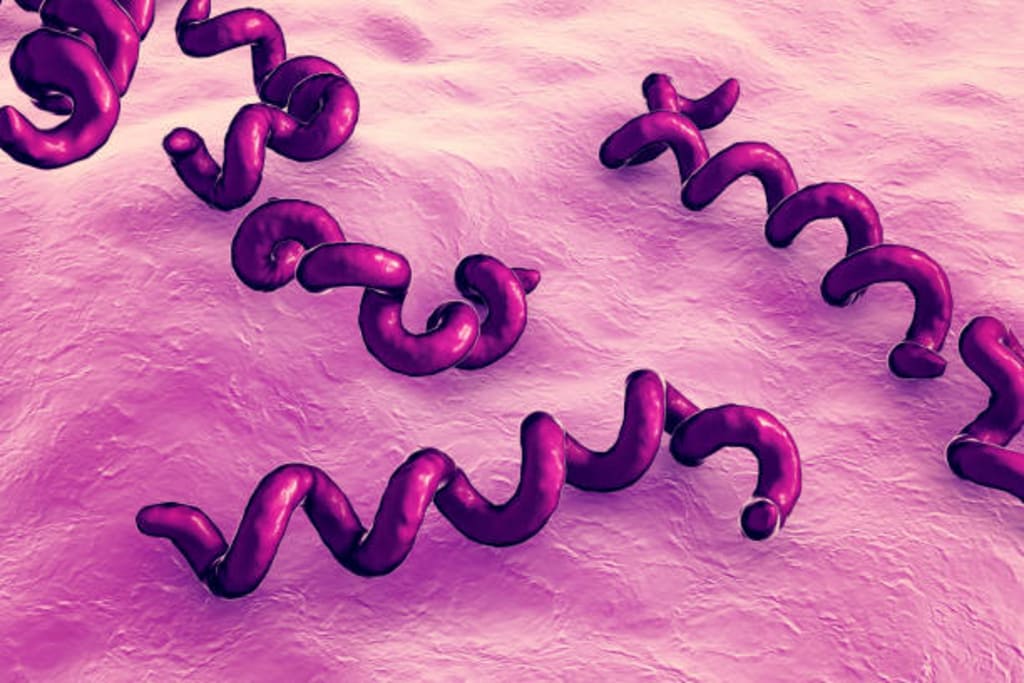
Syphilis, akin to the historical plagues of the Black Death and smallpox, has etched its place in the annals of human suffering. This notorious disease is notorious for its gruesome progression through three distinct stages, often leading to severe mental deterioration. Notable historical figures like Friedrich Nietzsche and Al Capone were among its victims, their lives marred by the disease's cruelty. Fortunately, advancements in immunology and medicine have rendered syphilis an easily treatable condition.
Worldwide, approximately 6 million cases of syphilis are reported each year, and the vast majority are successfully treated with a straightforward prescription of penicillin. However, it's worthwhile to delve into the history of this affliction that tormented Europe for over five centuries, causing horrifying disfigurements and driving its victims to madness.
The first documented cases of syphilis emerged in Europe during the mid-15th century. This infectious scourge was most prevalent among prostitutes and their clients, resulting in the afflicted being associated with immorality and shame. It wasn't confined to Europe, though, as European explorers and navigators introduced syphilis to North America in the late 15th century during their voyages to the New World.
Syphilis is caused by the bacterium Treponema pallidum, often referred to as T. pallidum, a type of spirochete bacteria characterized by its corkscrew-like shape. Unlike other bacteria that can be found in nature, T. pallidum is highly sensitive and has strict environmental requirements for survival. It cannot be found in soil, water, or even feces. If left on a surface, T. pallidum can only survive for about two hours, a stark contrast to bacteria like E. coli, which can persist on surfaces for days. Even in laboratory settings, T. pallidum is exceptionally challenging to culture. The only environment in which T. pallidum thrives is within the human body. This reliance on human hosts has allowed the bacterium to persist for more than 500 years.
T. pallidum does not spread through the air like the common cold, nor does it transmit through casual skin-to-skin contact. Due to its sensitivity, syphilis necessitates intimate contact involving specific areas of the body. In this context, intimacy refers to activities such as kissing or sexual contact where mucosal surfaces, such as those in the mouth or genital region, come into contact. Transmission occurs when an individual with a syphilitic lesion makes contact with a mucosal surface or a break in the skin. Once on the surface, T. pallidum releases an enzyme called matrix metalloproteinase-1 (MMP-1), which breaks down collagen, facilitating the bacterium's penetration into soft tissues. Mucosal or broken skin is the preferred medium for syphilis transmission, as it is softer, thinner, and offers less surface protection, making it easier for T. pallidum to penetrate. In contrast, regular, unbroken skin or the epidermis is more formidable for T. pallidum to breach because of its thickness, roughness, and the presence of acidic oils that are harmful to the bacterium.
Once T. pallidum infiltrates the body, the immune system launches a response, characterized by fever and inflammation, as it would for any bacterial infection. However, after a few days, the immune response ceases, and the body appears to return to normal. The immune system believes T. pallidum has been vanquished, but in reality, the bacterium has gone into hiding. T. pallidum possesses a remarkable ability to evade the immune system by shuffling a single gene within its DNA during the course of the infection. This gene-shuffling alters the sequence of proteins on the bacterium's surface. With these modified surface proteins, antibodies and immune cells fail to recognize T. pallidum, allowing it to replicate over several weeks.
The first stage of syphilis, known as primary syphilis, becomes evident approximately three weeks after the initial infection. It is characterized by the development of painless lesions called chancres at the site where the bacterium entered the body. These chancres most frequently appear on the genitals or the mouth, where thin, moist mucosal tissues, or breaks in the skin, are prevalent. These lesions are teeming with hundreds of colonies of the bacterium and are highly infectious when touched. Chancres typically heal within three to four weeks, and once this primary infection subsides, T. pallidum modifies its DNA to elude the immune system.
During the interlude between the first and second stages of syphilis, T. pallidum reproduces aggressively throughout the body. Nevertheless, its replication rate is significantly slower than that of most other bacteria. While E. coli, for instance, replicates every 20 minutes, T. pallidum takes approximately 30 hours to complete a replication cycle. This seemingly sluggish replication rate is not a vulnerability but an advantage for T. pallidum. Thanks to this gradual rate, the bacterium maintains a low concentration below the critical antigen mass, which represents the threshold of antigens from bacteria or viruses required to trigger an immune response. Because T. pallidum multiplies at such a leisurely pace, it remains beneath this critical threshold, eluding detection by the immune system and allowing it to spread throughout the body.
About three to six weeks after the initial infection, T. pallidum has had ample time to replicate, signaling the onset of secondary syphilis. This second stage is distinctly more intense than the primary stage. While primary syphilis manifested as painless lesions at the point of contact, secondary syphilis results in the emergence of painful lesions on the arms, hands, feet, chest, and back. Unlike primary syphilis, these lesions are excruciatingly painful and highly contagious due to their abundance of treponema bacteria. Additional symptoms include fever, swollen lymph nodes, hair loss, and weight loss. After about four weeks, secondary syphilis typically resolves, and T. pallidum enters an extended dormant phase, where it remains inactive for as long as 15 years.
Following secondary syphilis, the period of dormancy offers respite, with an absence of symptoms that can extend for several years. Health is not severely affected during this dormant phase, yet T. pallidum lingers in the shadows, poised to unleash its most destructive damage during the third and final stage.
Somewhere between 10 and 20 years after the initial infection, T. pallidum reawakens, heralding the onset of tertiary syphilis. In this last phase, the bacterium infects a remarkably specific part of the body: the walls of blood vessels. Infection of the vasculature, or blood vessels, leads to chronic inflammation, which presents as the development of large, inflamed scar tissue known as gummas. These growths vary in size and typically manifest in soft tissues, causing gruesome disfigurements if they become sufficiently large. Blood vessel infection inflicts a dual blow to the body, impacting both the blood vessels themselves and the organs that depend on these vessels for blood supply. Inflammatory processes in blood vessels lead to calcification, or the buildup of calcium in the vessel walls. Calcification narrows the blood vessels, reducing blood flow, which, in turn, results in diminished delivery of oxygen and nutrients to the organs.
About the Creator
Ananymus Kelly
meticulous
Keep reading
More stories from Ananymus Kelly and writers in Humans and other communities.
The Effects Of Cholera
A pandemic is a term used to describe the widespread outbreak of an infectious disease that affects a large geographical area, such as an entire country or multiple continents, and has a significant impact on a substantial number of people. Commonly, pandemics exhibit a pattern where they initially experience a sharp increase in the number of fatalities, but then either subside to safe levels or eventually disappear altogether. This pattern is evident in historical records of pandemics. However, there is one notable exception to this trend – cholera.
By Ananymus Kelly2 years ago in Humans
She Left Me For A Rich Guy, Look How She Turned Out
I sat back and watched you this weekend. I saw the photos. I saw the smiles. I saw the man you chose over the empire we were building. And for the first time in three years, I didn’t feel a sting of jealousy. I felt a cold, hard sense of irony.
By Nanu Nnabuife4 days ago in Humans



Comments
There are no comments for this story
Be the first to respond and start the conversation.