
The Story of Anelia and her mother's unwavering love and hope. Living with a rare genetic disease
"I knew something was wrong with my baby, but the doctors didn't seem to understand. They told me she had colic and that it would pass, but it didn't. Anelia was in constant pain, and I didn't know how to help her."

Alina's journey with her daughter Anelia was not an easy one. From the moment she was born, Alina had a nagging feeling that something was not right with her child. While the doctors initially praised Anelia's calm demeanor, it wasn't long before the young mother began to realize that her daughter was not like other babies.
"I remember the moment they told me that I should be happy because I had given birth to a very calm child. My heart swelled with joy, and I felt like I had been blessed with the perfect baby. But that joy didn't last long."
When the daughter woke up, she screamed endlessly. The doctors assumed that Anelia had started colic early. The mother began to feed her daughter artificial nutrition, but the child did not become easier.
Anelia began to develop other strange behaviors as well. At three months old, she started sucking her fingers so hard that she caused damage to the skin. When she got her first teeth, she started chewing on furniture and other objects, causing tooth loss. She even chewed on her tongue and cheeks, causing painful wounds. Despite the mother's plea for help, the medical professionals were unable to understand the root of Anelia's condition.
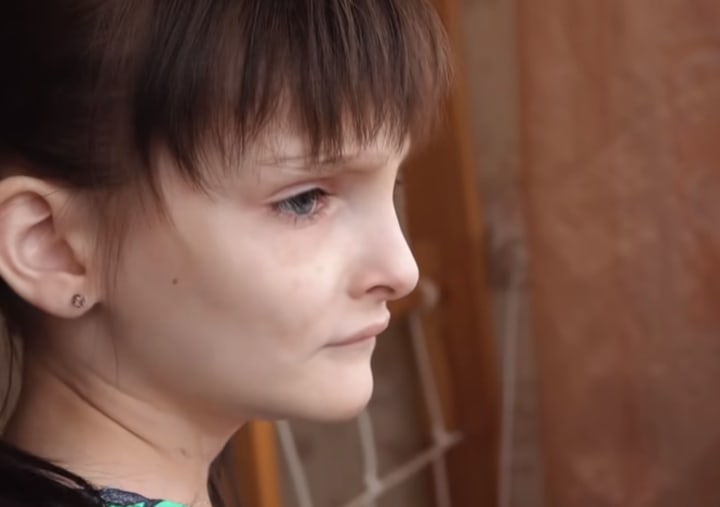
"I knew something was wrong with my baby, but the doctors didn't seem to understand. They told me she had colic and that it would pass, but it didn't. Anelia was in constant pain, and I didn't know how to help her."
Alina took her daughter to multiple doctors, but no one seemed to be able to figure out what was wrong with her. Anelia didn't seem to feel pain, which led to injuries from household appliances and other dangerous situations. Doctors gave her various diagnoses, but none of them seemed to be correct. Alina was at her wits' end, watching her daughter suffer and feeling helpless to do anything about it.
"They said she had bad habits, but I knew it was more than that. Anelia didn't feel pain, and that was causing her to hurt herself over and over again."
Alina decided to take matters into her own hands. She began researching Anelia's symptoms online, trying to find any information that might help her understand what was happening to her daughter. After months of searching, she finally stumbled upon a rare genetic disease called hereditary sensory-autonomic neuropathy.
HSAN is a rare disorder, with an estimated prevalence of 1 in 125 million people. There are several different types of HSAN, each with its own set of symptoms and inheritance patterns. HSAN can be inherited in an autosomal dominant, autosomal recessive, or X-linked manner, depending on the type.
HSAN is caused by genetic mutations that affect the function of the peripheral nerves. The mutations can affect genes that code for proteins involved in the development and function of the nerves, or they can affect genes that code for proteins involved in the transmission of nerve signals.
"I was devastated when I learned that my baby had this disease. I knew that it was rare, but I had no idea how serious it was. Anelia was in constant danger, and I didn't know if she would survive."
Once they confirmed the diagnosis, Alina felt a sense of relief. Finally, she knew what was wrong with her daughter. However, the relief was short-lived. HSAN is a progressive disease, meaning that it gets worse over time. If Anelia had the most severe form of the disease, as many children with HSAN do, she might not live past the age of ten. The disease can also cause severe mental disorders and self-destructive behaviors.
A mother was able to socialize her child, Anelia is teachable and capable of performing simple household tasks. Autoaggression has been reduced to a minimum when Anelia was 8 years old. Now a girl only causes injuries to herself due to carelessness, like other children. But Anelia has poor comprehension of speech directed at her.
"It's been a long road, and there's no cure for this disease. But I have hope that one day, scientists will find a way to alleviate the condition of children like Anelia. She's special, and I love her more than anything in this world."
Anelia doesn't understand what she can do and what she can't. Mom is always nearby to help and protect.
"I want the world to know that children like Anelia exist, and they need our help. We need to find a way to give them a better life, to protect them from themselves. And until we find a cure, I'll be here, by Anelia's side, doing everything I can to make sure she's safe and loved."
About the Creator
HeartbreakingStories
Welcome to my channel, where I share stories of hope, strength, and resilience in the face of adversity. My goal is to bring awareness to the challenges that people face and to show that no matter how difficult life can be.
Keep reading
More stories from writers in Humans and other communities.
Lost and Alone in the French Alps
Looking back, I can trace some of my life’s biggest adventures to a simple action from my sister. She’d introduced me to Tommy (a very long time ago), a colleague of hers, who had overshared his penchant for Italian-looking women, and I ticked that box.
By Chantal Christie Weiss20 days ago in Humans
Is Costco Open on MLK Day? What Shoppers Need to Know
Holidays often arrive quietly, then disrupt plans when we least expect it. Martin Luther King Jr. Day is one of those days. It is a federal holiday with deep meaning, but for many people, it also brings practical questions. Work schedules change. Schools close. Errands get delayed. Somewhere in the middle of reflection and routine, a simple question comes up every year: is Costco open on MLK Day? For families planning grocery runs, small business owners stocking supplies, or anyone trying to manage time wisely, this question matters. Understanding how Costco treats this day helps avoid frustration and last-minute confusion. The answer is not complicated, but the context around it is worth understanding.
By Muqadas khanabout 5 hours ago in Humans
Ludacris and Nelly draw backlash over bookings at MAGA-coded music festival
Ludacris and Nelly headlining a mostly right-wing event is good for them. It’s also great for the genre of hip hop. The two rap veterans have showcased their talents on other stages. Why can’t they perform for mostly MAGA folks and grab that bag?
By Skyler Saunders5 days ago in Beat


Comments
There are no comments for this story
Be the first to respond and start the conversation.