
The School System
A Broken System That Needs To Be Fixed

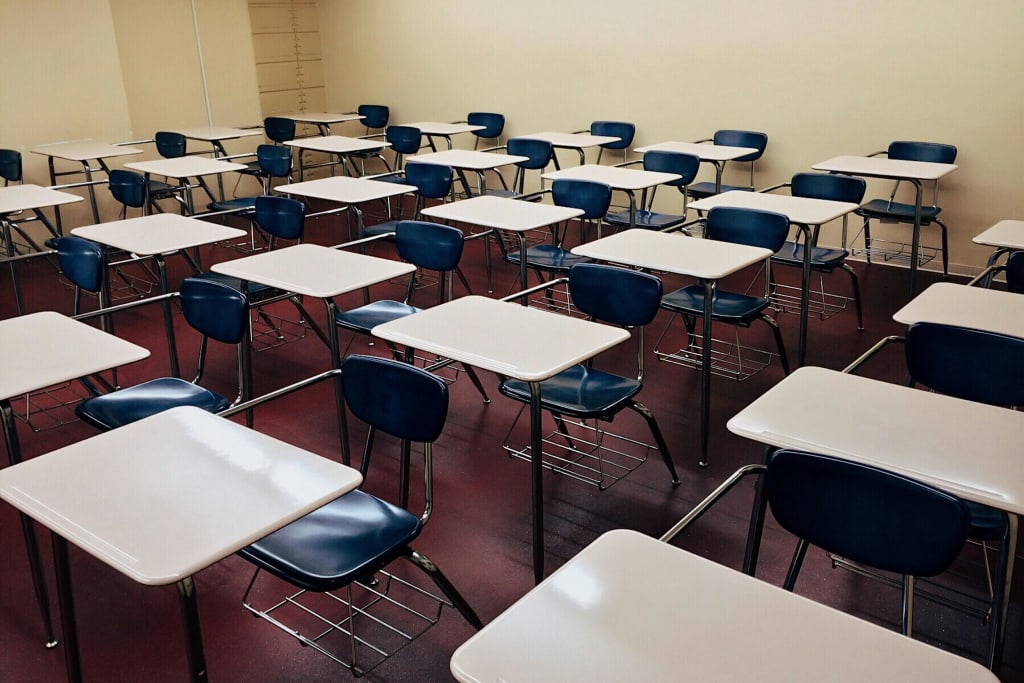
The school system does not fail loudly. It fails politely.
It still rings its bells, prints its worksheets, uploads its timetables and holds its assemblies about well-being and future pathways. From the outside, it looks functional. Even progressive. New acronyms appear every few years. New frameworks. New strategic plans featuring pastel logos and mission statements about innovation.
But inside, the system is running on a version of childhood that no longer exists.
It was built for an industrial world: for factories, for standardised labour, for obedience that could be measured in neat rows and silent rooms. Time is chopped into identical blocks. Knowledge is divided into subjects that rarely speak to one another. Curiosity is treated as a distraction unless it fits the rubric.
Children enter as questions. They leave as checklists.
The misalignment shows up in small ways. In the eight-year-old who loves building but is told to stop “fiddling.” In the teenager who reads three years above their level but is bored into apathy by worksheets designed for the middle. In the anxious student who learns very quickly that performance matters more than understanding, that the safest way to survive is to memorise and then forget.
The system calls this success.
But learning is not actually the system’s primary product. Compliance is. Attendance is. Data is. The goal is not depth but coverage, getting through content rather than staying with questions. Mastery becomes less important than pacing. Falling behind is treated as failure, even when the only thing being measured is speed.
Absence reveals this more clearly than almost anything else. Time away from school, even for mental health, illness, grief, family needs, or simple recovery, is framed as a problem to be corrected. Attendance is tracked, monitored and enforced. Automated messages are sent. Warnings are issued. Children learn very early that presence matters more than well-being.
The system does not ask what a child needs in order to learn. It only records whether they were physically in the room.
A child can be anxious, dissociating, overwhelmed or exhausted, and still be counted as “engaged.” Another can be learning deeply at home, reading, building or thinking, and be marked absent. One is rewarded. The other is punished.
Absence is treated as a moral failure. As lack of commitment. As something that must be explained, justified and documented. The body must be present, even when the mind is already gone.
Homework extends the system beyond the school day. It turns homes into satellite classrooms and evenings into unfinished lessons. Children carry institutional expectations into their private lives, where rest becomes guilt and play becomes procrastination. Learning is no longer something that emerges from curiosity, but something that follows them like a debt.
Assessment reinforces the same logic. Not “What did you understand?” but “What can you reproduce under pressure?” Knowledge is compressed into timed conditions, stripped of context and flattened into marks. A single bad day can outweigh months of effort. A single test can redefine how a child sees themselves.
Creativity is praised in speeches, but not in practice. Individuality is celebrated in slogans, but rarely rewarded. What is rewarded is what can be ranked: grades, scores, percentages and trophies. Academic excellence or sporting ability. If your talent does not fit into a reportable category, it becomes invisible. If your intelligence cannot be graphed, it is treated as irrelevant.
There is no column for imagination. No metric for wonder. No assessment for original thought that doesn’t resemble something already known.
Teachers feel the misalignment too. They arrive wanting to teach, to notice, to adapt. They leave late, carrying data instead of stories. Their professional judgment is slowly replaced by metrics, dashboards and evidence of evidence. They are asked to individualise learning while teaching thirty students the same content, at the same time, under the same constraints, for the same test.
They become managers of behaviour, administrators of curriculum and translators of policy. Fewer mentors, more middlemen between children and an increasingly abstract system.
The system praises creativity. It just doesn’t schedule time for it.
So teachers leave. Not just the burnt-out ones, but some of the best ones. The ones who still believe learning should feel alive. Increasingly, they leave to homeschool their own children, quietly opting out of the very system they were trained to serve. Parents do the same. Not always out of ideology, but out of exhaustion. Out of watching their children shrink inside classrooms that don’t see them. Out of realising that something meant to nurture curiosity is slowly flattening it.
Homeschooling grows not as a trend, but as a symptom.
Everyone knows the school system is misaligned. Parents feel it when their child’s confidence erodes. Teachers feel it when burnout becomes normal. Students feel it when learning becomes something to endure rather than pursue. Even policymakers feel it, quietly, in the gap between glossy reforms and classrooms that still look almost identical to those from a century ago.
But no one wants to touch the foundation.
Because overhauling the school system means questioning things we treat as natural: age-based progression, standardised assessment, the idea that learning must be linear, that intelligence can be ranked and that worth can be reported in grades.
It means asking why children spend six hours a day sitting when everything about their bodies and brains is designed for movement. Why silence is treated as virtue. Why boredom is considered discipline. Why failure is something to avoid instead of something to use.
It means admitting that the system doesn’t just educate children. It conditions them. It trains them for external validation. For permission. For waiting to be told what matters.
And so children spend their most formative years behind walls not built for childhood. Behind schedules that fragment their attention. Behind rules designed for efficiency, not for growth. They learn to raise their hands before they learn to trust their instincts. They learn to ask for permission before they learn to explore.
They learn that learning happens in specific buildings, at specific times, under specific authorities, and that their own curiosity, outside those walls, somehow doesn’t count.
The system keeps updating the surface instead. New devices in old classrooms. New language for old structures. Mindfulness programs inside schedules that still induce chronic stress. Well-being posters on walls where students are afraid to fail.
The system is not broken because it doesn’t work.
It’s broken because it works exactly as designed. For a world that no longer exists, shaping humans for roles that are disappearing, using tools that mistake compliance for learning and measurement for meaning.
And the quietest part of the failure is this:
Most children assume the problem is them.
About the Creator
Emilie Turner
I’m studying my Masters in Creative Writing and love to write! My goal is to become a published author someday soon!
I have a blog at emilieturner.com and I’ll keep posting here to satisfy my writing needs!
Keep reading
More stories from Emilie Turner and writers in Humans and other communities.
Building a Writing Routine
Writing consistently and productively isn't just talent or something you're born with. It takes discipline, rhythm and an environment conducive to creativity. Whether you're working on a novel, short stories, a blog or a University assignment, a strong writing routine can turn inspiration into actuality.
By Emilie Turner2 months ago in Humans
Whiskey At Dusk
Guess the whiskey was more important to you in the end, wasn’t it? It was more than the well-being of your friends; more vital than showing up to the places you promised you would and could come to; more critical of a matter than fulfilling your damn responsibilities and getting the press off your back.
By Snarky Lisa4 days ago in Humans
Seasoned Firewood - Ensures A Clean And Efficient Burn In The Fireplace Throughout The Winter
As winter settles in and fireplaces become the heart of the home, choosing the right Perth firewood is essential for warmth, safety, and efficiency. Seasoned firewood - wood that has been dried for several months or more - offers significant advantages over freshly cut or damp logs. Its reduced moisture content allows it to ignite faster, burn hotter, and produce fewer emissions, making it the preferred choice for homeowners seeking a consistent and clean-burning fire all season long.
By Oakford Firewood7 days ago in Humans


Comments
There are no comments for this story
Be the first to respond and start the conversation.