
The most-kissed woman in history
A mind blowing example of the Butterfly Effect
Paris, sometime in the late 19th century. A crowd of excited onlookers, young and old, rich and poor. The spectacle?
Corpses.
Or, to be more specific, the collection of unknown bodies that are often put on public display for identification. The abandoned dead of Paris, nameless faces, strung up in a grisly parade in the hopes that someone will claim them. Although this might seem intensely macabre to us today, back then this show was s more attractive prospect than any trip to the theatre. ‘There is not a single window in Paris that attracts more onlookers than this,’ claims one contemporary account.
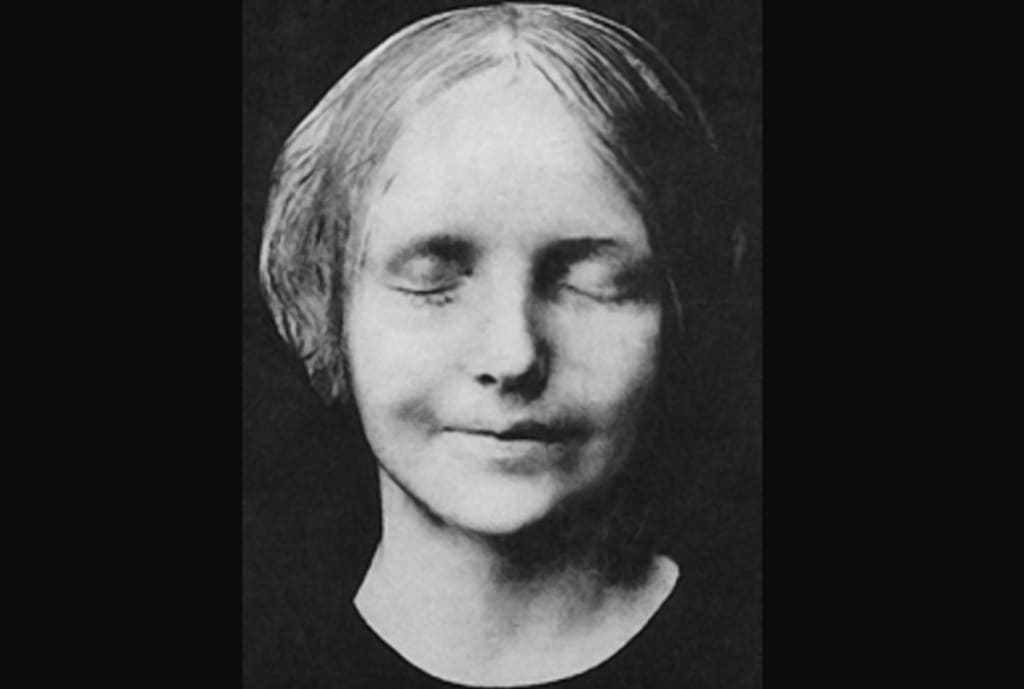
Accompanying the usual excited buzz, there is an additional, extraordinary sight that catches everyone’s eye. A girl, not any more that 16 who, unlike the other bodies, seems as though she is merely sleeping. A sweet, mysterious smile plays across her cold, drowned lips. This girl was pulled from the River Seine, and the lack of evidence of violence on her pale body suggested that she took her own life. But next to the other lumpen, innominate figures, she stands out as peaceful, calm. Perhaps as though she is waiting for a prince to wake her with a kiss.
He never comes.
The girl’s real identity, to this day, is unknown, but her captivating appearance soon generated her a nickname: L’Inconnue de la Seine – the unknown woman of the Seine. But this unknown, beautiful teenager was about to receive a new, surreal form of life in a way she could never have expected; and although the life of the girl is so entirely unknown, her face has become a famous and life-saving image in modern society.
Every star has a big break, and L’Inconnue’s comes very shortly after her death. In amongst her many admirers at the morbid line-up is an attendant at the mortuary, who is apparently so transfixed by her serenity and beauty that he orders a plaster cast to be made of her face. He realises the girl will not be identified by anyone, and thinks her too mesmerising to simply be buried and forgotten. The world seems to agree, as the death mask grows very popular and is soon reproduced and sold in shops all across Europe. Before long it stands silently in artists’ and sculptors’ studios, hangs on the walls of countless homes, and even inspires a generation of European, and particularly German, girls’ fashion. You can still buy a copy of it today.
L’Inconnue became a cultural icon, with countless poets and writers imagining romantic, heartbreaking histories for this enchantingly anonymous heroine.
Yet, more than 50 years after this initial metamorphosis into a world-renowned symbol, the unknown woman of the Seine transformed again, with the help of a man who wasn’t even born when she threw herself into the river.
The late 1940s. World War Two has been and gone, a new material called plastic is starting to be produced on a very wide scale. And in Norway, another person is drowning.
However, the outcome isn’t nearly so tragic this time – the boy underwater, two-year-old Tore Laerdal, is pulled out by his father Asmund just in time. Asmund is a toy-maker, and his most recent creation, the plastic ‘Anne’ doll, is such a huge hit in Norway that when a group of anaesthesiologists needs a doll to demonstrate a newly developed resuscitation technique, it is Asmund they call. Remembering how he only just managed to pump the deadly water out of his son’s lungs, Laerdal is only too happy to help.
Laerdal knew it was going to be a challenge to produce a realistic mannequin for such a demonstration, as it would have to be able to demonstrate how a real human body would react to this innovative ‘cardiopulmonary resuscitation’ – or CPR for short. On top of that, what sort of a face could he give this creation? He felt it necessary to give the doll a woman’s face, as he was unsure how willing the majority of men in the 1960s would be to get that personal with a male mannequin’s mouth.
Enter L’Inconnue.
The toy-maker remembered a dreamy smile he had often seen regarding him from the wall of his in-laws home, and decided to copy the mask onto his work. He didn’t know of her history, of how she was pulled from the Seine, or of how she inspired innumerable romantic artists – he only knew she was intriguing, and that her face would work on his mannequin.
Upon its completion, the doll was named Resusci Anne after Laerdal’s original little doll, and in America she became known as CPR Annie.
For decades, people have undergone training where they kneel down and perform mouth-to-mouth resuscitation with a drowned Parisian girl who’s name they can never know. Although more CPR mannequins have been produced since the 60s, Annie is considered the first and most successful ‘patient simulator’ ever created, and the Laerdal company estimates that around 2 million lives have been saved by CPR, with hundreds of millions more receiving basic CPR training from the doll. This makes Annie, and L’Inconnue, the most-kissed face in history.
Her legacy doesn’t stop there. Annie had now become a famous face in her own right, completely separate from the legend of the girl from the Seine. The fact that the doll looks quite realistic helps to make the demonstration far more memorable and easy to recall in times of real stress. For those of you who have undergone CPR training, you may remember the vague absurdity of it all – for me, the incessant playing of the Bee Gee’s ‘Stayin’ Alive’ so that I could pump Annie’s chest to the rhythm is a standout memory (aided slightly by a very funny episode of The Office).
However, what I also remember is the importance of talking to the doll like a real person. It’s part of the procedure to first ask the person if they are alright, as performing CPR on someone who doesn’t need it can be dangerous. Hence, before anything else, you are first required to ask the mannequin ‘Are you OK, Annie?’.
Sound familiar? In Michael Jackson’s 1988 hit song Smooth Criminal, the singer asks ‘Annie, are you okay? Are you okay Annie?’. Believe it or not, the lyric is directly inspired by the first step of CPR training. So a dead girl from 19th century France inspired a top 10 single, and one of Jackson’s most famous songs.
While the origins and life of L’Inconnue de la Seine will forever remain a mystery, shrouded in Parisian legend, her effect on the world, and how many lives she has saved, make her a fascinating and even heroic figure. Despite the positive impact she has had on millions of lives, her legacy is tragically ironic: her alluring, unknowable face has become synonymous with the technique that could have saved her from her silent, watery end.
About the Creator
Keep reading
More stories from Roxy Toyne and writers in Humans and other communities.
Black Book
Addie hummed the same tune over and over, trying to get it sounding right. She was absentmindedly wiping plates, her hands having gone into autopilot from years of practice, the sounds of the diner meandering around her but not enough to distract her from the song forming in her brain. Occasionally, from the sea of comforting murmured talk, bubbling coffee, and scraping plates there emerged a sharp laughing note that Addie would test in her tune before allowing it to sink back into the outskirts of her interest.
By Roxy Toyne 5 years ago in Humans
Whiskey At Dusk
Guess the whiskey was more important to you in the end, wasn’t it? It was more than the well-being of your friends; more vital than showing up to the places you promised you would and could come to; more critical of a matter than fulfilling your damn responsibilities and getting the press off your back.
By Snarky Lisaabout 15 hours ago in Humans
What No One Told Us About Successful Relationships
The truth behind love that lasts longer than a fairy tale When I was younger, I believed that love was enough. I thought that if two people loved each other deeply, they would naturally stay together. I thought that love was the only ingredient needed for a relationship to succeed.
By Ahmed aldeabella36 minutes ago in Humans



Comments
There are no comments for this story
Be the first to respond and start the conversation.