
The Moon's Surface Love
This simple act of love and devotion to his faith captured the world's imagination.
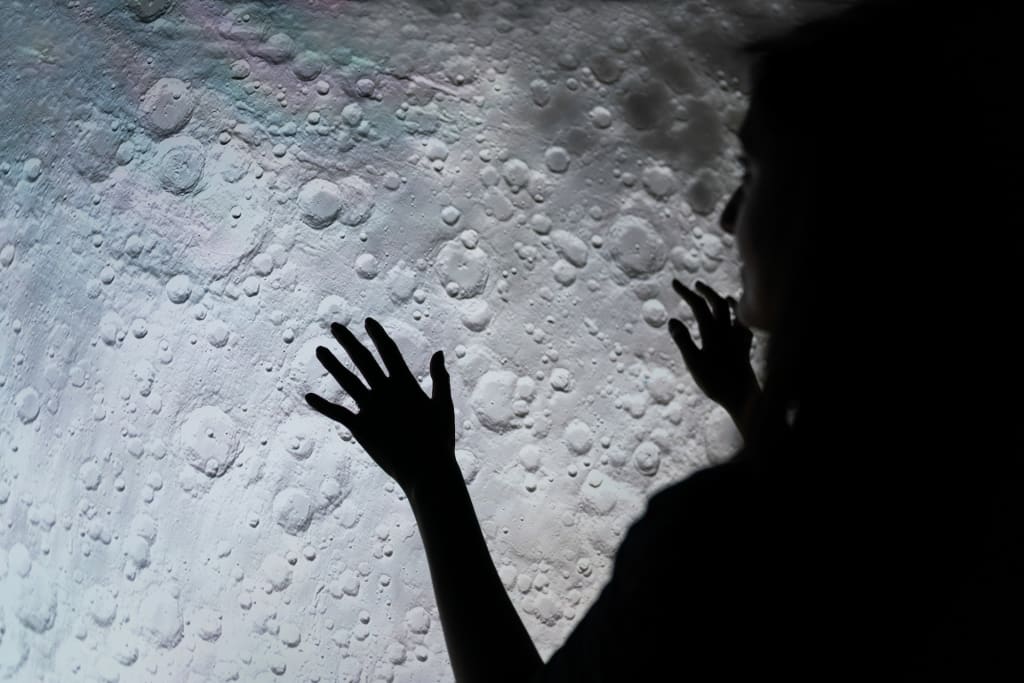
In the summer of 1969, humanity witnessed a historic moment that transcended national borders and united people around the world. It was the Apollo 11 mission, the journey that took astronauts Neil Armstrong, Buzz Aldrin, and Michael Collins to the moon, where Armstrong and Aldrin became the first humans to set foot on another celestial body. Amid the scientific milestones and technological achievements of the mission, there was a deeply personal and spiritual moment that captured the world's imagination—Buzz Aldrin's communion on the moon's surface.
Buzz Aldrin, an astronaut and engineer, was not only a pioneer of space exploration but also a man of deep faith. Before embarking on the Apollo 11 mission, he had a conversation with the Dean of St. Paul's Cathedral in London, where they discussed the idea of taking communion in space. Aldrin, a devout Christian, felt that this act of devotion was a profound way to connect his faith with the monumental journey he was about to undertake.
On July 20, 1969, as the lunar module Eagle descended toward the moon's surface, Buzz Aldrin found himself in a small, confined spacecraft, preparing to make history. He had brought with him a tiny chalice and a small vial of wine and a wafer, elements of the Christian sacrament of communion. In the midst of the technological marvels and scientific pursuits that defined the mission, he sought to connect with something deeply spiritual and personal.
As the Eagle landed on the moon and Neil Armstrong spoke those famous words, "That's one small step for [a] man, one giant leap for mankind," Buzz Aldrin took a private moment to partake in communion. He read a passage from the Bible, John 15:5, which says, "I am the vine, you are the branches. Whoever remains in me, and I in him, will bear much fruit; for you can do nothing without me."
In that solitary moment on the moon's surface, Aldrin expressed his faith and devotion, connecting the vastness of space with the depths of his spirituality. It was a simple yet profound act of love—a love for God, a love for humanity, and a love for the awe-inspiring cosmos that surrounded him.
The image of Aldrin, dressed in his spacesuit, taking communion on the moon, is one of the most iconic and enduring symbols of the Apollo 11 mission. It encapsulates the idea that human exploration and scientific achievement need not be divorced from matters of the heart and soul. In the midst of the technological marvels of space travel, Aldrin's communion was a reminder of the enduring power of faith and love.
Aldrin's act of communion resonated with people around the world. It sparked discussions about the intersection of science and spirituality, and it invited contemplation about the vastness of the universe and humanity's place within it. It also inspired conversations about the common bonds that connect people of different faiths and backgrounds.
While the moon landing was a monumental achievement that showcased humanity's capacity for innovation and exploration, it was also a moment of humility. As humans ventured beyond Earth's boundaries, they were reminded of the vastness of the cosmos and the mysteries that lay beyond. Aldrin's communion on the moon encapsulated this humility—a recognition that, in the face of the cosmos, our faith, our love, and our connection to something greater remain deeply personal and profoundly significant.
Buzz Aldrin's journey to the moon and his act of communion served as a reminder that even in the most extraordinary circumstances, love and faith can find expression. His devotion to his faith and his desire to connect with the divine in the midst of the moon's desolation captured the essence of what it means to be human. In the vast expanse of space, he found a moment of profound intimacy.
Aldrin's communion also highlighted the importance of freedom of religion and expression. In the midst of the Cold War and geopolitical tensions, his act was a demonstration of the fundamental human right to practice one's faith, even in the most unconventional of places.
Buzz Aldrin's communion on the moon was a powerful reminder that love, faith, and spirituality are universal aspects of the human experience. They are not confined to the boundaries of our planet but extend to the farthest reaches of the cosmos. It was a testament to the enduring capacity of the human spirit to seek connection and meaning, even in the most extraordinary of circumstances.
As we look back on that historic moment on the moon, Buzz Aldrin's act of love and devotion continues to inspire and captivate the world's imagination. It reminds us that while the cosmos may be vast and mysterious, the human heart remains a boundless source of love, faith, and wonder—a beacon of light that shines even in the darkest of voids.
About the Creator
Getting Serious About Comedy (Part I)
If I were asked to remark on my life and the childhood that paved some road leading me to this point, I would have to say something about all the funny people who surrounded me for the last 26,872 days (and counting). Somewhere along that road, I became a big fan of laughter and the comedy that spawns it – and, I mean not only my own laughter, but the laughter of others, some of which I have actually been responsible for inducing.
By John Oliver Smith7 days ago in Humor



Comments (1)
Good work! Good job!