
The Memory Jar
Sometimes the smallest things hold the biggest pieces of us
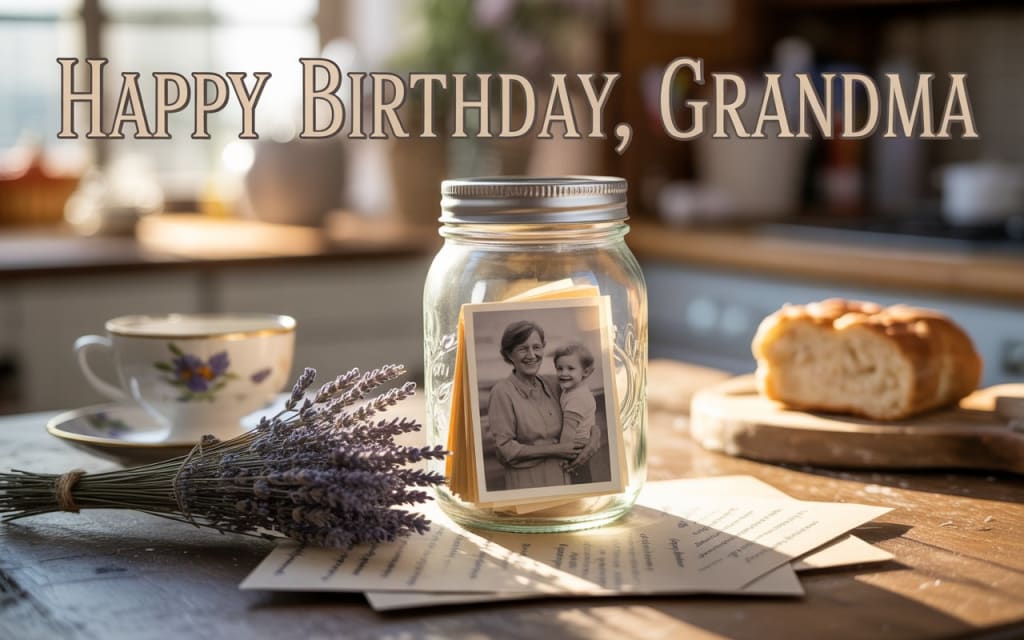
The Memory Jar
It started with a mason jar and a sticky note.
My grandmother, always a quiet woman with clever hands, left it for me on the kitchen table of her tiny farmhouse the summer I turned twelve. The note was folded in half and taped to the side of the jar, scrawled in her slanted, no-nonsense handwriting:
> “Every memory worth keeping fits in here. Start collecting.”
That summer, my parents were working through a bitter divorce, and I’d been sent to live with Grandma for a few months. I arrived with nothing but a suitcase, a stubborn silence, and a deep ache I couldn’t name yet. At twelve, I didn’t know how to describe grief that came from something still alive.
She didn’t ask me to talk about it, and I didn’t try. We lived quietly, side by side, in a rhythm that was equal parts silence and simple kindness. She’d slice strawberries for my toast. I’d water her garden when her knees started to give her trouble. She taught me how to braid garlic and knead bread. I taught her how to use the voice memo app on her phone—not that she ever did, but it made her laugh when I tried.
And always, there was the jar.
At first, I ignored it. It felt like just another adult thing trying to make my sadness feel manageable—like when my school counselor told me to draw my “emotions” with crayons.
But a few weeks in, I wrote a memory down on a scrap of paper without even thinking. It was from the day before:
> "Grandma showed me how to tell when tomatoes are ready—she said they 'sigh' when you touch them."
I folded the paper three times and slid it into the jar.
After that, it became a quiet ritual.
Some memories were funny.
> “Tried to help fix the screen door. Failed. Got stuck in it.”
> “Grandma says swear words when she burns things. She said I’m not old enough to repeat them but old enough to learn not to.”
Others were softer, smaller.
> “Woke up to smell of coffee and thunder. She was humming.”
> “Her hands are always warm when she touches my shoulder.”
And some felt heavier:
> “Dad forgot to call today. Again.”
> “I miss Mom’s bad jokes.”
By the end of the summer, the jar was nearly half-full. I never read the notes again—I didn’t need to. Just knowing they were there made something inside me feel less brittle.
When it was time to leave, I didn’t want to.
The last morning in her kitchen, she handed me the jar, now with a new label written in the same slanted handwriting:
> “For when you forget.”
“I don’t want to forget,” I said, blinking hard.
“That’s the point,” she said. “But we all do, sometimes. So we write it down. That’s how we remember who we are.”
---
Years passed. Life changed.
High school, heartbreaks, therapy.
College. New cities. Rented apartments with leaky ceilings.
Grandma’s death came quietly, just before spring.
I went back for the funeral. The house smelled different—emptier. But her spirit lingered in the garden beds, in the worn handles of the wooden spoons, in the dusty jar still sitting on the top shelf of the pantry.
I opened it for the first time in nearly a decade.
The scraps of paper were yellowed and curled, but the memories burst out as fresh as if they’d just happened:
> “She said lavender keeps the mosquitoes away, but she plants it because it reminds her of Grandpa.”
> “I asked if she missed being young. She said, ‘Only my knees.’”
My throat tightened.
I read each one, carefully unfolding pieces of my childhood I didn’t realize I’d stored away so deeply.
Then I added a new note:
> “She never told me she loved me out loud. But she showed me a hundred different ways. I remember them all.”
And I brought the jar home.
---
Now, it sits on my own kitchen counter.
My daughter is only six, but she’s already started dropping her own notes inside. Some are drawings of the cat. Some are wildly misspelled. One just says:
> “Today was a happy day.”
She doesn’t know yet what the jar means. Not really. But she will.
One day, when the world starts to stretch her thin and she begins to forget who she’s been, she’ll open it. And she’ll remember.
Because memories—especially the quiet, ordinary ones—are how we find our way back to ourselves.
---
Moral:
Cherish the everyday moments—they often become the most powerful memories we carry.
About the Creator
Keep reading
More stories from Muhammad Nasir and writers in Humans and other communities.
The Silence Between My Mother’s Words
The Silence Between My Mother’s Words I used to think my mother didn’t love me. She never said it outright. There were no tender I-love-yous tucked into lunchboxes, no handwritten birthday cards with swirling letters and soft affirmations. When I was little, I clung to friends’ mothers who wrapped them in compliments and giggles, mothers who kissed scraped knees and applauded mediocre talent shows like they were Broadway.
By Muhammad Nasir5 months ago in Humans



Comments
There are no comments for this story
Be the first to respond and start the conversation.